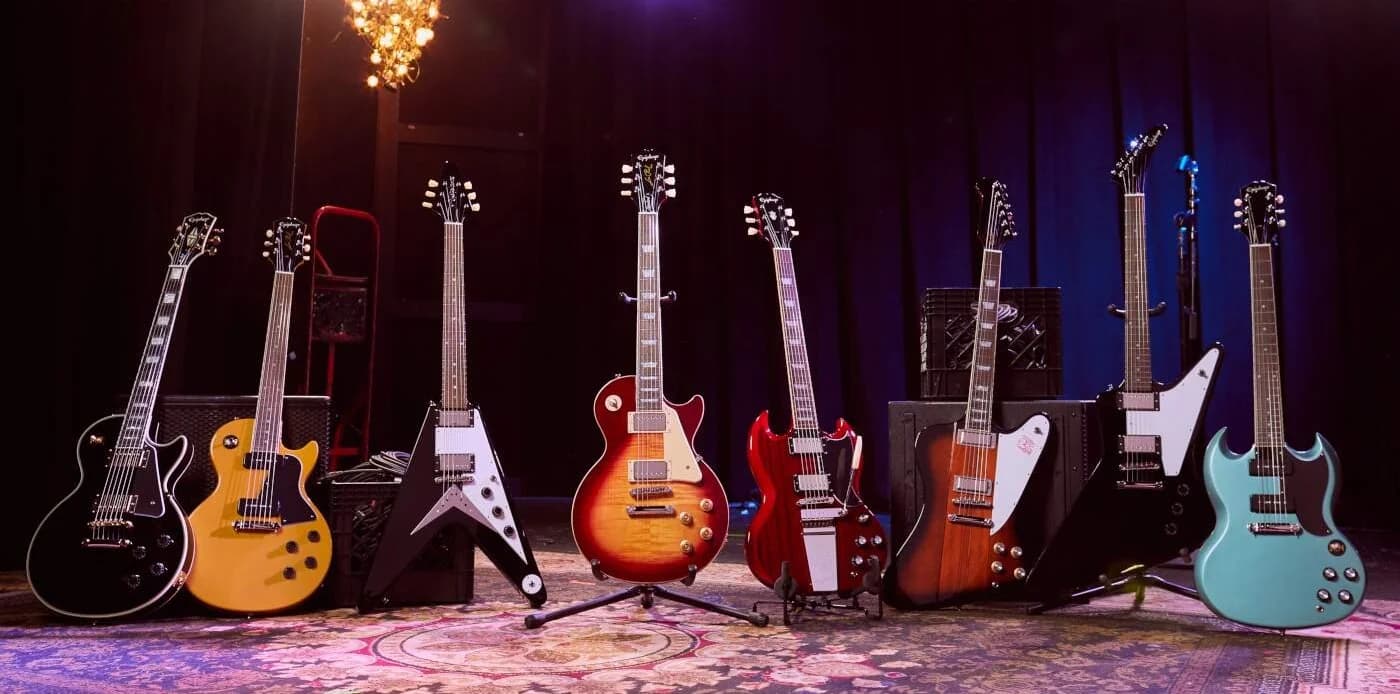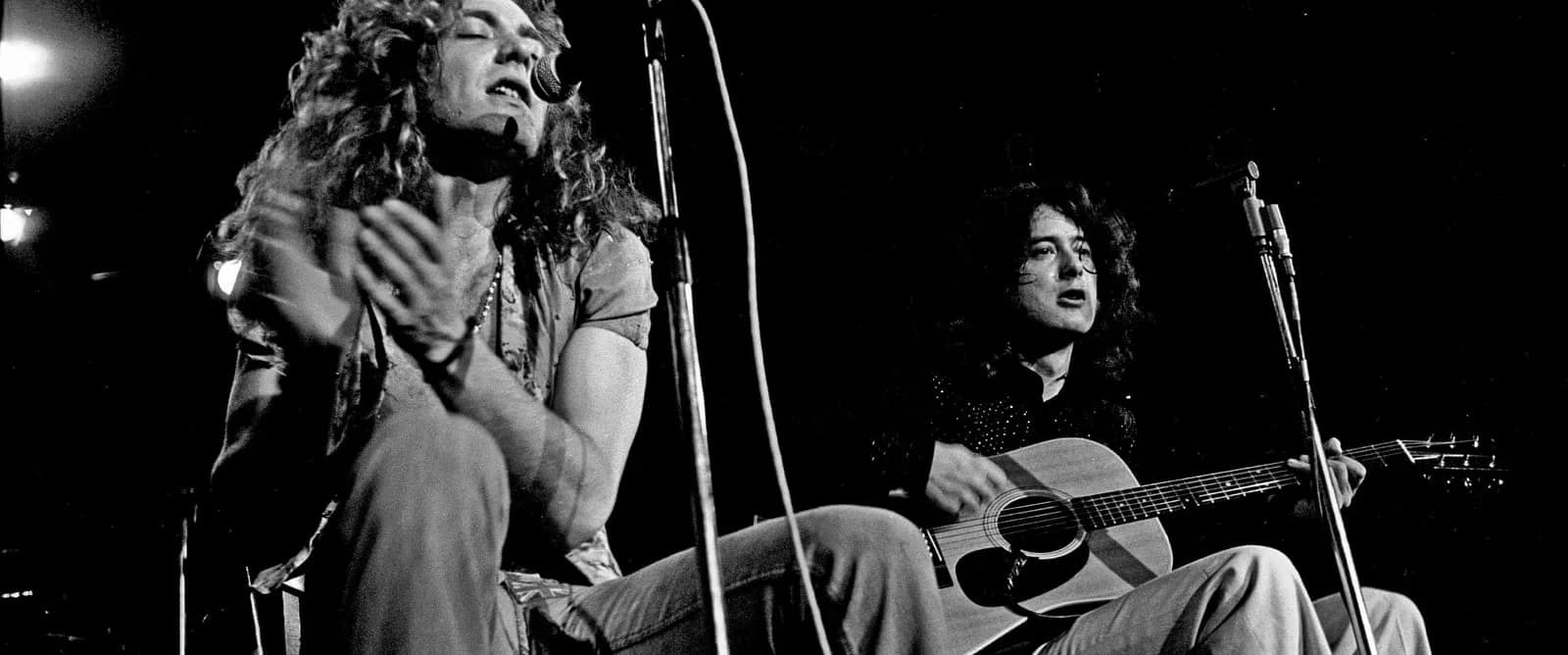

Rock has never been just one thing.
Since its birth, it has mixed with blues, country, gospel, rhythm and blues, soul, folk, psychedelia, classical music, jazz, punk, metal, electronic music and many other languages. That is why talking about “rock” means talking about a huge tree, full of branches, phases, scenes, attitudes and different sounds.
Some styles are direct and raw. Others are long, complex and experimental. Some value heavy riffs. Others prefer protest lyrics, pop melodies, dirty tones, instrumental virtuosity or more alternative atmospheres.
The important thing is to understand that rock styles are not closed boxes. Many bands move through more than one branch throughout their careers. Others combine elements from several styles in the same song.
Even so, knowing the main characteristics of each style helps anyone who is starting to listen, study guitar, build a repertoire or simply understand music history more clearly.
Before the styles: what defines rock?
At the center of this language are a few essential elements: guitar in the foreground, a strong beat, bass holding the groove, drums shaping the body of the song and a voice with attitude, energy and personality.
But rock is not defined only by instrumentation. It is also an aesthetic attitude. Rock has always carried an idea of movement, rupture, intensity and individual affirmation.
At times, this appears as rebellion. At other times, as virtuosity. At others, as poetry, experimentation, noise, spectacle or radical simplicity.
Rock and roll: the electric root
It is direct, danceable and closely connected to blues, rhythm and blues and country. Its songs usually have simple structures, upbeat tempos, easy choruses and a very physical kind of energy.
On guitar, rock and roll brought short riffs, rhythmic strumming, blues-based phrases and melodic solos. Chuck Berry, in particular, created a vocabulary that would influence generations of guitar players.
Rock and roll was not only a new sound. It was also a cultural shift. It spoke to youth, mixed Black and white musical influences, unsettled conservative sectors and created a new image for the popular musician: freer, more electric and more provocative.
Blues rock: when the blues gets louder
This style values bends, vibrato, improvisation, expressive solos, pentatonic-based riffs and a strong sense of dialogue between guitar and voice.
Blues rock can be raw, psychedelic, heavy or virtuosic. But it usually keeps one central feature: emotion comes before speed.
For beginner guitarists, it is one of the most important styles to study. It teaches phrasing, dynamics, intention, bend control, tone and expression.
Hard rock: weight, riffs and stage presence
It is built around memorable riffs, powerful drums, intense vocals, guitar solos and a more grandiose stage presence.
Hard rock can sound dirty and direct, as in AC/DC, or more technical and explosive, as in Van Halen. It can have a darker atmosphere, as in Black Sabbath, or a more theatrical one, as in KISS.
The common point is the strength of the riff. In hard rock, the guitar is not only accompanying the music. Very often, it is the song’s identity.
Heavy metal: weight becomes its own language
While hard rock still keeps a strong connection to blues and arena rock, metal begins to create its own language: darker riffs, lower tunings, heavier themes, tighter rhythmic precision and a more intense aesthetic.
Metal also divided into many branches: traditional heavy metal, thrash metal, power metal, doom metal, death metal, black metal, progressive metal, metalcore and others.
Metal is not simply “heavier rock”. It developed its own culture, its own scenes, its own techniques and its own way of building intensity.
Punk rock: simplicity, urgency and attitude
While some bands were making long songs, complex solos and elaborate productions, punk came with a different proposal: play fast, simple, direct and with attitude.
In punk, technique is not the center. Energy is. The message often matters as much as the music. Punk speaks of dissatisfaction, youth, politics, boredom, anger, irony and urban life.
For anyone starting on guitar, punk is an excellent entry point. It shows that you do not need advanced theory to create music with impact.
Progressive rock: ambition, technique and experimentation
While punk values simplicity and urgency, progressive rock values complexity, long-form construction, changing moods, instrumental technique and experimentation.
Progressive rock often incorporates elements of classical music, jazz, folk, psychedelia and experimental music. Songs can last several minutes, include long instrumental sections, unusual time signatures and conceptual lyrics.
Progressive rock shows that rock can also be a sophisticated language, full of layers and artistic ambition.
Psychedelic rock: sound, journey and expanded perception
This style is not defined only by riffs or structures. It is defined by atmosphere.
Psychedelic rock uses effects, echoes, reverbs, improvisation, symbolic lyrics, dreamlike moods and less predictable structures. The idea is to create a sonic experience, not just a traditional song.
Psychedelia opened doors to progressive rock, hard rock, space rock and several forms of alternative music.
Glam rock: theater, glitter and visual identity
In glam, image is a fundamental part of the music. Makeup, extravagant clothes, boots, glitter, characters and stage attitude are part of the experience.
Musically, glam can be simple and direct, with strong choruses and accessible riffs, or more sophisticated and experimental, depending on the artist.
Glam helped show that rock could also be performance, character and visual construction.
Southern rock: guitar, road and American tradition
On guitar, southern rock values full-bodied riffs, slide guitar, long solos, warm tones and, often, harmonies between two or three guitars.
It is an important style for understanding the connection between rock, blues, country and road culture.
AOR and arena rock: big choruses and polished production
It is a more melodic and polished kind of rock, with strong choruses, clean vocals, well-recorded guitars, keyboards and arrangements designed for radio and large arenas.
Arena rock, in turn, is not only a musical style. It is also a live format: large stages, huge choruses, lights, pyrotechnics, solos and songs designed for crowds.
It is a branch in which rock approaches pop without necessarily losing the guitar as a central element.
New wave and post-punk: when rock becomes colder, urban and experimental
After the punk explosion, several bands began to experiment with new possibilities.
These styles show how rock absorbed the urban modernity of the late 1970s and early 1980s.
Gothic rock: atmosphere, shadow and romanticism
Gothic rock works with dense atmospheres, chorus-heavy guitars, prominent bass lines, deep or ethereal vocals and lyrics about loneliness, desire, death, dreams, spirituality, decay and dark romanticism.
It shows that rock can also be introspective, elegant and deeply atmospheric.
Grunge: weight, dirt and disillusion
Grunge mixed elements of punk, hard rock, metal and alternative rock. Its sound is usually dirty, heavy, emotional and less concerned with the technical shine of 1980s rock.
The lyrics spoke of alienation, discomfort, depression, anger, irony, difficult relationships and a sense of inadequacy.
Grunge showed that rock could return to a raw, vulnerable and emotionally direct sound.
Alternative rock: freedom outside the formula
Alternative rock can be noisy, melodic, experimental, electronic, minimalist or grandiose. The common point is the attempt to escape a very traditional formula.
Alternative rock is less a specific sound and more a posture: looking for another route inside rock.
Indie rock: independence, identity and personal sensitivity
Over time, indie also began to describe an aesthetic: cleaner or lightly saturated guitars, less grandiose production, personal lyrics, memorable melodies and a feeling of closeness.
Indie shows that rock does not always need to sound gigantic. Sometimes, its strength is precisely in personality, simplicity and a band’s own identity.
Garage rock: raw, urgent and unpolished sound
The name comes from the idea of young bands rehearsing in garages, with few resources, a lot of energy and little concern for technical polish.
Garage rock reminds us of an important truth: not every great sound needs to be polished. Sometimes, imperfection is part of the identity.
Pop rock: melody, chorus and accessibility
Here, the guitar may be present, but the music usually prioritizes melody, chorus, clarity, production and direct communication with the audience.
Pop rock often works as an entry point into the rock universe. It can be lighter, but that does not mean it is easy to do well. Writing a direct and memorable melody also requires skill.
Rock around the world: local scenes, global language
Although it emerged strongly in the United States and developed rapidly in the United Kingdom, rock became a global language.
Over the decades, different countries created their own scenes, adapting rock to their cultures, languages, social realities and musical traditions. This made the genre more than an Anglo-American phenomenon: it became an international form of expression.
In the United States, rock developed in many directions: rock and roll, blues rock, southern rock, garage rock, punk, hardcore, grunge, metal, alternative and indie. Scenes such as New York, Los Angeles, Seattle, Detroit, Memphis, Chicago and San Francisco played important roles at different moments in history.
This worldwide expansion shows that rock does not belong to a single country. It was born from specific contexts, but it became an open language capable of absorbing accents, scenes, histories and different identities.
How to tell the styles apart in practice
For beginners, it can be difficult to identify the difference between so many styles. A good approach is to pay attention to a few elements.
| Element | What to observe |
|---|---|
| Guitar | Is it clean, dirty, heavy, fast, melodic, experimental or riff-based? |
| Drums | Are they simple, danceable, aggressive, technical, tribal or full of fills? |
| Voice | Is it raspy, soft, theatrical, deep, shouted, pop-oriented or melancholic? |
| Lyrics | Do they talk about partying, politics, fantasy, pain, love, rebellion, the road or introspection? |
| Production | Is the sound raw, polished, atmospheric, heavy, lo-fi or grandiose? |
| Structure | Is the song short and direct or long and full of different sections? |
| Attitude | Is the goal to dance, protest, impress, move, provoke or create atmosphere? |
These questions help you listen to rock with more attention.
A simple, dry riff may point to punk, garage or hard rock. A long song with changing moods may point to progressive rock. A dirty, heavy and emotional sound may recall grunge. A melodic chorus and clean production may approach pop rock or AOR.
The secret is to listen to the whole picture, not just one isolated element.
Summary of the main styles
| Style | Main characteristic | Reference examples |
|---|---|---|
| Rock and roll | Danceable, simple and energetic foundation | Chuck Berry, Elvis Presley, Little Richard |
| Blues rock | Amplified blues with expressive guitar | Cream, Jimi Hendrix, Stevie Ray Vaughan |
| Hard rock | Strong riffs, weight and stage presence | Led Zeppelin, AC/DC, Deep Purple |
| Heavy metal | Weight, tension, precision and intense aesthetics | Black Sabbath, Iron Maiden, Metallica |
| Punk rock | Simplicity, speed and attitude | Ramones, Sex Pistols, The Clash |
| Progressive rock | Technique, long songs and experimentation | Pink Floyd, Yes, Genesis, Rush |
| Psychedelic rock | Atmosphere, effects and sonic expansion | The Doors, Pink Floyd, Jefferson Airplane |
| Glam rock | Theater, image and memorable choruses | David Bowie, T. Rex, KISS |
| Southern rock | Blues, country, road and warm guitars | Lynyrd Skynyrd, Allman Brothers, ZZ Top |
| AOR / Arena rock | Big choruses and polished production | Journey, Boston, Foreigner |
| Post-punk | Urban tension, strong bass and dark mood | Joy Division, The Cure, Siouxsie |
| Gothic rock | Melancholy, dark atmosphere and theatricality | Bauhaus, Sisters of Mercy, The Cure |
| Grunge | Dirt, weight and emotional vulnerability | Nirvana, Pearl Jam, Alice in Chains |
| Alternative rock | Aesthetic freedom outside the formula | R.E.M., Radiohead, Pixies |
| Indie rock | Identity and less grandiose production | The Smiths, Arctic Monkeys, The Strokes |
| Garage rock | Raw, direct and urgent sound | The Sonics, The White Stripes, The Hives |
| Pop rock | Melody, chorus and accessibility | The Beatles, U2, Coldplay |
What beginner guitarists can learn from each style
Each rock style teaches something different to guitar players.
Blues rock teaches expression, bends, vibrato and dynamics.
Hard rock teaches riffs, attack and tone construction.
Metal teaches precision, picking, weight and rhythmic control.
Punk teaches energy, simplicity and directness.
Progressive rock teaches composition, technique and changes in mood.
Psychedelic rock teaches effects, atmosphere and improvisation.
Grunge teaches dynamics between quiet parts and explosive choruses.
Indie teaches identity, texture and economy of notes.
Pop rock teaches melody, arrangement and accessible songwriting.
To grow as a guitarist, it is worth studying more than one style. A musician who learns only speed can become limited. A musician who learns only simple chords can also become limited.
The richness of rock is precisely in the mixture: riff, melody, tone, attitude, dynamics, phrasing and intention.
Where to start listening
If you want to understand rock styles in practice, a good strategy is to listen by blocks.
| Path | What to listen to |
|---|---|
| Roots | Chuck Berry, Elvis Presley, Little Richard |
| Blues rock | Cream, Jimi Hendrix, Stevie Ray Vaughan |
| Hard rock | Led Zeppelin, Deep Purple, AC/DC |
| Classic metal | Black Sabbath, Judas Priest, Iron Maiden |
| Punk | Ramones, Sex Pistols, The Clash |
| Progressive rock | Pink Floyd, Yes, Genesis, Rush |
| Psychedelic rock | The Doors, Jefferson Airplane, Pink Floyd |
| Grunge | Nirvana, Pearl Jam, Soundgarden, Alice in Chains |
| Alternative | R.E.M., Pixies, Radiohead, Foo Fighters |
| Indie | The Smiths, The Strokes, Arctic Monkeys, Interpol |
| Global rock | The Beatles, AC/DC, Rush, Soda Stereo, X Japan, Kraftwerk, Sepultura |
This kind of listening helps you notice how one style talks to another.
Hard rock is born partly from blues rock. Metal is born partly from hard rock. Punk reacts against more elaborate rock. Post-punk reacts to punk itself. Grunge mixes punk, metal and alternative. Indie absorbs many of these inheritances and tries to create something more personal.
Nothing appears completely isolated.
Conclusion: rock is a language in motion
Rock has survived for so many decades because it never stood still.
It began as young, danceable and provocative music. Then it became heavier, more poetic, more experimental, more political, more theatrical, darker, more commercial, more alternative and more fragmented.
Each style was born from a different need. Hard rock wanted more weight. Punk wanted urgency. Progressive rock wanted to expand form. Metal wanted to intensify force. Grunge wanted to remove the artificial shine. Alternative rock wanted to escape the formula. Indie wanted to preserve identity.
That is why understanding rock styles is not just memorizing names. It is realizing how each generation used guitar, voice, bass, drums, lyrics, image and attitude to say something of its own.
In the end, rock is not defined by a single sound.
It is defined by movement, tension, energy and transformation.