
Dados Básicos
| Campo | Informação |
|---|---|
| Nome completo | JOYO JW-03 Digital Wireless Transmitter and Receiver |
| Marca | JOYO |
| Categoria | Sistema sem fio digital para instrumentos |
| Linha/série | JOYO Wireless / Audio |
| País de fabricação | China, conforme origem corporativa da JOYO Technology em Shenzhen |
| Faixa de preço aproximada | Brasil: cerca de R$270 a R$400; EUA: cerca de US$30 a US$45; Austrália: cerca de A$75, variando por loja, estoque e impostos |
| Status | Em produção e disponível em canais oficiais e varejistas autorizados |
| Página oficial | joyoaudio.com/product/218.html |
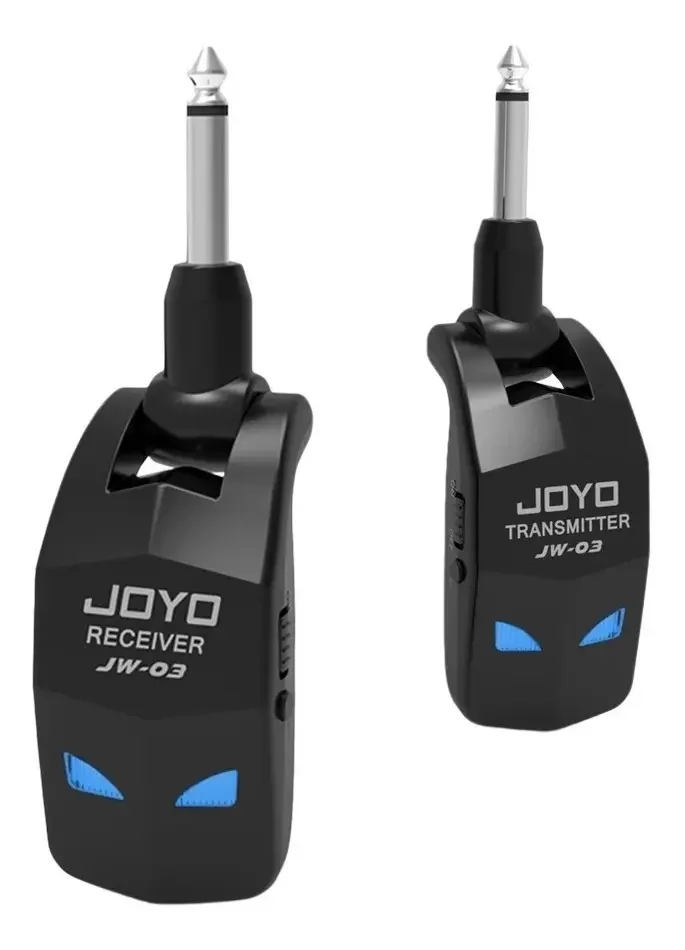
O JOYO JW-03 é um sistema sem fio digital de 2,4 GHz para instrumentos, formado por transmissor e receptor com plug P10 articulado. A proposta é simples: substituir o cabo entre guitarra, baixo, violão eletroacústico, pedais ou amplificador por um par compacto, recarregável e de uso direto.
Visão Geral
O JW-03 ocupa uma posição muito clara no mercado: é um sistema sem fio de entrada, pensado para quem quer mobilidade sem entrar no preço de soluções profissionais de palco. Ele não tenta competir com sistemas de turnê de marcas como Shure, Line 6 ou Sennheiser. Sua força está em entregar liberdade básica, baixa latência declarada, bateria suficiente para uma apresentação comum e operação plug-and-play por um preço bastante acessível.
Para guitarristas de rock, blues, pop, worship, ensaio de banda e estudo em casa, a grande vantagem é eliminar o cabo mais incômodo do setup: aquele que sai da guitarra. Em palcos pequenos, igrejas, salas de ensaio e home studios, isso reduz tropeços, facilita testar timbres longe do amplificador e deixa o músico circular sem ficar preso ao pedalboard.
O ponto editorial mais importante é entender a categoria correta do produto. O JW-03 não é uma interface de áudio, não é pedal de efeito, não é afinador e não é solução profissional de RF para grandes palcos. Ele é um transmissor/receptor sem fio compacto, com especificações honestas para a faixa de preço, mas dependente das condições do ambiente sem fio.
Construção e Design
O design segue o padrão popular de transmissores sem fio compactos: duas unidades pequenas, uma para o instrumento e outra para o amplificador ou cadeia de pedais. Cada unidade usa plug P10 de 6,35 mm com articulação, permitindo ajustar o ângulo em relação ao corpo da guitarra, ao jack lateral, ao jack frontal ou à entrada do pedal.
A construção é leve e funcional. Lojas e materiais de varejo descrevem o corpo como plástico/ABS robusto, coerente com a proposta de custo-benefício. Não há a sensação de equipamento de estrada feito para abuso contínuo, mas o formato é prático para estudo, ensaio, pequenos palcos e uso casual. O tamanho dobrado informado oficialmente é de 78 x 37 x 30 mm, o que facilita guardar o par em bag, case ou compartimento de acessórios.
A ergonomia é um ponto forte. O JW-03 não exige fonte externa durante o uso, não ocupa espaço no pedalboard e não pede configuração complexa. A principal atenção prática é física: em guitarras com jack embutido, cavidade muito estreita ou desenho incomum, o ângulo do transmissor pode ficar menos confortável. Em Stratocaster, Telecaster, Les Paul, SG, baixos e violões eletroacústicos comuns, o plug articulado tende a resolver a maior parte dos casos.
Especificações Técnicas
| Especificação | JOYO JW-03 |
|---|---|
| Tipo | Sistema sem fio digital com transmissor e receptor |
| Frequência wireless | Banda ISM de 2,4 GHz |
| Resolução de áudio | 48 kHz / 16 bit |
| Latência declarada | Menor que 5 ms |
| Alcance declarado | Mais de 20 m, dependendo do ambiente |
| Resposta de frequência | 10 Hz – 22 kHz ±1 dB |
| Distorção | Menor que 0,02% a 1 kHz / -10 dBFS |
| Canais | 12 canais em 4 bancos de canal |
| Método anti-interferência | Frequency hopping |
| Bateria | Lítio recarregável 3,7 V / 600 mAh |
| Autonomia declarada | Mais de 8 horas com carga completa |
| Conectores | Plug P10 6,35 mm no transmissor e no receptor |
| Articulação do plug | Rotação articulada, descrita por varejistas como até 220° |
| Dimensões | 78 x 37 x 30 mm quando dobrado |
| Acessórios informados | Manual do proprietário e cabo USB |
Essas especificações colocam o JW-03 acima do nível puramente descartável de acessórios baratos, especialmente pela autonomia declarada e pela resposta de frequência ampla. Ainda assim, os números devem ser lidos dentro do contexto real: sistemas de 2,4 GHz podem sofrer com Wi-Fi, Bluetooth, roteadores, celulares, paredes, distância, obstáculos e excesso de dispositivos no mesmo ambiente.
JOYO JW-03
 1 / 3
1 / 3Recursos e Funcionalidades
O JW-03 é propositalmente simples. Não há presets, IRs, app, MIDI, USB de áudio, loop de efeitos, afinador ou edição por software. O recurso central é a transmissão digital do sinal do instrumento para o receptor, usando a banda de 2,4 GHz.
Na prática, o uso típico é ligar o transmissor na guitarra ou baixo, ligar o receptor no amplificador, primeiro pedal ou entrada de interface/pedaleira compatível, parear as unidades e tocar. O sistema permite seleção de canais, recurso importante quando há mais de um sistema sem fio no mesmo ambiente. Materiais de varejo também indicam que até quatro unidades podem operar simultaneamente, desde que configuradas corretamente e respeitando as condições de interferência.
A bateria interna recarregável é um dos pontos mais atraentes. A autonomia declarada acima de oito horas cobre ensaios longos, cultos, apresentações pequenas e sessões de estudo sem depender de pilhas. O cabo USB duplo, comum nesse tipo de produto, permite carregar transmissor e receptor ao mesmo tempo.
O frequency hopping ajuda o sistema a lidar com interferências, alternando frequências dentro da banda disponível. Isso não torna o JW-03 imune a ambientes congestionados, mas melhora a estabilidade em comparação com uma transmissão fixa simples.
Som e Desempenho
Em termos de som, o JW-03 deve ser avaliado pelo que ele promete preservar, não pelo que ele adiciona. Um bom sistema sem fio para guitarra não deve colorir o timbre de forma perceptível, comprimir demais a dinâmica ou introduzir ruído evidente. A resolução de 48 kHz / 16 bit e a resposta de 10 Hz a 22 kHz indicam uma faixa técnica suficiente para guitarra, baixo e violões eletroacústicos em contextos comuns.
A latência declarada abaixo de 5 ms é adequada para estudo, ensaio e palco pequeno. Em uma cadeia real, a sensação de atraso também depende de pedaleiras digitais, interfaces, monitores, plugins e distância física do som. Usado diretamente entre guitarra e amp, o atraso tende a ficar abaixo do limiar de incômodo para a maioria dos músicos.
Na dinâmica, o JW-03 funciona melhor quando usado em setups de ganho moderado, crunch, blues, rock clássico, pop e worship. Em high gain, qualquer sistema sem fio barato pode revelar mais ruído residual, especialmente se o ambiente tiver interferência ou se a cadeia de pedais já for ruidosa. Isso não significa que o produto não sirva para drive pesado, mas sim que um noise gate, fonte limpa nos pedais e bom posicionamento continuam importantes.
Em casa, o benefício é conforto. No ensaio, é liberdade para circular e ajustar o som ouvindo o amplificador de outras posições. Em palco pequeno, é redução de cabos e mais mobilidade. Em estúdio crítico ou gravação definitiva, um cabo de boa qualidade ainda pode ser a escolha mais segura, principalmente quando se busca repetibilidade absoluta, blindagem previsível e zero risco de interferência sem fio.
Uso em Contexto Musical
Para este review, a seção de artistas foi desconsiderada. Não há evidência editorialmente forte de que o JOYO JW-03 seja um equipamento associado de forma relevante a guitarristas famosos de rock ou blues, nem faz sentido transformar um acessório utilitário de baixo custo em peça de assinatura artística.
O valor musical do JW-03 está em outro lugar: ele permite que o guitarrista iniciante, intermediário ou músico de palco pequeno toque com mais liberdade física. Em blues, ajuda a testar a interação entre guitarra e amplificador em diferentes pontos da sala. Em rock, facilita ensaios com movimentação. Em igrejas e palcos compactos, reduz cabos no chão. Em home studio, agiliza gravações rápidas, embora o cabo ainda seja preferível quando a prioridade máxima for estabilidade absoluta.
Essa distinção é importante. O JW-03 não deve ser vendido como "o segredo do timbre" de ninguém. Ele é uma ferramenta de conveniência para manter o sinal do instrumento funcionando sem cabo, com qualidade suficiente para muitos usos reais.
Para Quem É
O JOYO JW-03 faz muito sentido para iniciantes e intermediários que querem experimentar um sistema sem fio sem investir alto. Também é uma escolha coerente para guitarristas que tocam em casa, em ensaios, igrejas, bares pequenos, eventos informais e palcos onde a distância entre instrumento e amp não é extrema.
Ele combina especialmente bem com quem toca rock clássico, blues, pop, worship, indie, country, hard rock moderado e repertórios de banda em geral. Baixistas também podem se beneficiar, desde que aceitem as limitações típicas de sistemas compactos de 2,4 GHz e testem a resposta no próprio instrumento.
Não é a melhor escolha para turnês profissionais, grandes palcos, festivais com ambiente de RF congestionado, gravação crítica de estúdio ou músicos que dependem de máxima confiabilidade em qualquer condição. Para esses casos, sistemas profissionais com gerenciamento de frequência mais robusto, construção superior, receptor dedicado de pedalboard ou rack e suporte técnico mais amplo são escolhas mais adequadas.
Comparação com Concorrentes
| Modelo | Proposta | Pontos fortes | Limitações | Melhor cenário |
|---|---|---|---|---|
| JOYO JW-03 | Sistema sem fio 2,4 GHz de entrada | Preço baixo, bateria acima de 8 h, operação simples, 48 kHz / 16 bit | Construção simples, sem case de carga, sujeito a interferência de 2,4 GHz | Iniciantes, ensaio, casa e pequenos palcos |
| Xvive U2 | Sistema compacto 2,4 GHz mais consolidado | 24 bit / 48 kHz, boa reputação, várias cores, uso plug-and-play | Bateria menor, preço geralmente mais alto que JOYO | Quem quer alternativa popular e mais conhecida |
| NUX B-5RC | Sistema 2,4 GHz com case de carga | 24 bit, baixa latência, case recarregável, compatível com instrumentos ativos e passivos | Custa bem mais; autonomia das unidades é menor sem o case | Músico que viaja ou quer praticidade de recarga |
| BOSS WL-20 | Sistema compacto de marca premium | Latência de 2,3 ms, pareamento automático, bateria longa no transmissor | Preço superior; versões WL-20 e WL-20L exigem atenção ao tipo de captador | Quem prioriza confiabilidade de marca e palco pequeno |
O JW-03 vence principalmente em custo-benefício. O Xvive U2 é um concorrente direto mais conhecido e com áudio 24 bit, mas normalmente custa mais. O NUX B-5RC é mais moderno em conveniência por causa do case de carga. O BOSS WL-20 é mais caro, porém oferece menor latência declarada e refinamento de marca. Portanto, a escolha depende menos de "qual é o melhor absoluto" e mais do risco aceitável: economia máxima, conveniência de recarga, reputação ou robustez.
Prós e Contras
| Prós | Contras |
|---|---|
| Preço muito competitivo | Não é solução profissional de turnê |
| Operação simples, sem menus complexos | Banda de 2,4 GHz pode sofrer interferência em ambientes congestionados |
| Autonomia declarada acima de 8 horas | Não inclui case de carregamento dedicado |
| Latência menor que 5 ms, adequada para uso comum | Construção simples, mais voltada a uso cuidadoso |
| Plug articulado facilita adaptação a vários instrumentos | Pode não encaixar perfeitamente em todos os formatos de jack |
| Funciona com guitarra, baixo e instrumentos eletroacústicos | Para gravação crítica, cabo ainda é a opção mais previsível |
O maior ponto positivo é a relação entre preço, autonomia e praticidade. O maior cuidado é não esperar dele a estabilidade de um sistema profissional caro. Como acessório de mobilidade, o JW-03 entrega bastante. Como peça central de um setup profissional exigente, ele deve ser visto com cautela.
Veredito Final
O JOYO JW-03 vale a pena para quem quer entrar no mundo dos sistemas sem fio gastando pouco e sem complicação. Ele é simples, direto, recarregável, compacto e suficientemente competente para estudo, ensaios, palcos pequenos e situações em que a liberdade de movimento pesa mais do que a perfeição absoluta do sinal.
Seu melhor cenário é o músico iniciante ou intermediário que toca guitarra, baixo ou violão eletroacústico e quer se livrar do cabo em ambientes controlados. Para rock, blues, pop e worship, ele cumpre bem a função de acessório prático. Para palco profissional, festival, gravação crítica ou ambientes com muita interferência, concorrentes como BOSS WL-20, NUX B-5RC, Line 6 Relay ou sistemas profissionais dedicados podem ser escolhas mais seguras.
Como compra racional, o JW-03 é forte: não promete luxo, mas entrega liberdade. Desde que o usuário entenda suas limitações e teste o comportamento no próprio ambiente, é um dos acessórios de melhor custo-benefício para quem quer experimentar um setup sem fio sem transformar isso em grande investimento.