

Understanding the parts of a guitar makes learning much easier. When you know what each component is called and what it does, you can tune more confidently, change strings, describe problems, choose gear, and understand why one guitar feels or sounds different from another.
This beginner-friendly guide explains the most important guitar parts and gives you practical examples you can use right away.
The big picture: how a guitar works
A guitar starts with vibrating strings. When you pick or strum a string, it vibrates at a certain pitch. Your fretting hand changes that pitch by pressing the string against different frets. On an electric guitar, pickups sense the string vibration and send an electrical signal to your amp, pedals, or audio interface.
In simple terms:
- Strings create the vibration.
- Frets and the fretboard help you choose notes.
- Pickups convert vibration into an electrical signal.
- Controls shape volume and brightness.
- Bridge, nut, and tuners help with tuning stability and setup.
Knowing this signal path helps you troubleshoot common problems like buzzing, poor tuning, weak tone, or uncomfortable string height.
Headstock
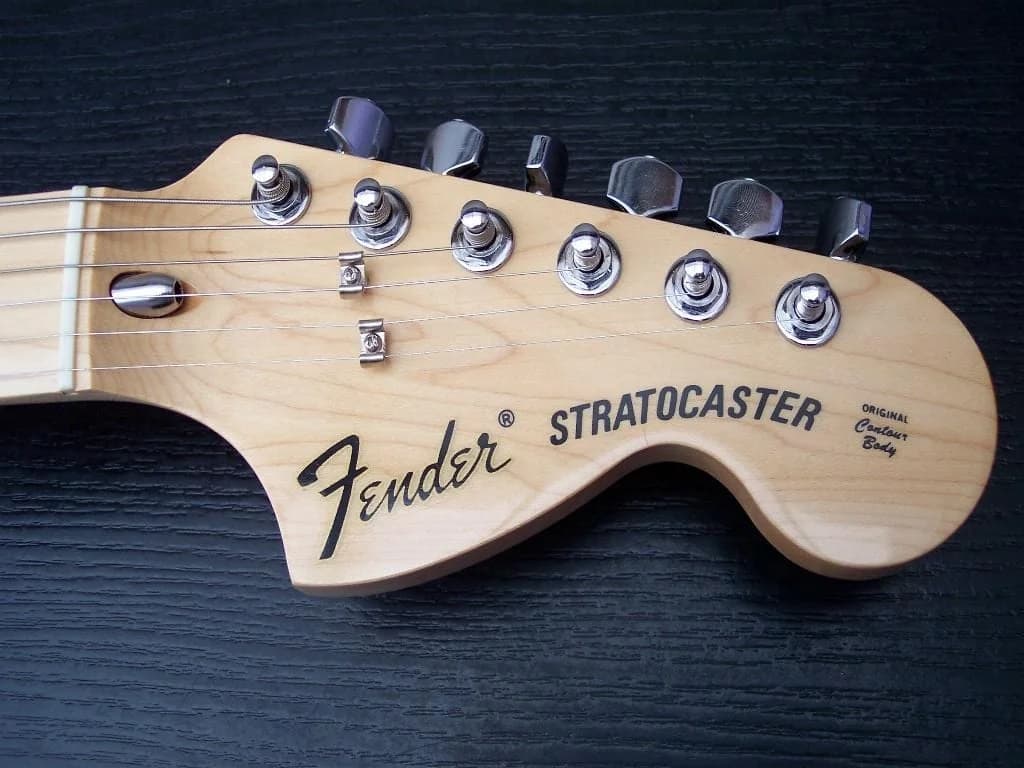
Headstocks come in different shapes. Some guitars have all six tuners on one side, while others have three tuners on each side. The design can affect string angle, tuning feel, and visual identity.
Headstock
 1 / 2
1 / 2Tuning machines
Practical example:
- If your low E string is flat, tighten the tuner slightly.
- If the pitch goes too high, loosen it a little and tune up again slowly.
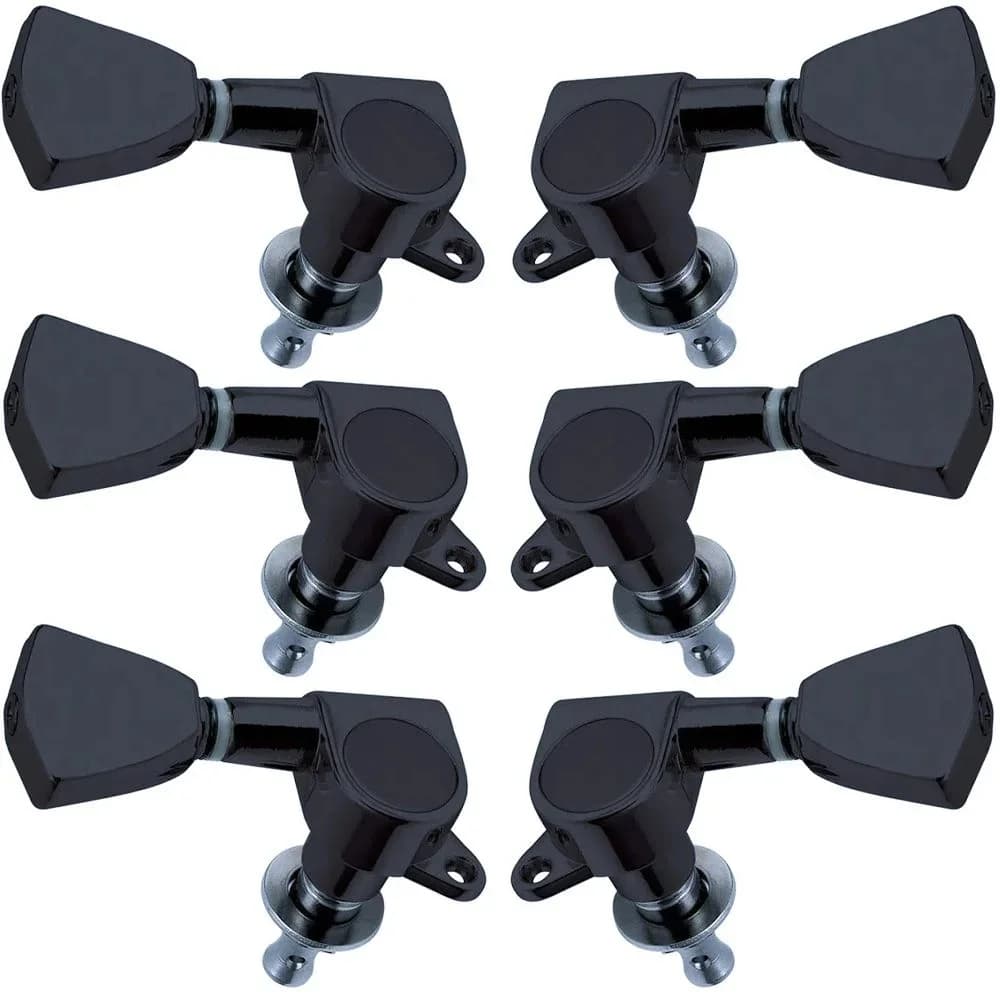
Good tuners help the guitar stay in tune, especially when you use bends, vibrato, or a tremolo arm.
Tuning machines
 1 / 2
1 / 2String trees
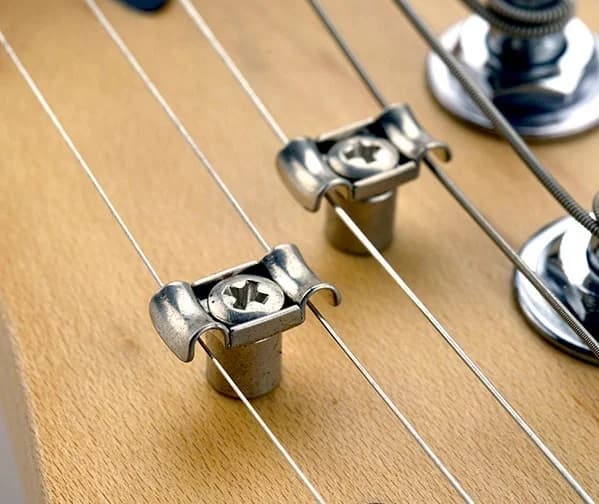
Not every guitar needs string trees. It depends on the headstock shape and tuner height.
String trees
 1 / 2
1 / 2Nut
The nut affects tuning, comfort, and the height of the strings near the first fret. If the nut is poorly cut, you may notice:
- Open chords feel too hard to press
- Notes near the first fret sound sharp
- Strings make pinging noises while tuning
- Buzzing happens close to the nut
- The guitar goes out of tune after bends
Common nut materials include plastic, bone, graphite, and synthetic compounds. For beginners, the most important thing is not the material itself, but whether the nut is properly adjusted.
Neck
Some necks are slim and fast, which many lead players enjoy. Others are thicker and rounder, which can feel stable for rhythm playing, blues, and classic rock.
Fretboard
Common fretboard woods include maple, rosewood, and ebony. They can influence feel, appearance, and subtle aspects of response.
Frets
For example:
- The open low E string is E.
- Press the first fret and it becomes F.
- Press the third fret and it becomes G.
This is why frets are essential for accurate notes, chords, and melodies.
Fret markers
Markers are useful for:
- Finding positions quickly
- Learning scales
- Moving chord shapes
- Playing solos without getting lost
Truss rod
If your guitar has high action, buzzing across several frets, or feels unusually hard to play, a professional setup may help.
Body
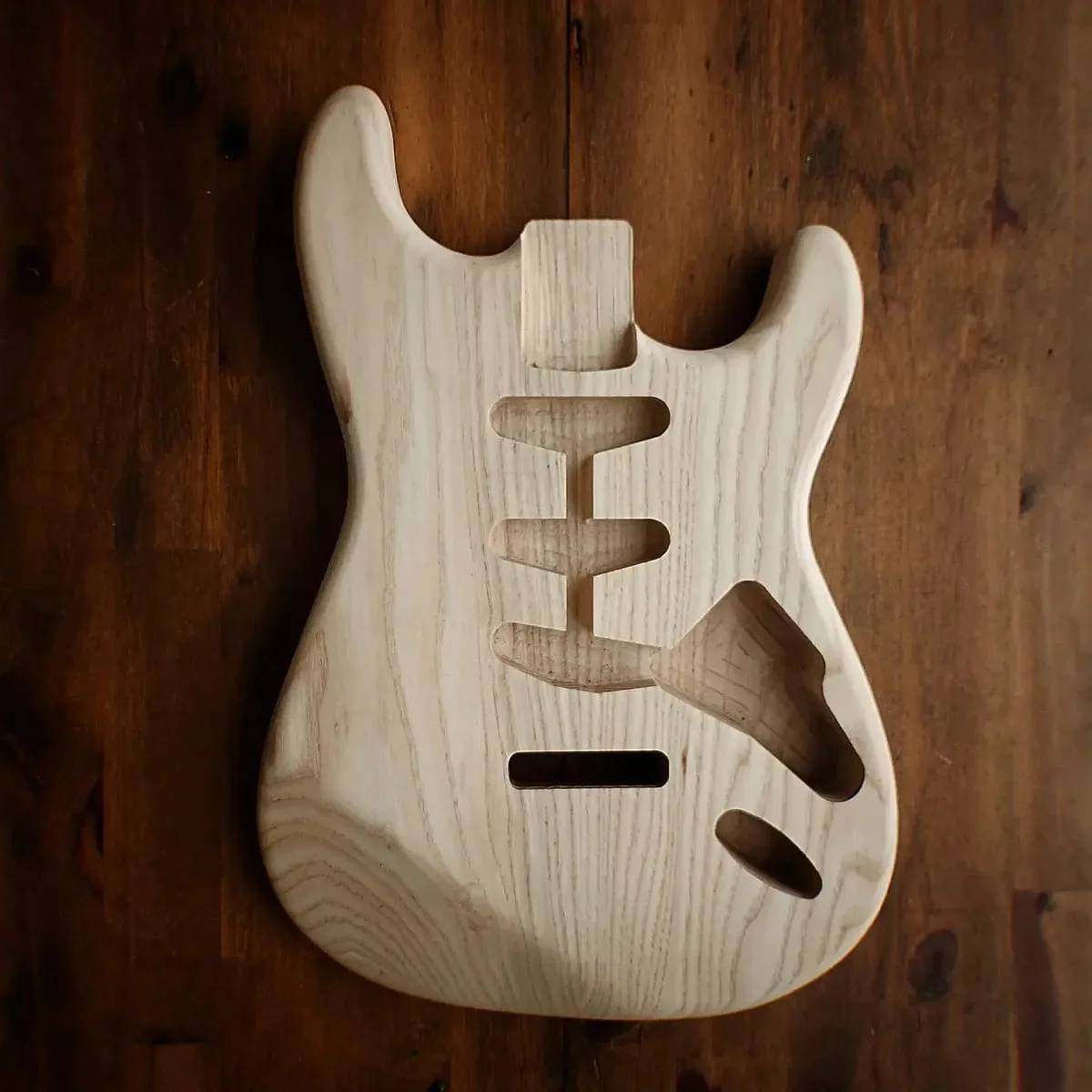
Popular body styles include Strat-style, Tele-style, Les Paul-style, SG-style, and Superstrat designs. The best choice for a beginner is a guitar that feels comfortable both sitting down and standing up.
Body
 1 / 2
1 / 2Pickups
Common pickup types include:
- Single-coil: bright, clear, and crisp. Great for blues, funk, pop, indie, and classic rock.
- Humbucker: thicker, louder, and less noisy. Common in rock, hard rock, metal, and jazz.
- P90: raw, mid-focused, and vintage-sounding. It sits somewhere between a single-coil and a humbucker.
Pickup position matters too:
- Bridge pickup: brighter and more aggressive.
- Neck pickup: warmer, fuller, and smoother.
- Middle pickup: balanced and often used in clean tones.
Pickup selector
Try this simple experiment: play the same riff while switching pickup positions. You will hear how the bridge pickup cuts more, while the neck pickup sounds rounder and softer.
Volume and tone controls
Output jack
If your sound cuts out when you move the cable, the jack may be loose or dirty. This is a common repair and usually simple for a technician.
Bridge
Common bridge types include:
- Fixed bridge: stable, simple, and beginner-friendly.
- Tremolo bridge: allows pitch movement with a tremolo arm.
- Floating bridge: allows more extreme pitch changes but requires more careful setup.
For new players, a fixed bridge or simple tremolo system is often easier to maintain.
Saddles
Good intonation means your guitar sounds in tune not only on open strings, but also higher up the neck.
Strings
Common electric guitar string gauges include 0.009, 0.010, and 0.011 sets. Beginners often prefer 0.009 or 0.010 because they are easier to press and bend.
Replace your strings when you notice:
- Dull tone
- Rust or discoloration
- Rough feel
- Tuning problems
- Frequent breaking
Fresh strings can make a guitar feel and sound much better.
Other parts, such as screws, plates, cavities, and wiring, are also important for maintenance, but you do not need to memorize everything at once.
How this helps your playing
Knowing the parts of a guitar helps in real musical situations:
- If your strings feel too high, you can think about the bridge, nut, or neck setup.
- If the tone is too bright, you can adjust the tone knob or pickup selector.
- If tuning is unstable, you can check strings, tuners, nut, and bridge.
- If the guitar feels uncomfortable, you can consider neck shape, body weight, and string gauge.
A great beginner exercise is to hold your guitar and name each part out loud. Then play the same chord using different pickup positions and listen carefully to how the tone changes.
Final thoughts
Learning the parts of a guitar makes the instrument less mysterious and more enjoyable. You do not need to become a guitar technician, but understanding the basics gives you more control over your sound, comfort, and practice routine.
Start with the essentials: tuners, nut, neck, fretboard, frets, pickups, controls, bridge, and strings. As you keep playing, these names will become part of your everyday musical language.