
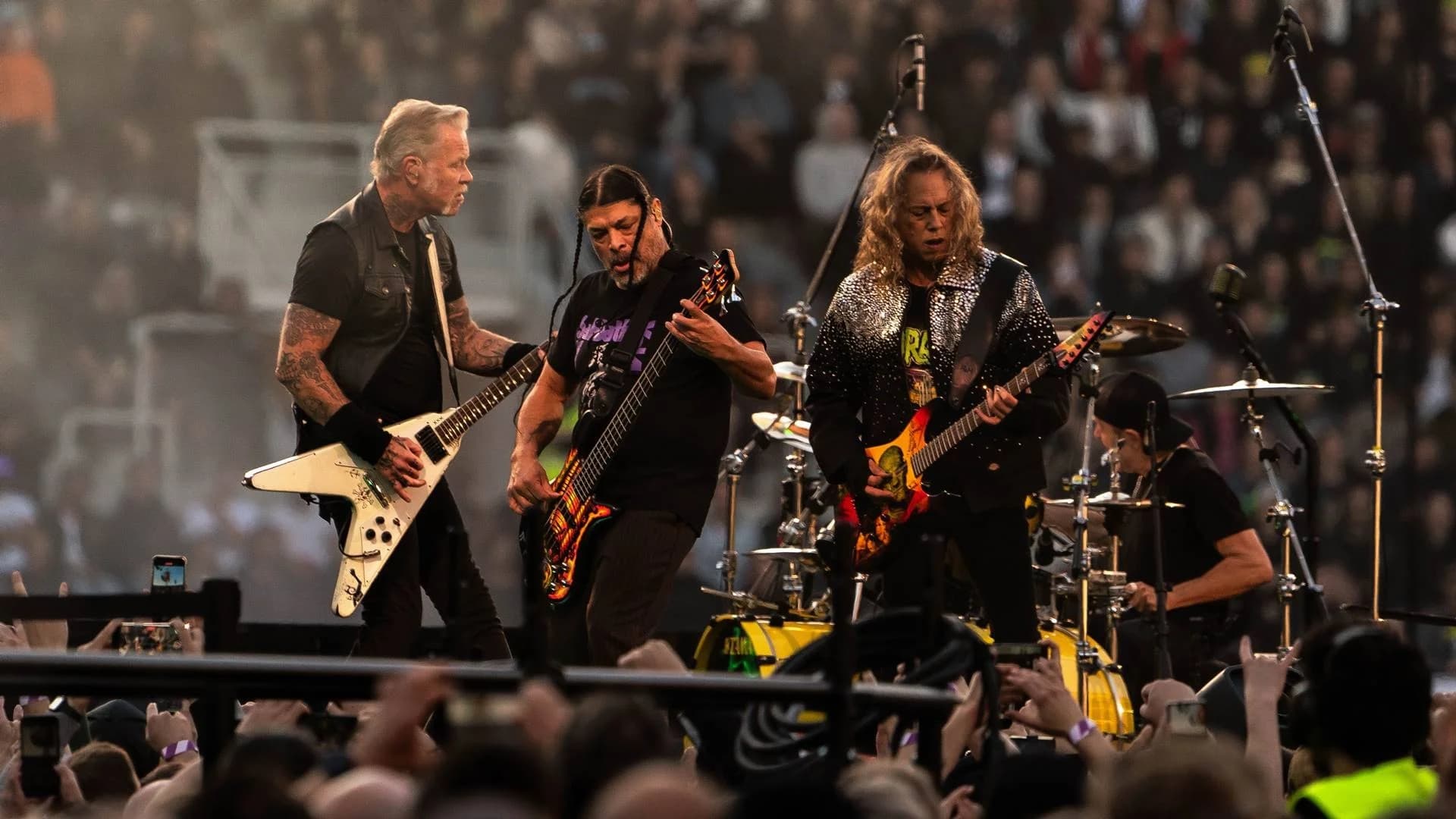
Basic Facts
| Field | Information |
|---|---|
| Name | Metallica |
| Origin | Los Angeles, California, United States |
| Formed | 1981 |
| Status | Active |
| Genre | Heavy Metal, Thrash Metal, Hard Rock |
| Label | Blackened Recordings; historically Megaforce, Elektra, Vertigo and Warner Bros. |
| Current members | James Hetfield, Lars Ulrich, Kirk Hammett, Robert Trujillo |
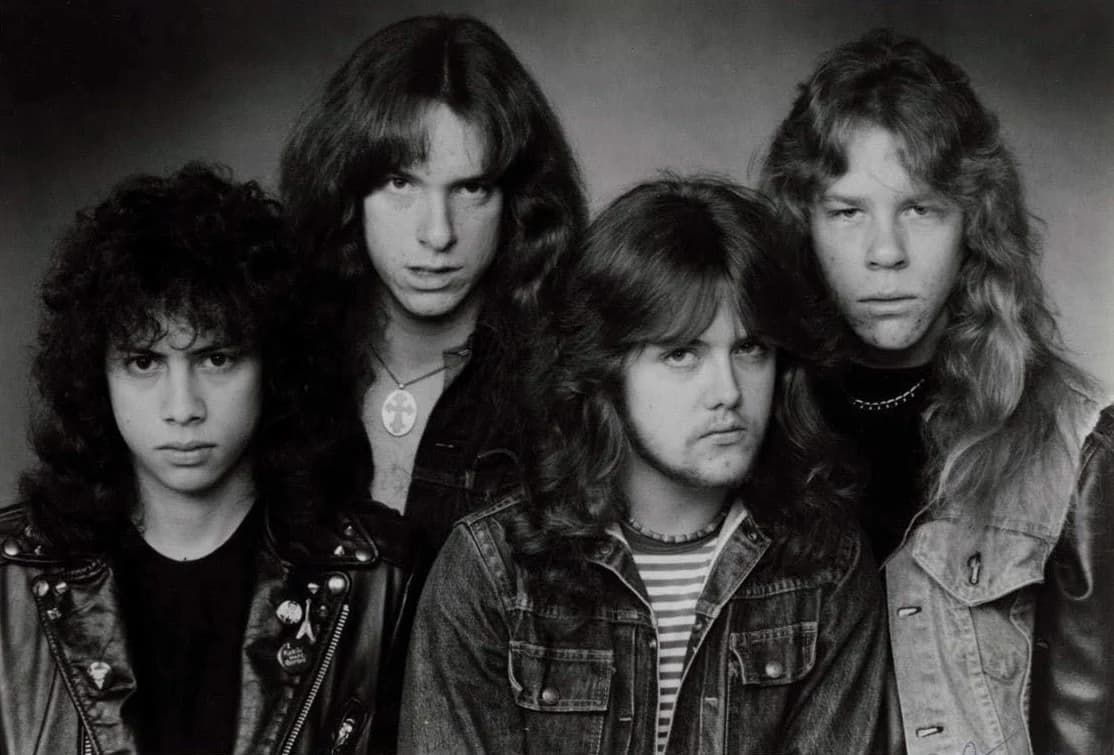
| Classic lineup | James Hetfield, Lars Ulrich, Kirk Hammett, Cliff Burton |
| Official website | metallica.com |
Origin and Formation
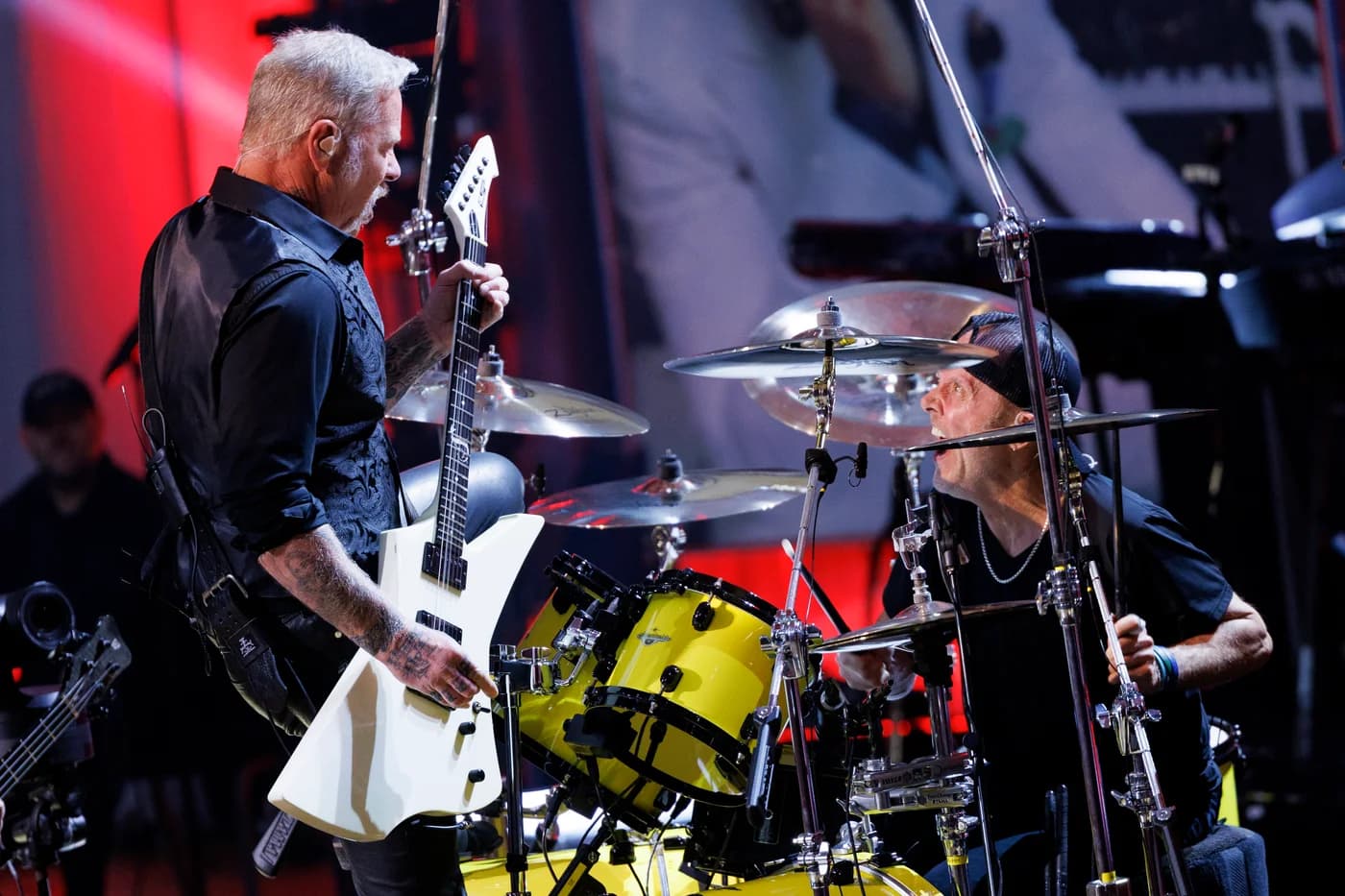
Metallica was officially born in Los Angeles on October 28, 1981, when Danish drummer Lars Ulrich and guitarist/vocalist James Hetfield connected through an advertisement Ulrich had placed in The Recycler. The ad looked for musicians into the New Wave of British Heavy Metal, especially bands such as Diamond Head, Tygers of Pan Tang and Iron Maiden. That reference was a blueprint: from the start, Metallica wanted to make British metal faster, harder and more American in attitude.
Before the band solidified, Hetfield had played in Leather Charm, while Ulrich was an obsessive European metal fan and record collector with unusual drive. Ron McGovney, Hetfield’s friend and housemate, became the first bassist; Dave Mustaine took lead guitar and injected the earliest material with volatile technical aggression. The name came through Ron Quintana, who had considered “MetalMania” and “Metallica” for a fanzine. Ulrich recognized the power of the latter and claimed it for the band.
The first shows took place around the Los Angeles underground, but Metallica did not fit the glam-dominated Sunset Strip. The music was faster, drier, less theatrical and more riff-driven. The 1982 demo No Life 'Til Leather spread through tape trading and gave the band credibility in the Bay Area, where the emerging thrash audience was more receptive.
The decisive change came when Metallica convinced Cliff Burton, then bassist for Trauma, to join. Burton’s condition pushed the band closer to San Francisco, and the move transformed Metallica from a promising Los Angeles outlier into one of the defining creative forces of the Bay Area thrash scene.
Members
James Hetfield is Metallica’s rhythmic backbone. His down-picked right hand became one of heavy metal’s most recognizable sounds: percussive, dry, exact and physically intimidating. As a singer and lyricist, he turned fear, addiction, war, alienation, guilt and endurance into recurring emotional territory.
Lars Ulrich is the catalyst and strategist. His drumming shaped the drama of early Metallica through tempo shifts, abrupt transitions and long-form arrangements, while his vision helped the band navigate labels, media, tours and the ambition to grow beyond the underground.
Kirk Hammett joined in 1983, replacing Dave Mustaine just before Kill 'Em All was recorded. Coming from Exodus and steeped in blues, horror, hard rock and wah-driven phrasing, Hammett added melodic release to the band’s rhythmic violence. Cliff Burton, bassist from 1982 to 1986, expanded Metallica’s harmonic imagination through classical knowledge, progressive instincts and a lead-like approach to bass.
Jason Newsted entered after Burton’s death and became the stage engine of the band’s global expansion, from ...And Justice for All through the Black Album era. Robert Trujillo joined in 2003, bringing fingerstyle power, groove, technical command and a stabilizing physical presence after the turbulence of the St. Anger period.
| Member | Instrument/Role | Period |
|---|---|---|
| James Hetfield | Lead vocals, rhythm guitar | 1981-present |
| Lars Ulrich | Drums | 1981-present |
| Dave Mustaine | Lead guitar, backing vocals | 1981-1983 |
| Ron McGovney | Bass, backing vocals | 1981-1982 |
| Cliff Burton | Bass, backing vocals | 1982-1986 |
| Kirk Hammett | Lead guitar, backing vocals | 1983-present |
| Jason Newsted | Bass, backing vocals | 1986-2001 |
| Robert Trujillo | Bass, backing vocals | 2003-present |
History
Kill 'Em All, released in 1983 on Megaforce Records, captured Metallica in raw ignition. It still carried punk velocity and garage aggression, but the identity was already unmistakable: serrated riffs, gang-shout choruses and a street-level intensity that turned imperfection into power. “Whiplash,” “Seek & Destroy” and “The Four Horsemen” helped define the early language of thrash metal.
Ride the Lightning, released in 1984, was the artistic leap. Recorded in Copenhagen with Flemming Rasmussen, it proved Metallica was not only a fast band. “Fade to Black” introduced vulnerability and acoustic dynamics; “For Whom the Bell Tolls” turned heaviness into solemn drama; “Creeping Death” expanded the band’s epic scale. Master of Puppets, in 1986, became the classic synthesis: long compositions, surgical riffs, mature lyrics and a sense of drama that pushed heavy metal into a new era.
On September 27, 1986, Cliff Burton died in a tour bus accident in Sweden. Jason Newsted was chosen as his replacement, and the band moved forward with ...And Justice for All in 1988. The album was cold, technical, politically outraged and structurally complex, with a mix famous for its nearly inaudible bass. Even so, “One” brought Metallica to MTV, Grammy recognition and a much wider audience.
In 1991, Metallica, widely known as the Black Album, changed the scale of everything. Produced by Bob Rock, it simplified arrangements, enlarged the low end and put massive hooks at the center of the band’s language. “Enter Sandman,” “The Unforgiven,” “Sad But True” and “Nothing Else Matters” turned Metallica into a global arena force.
Load and Reload divided listeners by moving toward hard rock, blues, groove and a less thrash-specific image. Garage Inc. reaffirmed the band’s love of covers, while S&M with the San Francisco Symphony revealed the orchestral dimension already embedded in many Metallica songs. Jason Newsted’s 2001 departure, Hetfield’s rehabilitation and the Some Kind of Monster sessions exposed a band in deep human and creative crisis.
St. Anger documented that crisis with dry sonics, a ringing snare, no guitar solos and a therapeutic aggression. Trujillo joined after the album and helped restore stability. Death Magnetic reconnected Metallica with long-form thrash architecture; Hardwired... to Self-Destruct consolidated the modern era; and 72 Seasons showed a veteran band still committed to riffs, psychological themes and live force.
Metallica’s name emerged when Ron Quintana was considering titles for a metal publication. Lars Ulrich preferred “Metallica” for the band and suggested another name for the magazine.
No Life 'Til Leather spread through tape trading and helped build the band’s reputation before a major contract, in an era when duplicated tapes functioned as heavy metal’s underground network.
Burton’s arrival mattered so much that Metallica accepted a move toward the Bay Area to secure him, reshaping the band’s cultural and musical environment.
The 1991 album brought Metallica to a massive audience and remains a gateway through which many listeners discover the band before exploring its thrash catalog.
Discography
Metallica’s discography maps the evolution of modern heavy music. The first three albums built the grammar of thrash: speed, aggression, technique and epic narrative. ...And Justice for All pushed that language to its architectural extreme, while the Black Album compressed the band’s force into direct, monumental songs.
The Load and Reload era opened the door to hard rock, blues, groove and less orthodox songwriting. St. Anger captured emotional collapse. Death Magnetic and Hardwired... to Self-Destruct returned to longer riff-based structures, and 72 Seasons revisited the band’s core obsessions with age, trauma and resistance.
| Album | Year |
|---|---|
| Kill 'Em All | 1983 |
| Ride the Lightning | 1984 |
| Master of Puppets | 1986 |
| ...And Justice for All | 1988 |
| Metallica | 1991 |
| Load | 1996 |
| Reload | 1997 |
| St. Anger | 2003 |
| Death Magnetic | 2008 |
| Hardwired... to Self-Destruct | 2016 |
| 72 Seasons | 2023 |
Style and Influence
Metallica’s style begins as a fusion of NWOBHM speed, punk aggression, European metal precision and a compositional ambition unusual in the early-1980s American underground. The riff is the core: dry, memorable, modular and built for physical impact. Hetfield often turns rhythm guitar into percussion; Ulrich organizes tension and release; Hammett supplies blues and horror-inflected melody; and the bassists, especially Burton and Trujillo, add harmonic depth and bodily force.
Production choices define the eras as well. The 1980s are sharp, fast and increasingly architectural. In 1991, Bob Rock made the band bigger, heavier and more accessible. The 1990s explored hard rock and blues textures. St. Anger was almost documentary in its rawness. Later Metallica balances thrash memory, modern weight and stadium-scale songwriting.
One of Metallica’s clearest influences, Diamond Head shaped the band’s sense of riff, melodic drive and extended song structure. Metallica’s covers later introduced the British band to new generations.
Motörhead taught that speed, dirt and attitude could still feel like rock and roll. Metallica transformed that urgency into more technical and dramatic compositions.
The Sabbath legacy appears in the weight of the riffs, the dark atmospheres and the sense of threat. Even when Metallica accelerates, that classic heavy gravity remains central.
From Iron Maiden came a taste for long arrangements, dual-guitar drama, epic narratives and historical themes, all radicalized by Metallica into a drier and more aggressive language.
The punk influence appears in concision, direct aggression and horror imagery. Metallica pushed that energy into metal while keeping a collective song instinct.
Dave Mustaine’s departure from Metallica led to Megadeth, whose technical, nervous style helped define thrash as a field of speed, precision and personality.
Legacy
Metallica’s legacy is both artistic and cultural. Artistically, the band turned thrash metal into a language sophisticated enough for long compositions, progressive moods, dense lyrics and cinematic dynamics. Culturally, it carried an extreme form of heavy metal into arenas, radio, awards shows, stadiums and generations of listeners who might never have reached the underground on their own.
The 2009 Rock and Roll Hall of Fame induction confirmed what metal fans already knew: Metallica was not merely a major heavy metal band, but one of the central forces in modern heavy music. Its commercial achievements, massive certifications and decades of global touring coexist with a catalog that still shapes guitarists, drummers, producers and songwriters.
The band’s importance also lies in survival. Cliff Burton’s death, Jason Newsted’s exit, the Load/Reload backlash, the Some Kind of Monster crisis, the polarized reception of St. Anger and the pressure of aging under public scrutiny could have ended many bands. For Metallica, they became chapters in a larger story.
For Luciano Bastos Guitar, Metallica is a school of heavy guitar: right-hand precision, riff construction, harmonic tension, economical hooks, stage command and the courage to expand one’s vocabulary. Few bands have sounded so violent, so popular and so instantly recognizable.