Basic Data
| Field | Information |
|---|---|
| Full name | Fender American Professional II Stratocaster |
| Brand | Fender — Fender Musical Instruments Corporation |
| Category | Solid-body electric guitar |
| Launch year | 1954 as the Fender Stratocaster; the American Professional II series launched in 2020 |
| Status | In production |
| Dimensions | 25.5-inch scale length; 1.685-inch / 42.8 mm nut width |
| Weight | Varies by unit and wood; Fender does not publish a fixed weight for the model |
| Power | Passive; no battery required |
| Price range | New: official U.S. reference around US$1,839.99; used: varies by year, condition, series, and local market |
Overview
The Fender Stratocaster is one of the most important guitars in history. Introduced in 1954 as an evolution of the solid-body electric guitar, it brought three pickups, an ergonomic contoured body, synchronized vibrato, and a double-cutaway design that made the upper frets easier to reach. More than a famous shape, the Stratocaster became a sound language: clear highs, open mids, controlled lows, and a response that reacts strongly to the player's touch.
The American Professional II Stratocaster is Fender's modern interpretation for working musicians. It keeps the essence of the classic instrument while adding practical improvements: a Deep C neck with rolled fingerboard edges, narrow tall frets, V-Mod II pickups, a treble bleed circuit, and a two-point bridge with a cold-rolled steel block. The goal is to preserve the traditional Strat sound while improving playability, stability, and finish.
For players still learning about guitars, the Stratocaster is often a reference point because it appears in so many styles. It can sound clean and bright, percussive in funk, full in blues, cutting in rock, and highly expressive in solos with vibrato arm movement. Its strength is the combination of physical comfort, tonal variety, and dynamic response.
Understanding Stratocaster Models
A common mistake is assuming every Stratocaster is the same. In practice, "Stratocaster" is a family of guitars with different goals. The basic shape may look similar, but each line changes materials, finish, pickups, electronics, bridge type, country of manufacture, and price range.
The Player II is usually the modern entry point into a true Fender. The American Professional II is the balanced professional option. The American Vintage II aims to recreate historical specifications. The American Ultra focuses on modern comfort, quieter electronics, and high performance. HSS versions add a bridge humbucker for players who need more rock weight.
| Model | Purpose | Practical description |
|---|---|---|
| Player II Stratocaster | Offer the Fender experience at a more accessible price | Made in Mexico, with a Modern C neck, 9.5-inch fingerboard radius, Player Series Alnico V pickups, and two-point bridge. A good choice for players who want a real Fender for study, stage, and recording without entering American pricing. |
| American Professional II Stratocaster | Deliver the most balanced professional Stratocaster | Made in the USA, with V-Mod II pickups, Deep C neck, narrow tall frets, treble bleed circuit, and two-point bridge. The safest option for players seeking a modern, reliable, versatile Strat. |
| American Vintage II Stratocaster | Recreate classic periods of Strat history | Uses specifications inspired by historic years, including neck profile, pickups, fingerboard radius, and vintage-style hardware. Best for players seeking a feel and response closer to an old Strat. |
| American Ultra Stratocaster | Prioritize modern comfort and advanced versatility | Usually includes a faster neck, improved upper-fret access, Noiseless pickups, and extra electronic options. Useful for stage and studio players who want low noise without leaving the Strat format. |
| Stratocaster HSS | Combine Strat sounds with more bridge power | Keeps single-coils in the neck and middle, but adds a bridge humbucker. Good for rock, pop rock, and players who need both clean sparkle and fuller rhythm tones. |
| Stratocaster SSS | Preserve the classic Strat sound | Three single-coils and a 5-way switch. This is the traditional configuration, with clear, percussive, expressive tones, though it can be noisier in difficult electrical environments. |
| Custom Shop Stratocaster | Offer premium construction and special specifications | High-end production with relic finishes, special colors, selected woods, and custom details. Intended for collectors, professionals, and players seeking a very specific experience. |
| Squier Stratocaster | Bring the Strat shape closer to beginners | Fender's more affordable brand. Good for starting out, practicing, and understanding the Strat concept, though construction, pickups, and hardware vary widely by series. |
In practice, the question should not be only "which Stratocaster is best?" but "which Strat fits my level, budget, and style?". For learning, a Squier or Player II may be enough. For broad professional use, the American Professional II is highly balanced. For maximum tradition, the American Vintage II makes more sense. For modern features, an Ultra or HSS model may be better.
Construction and Design
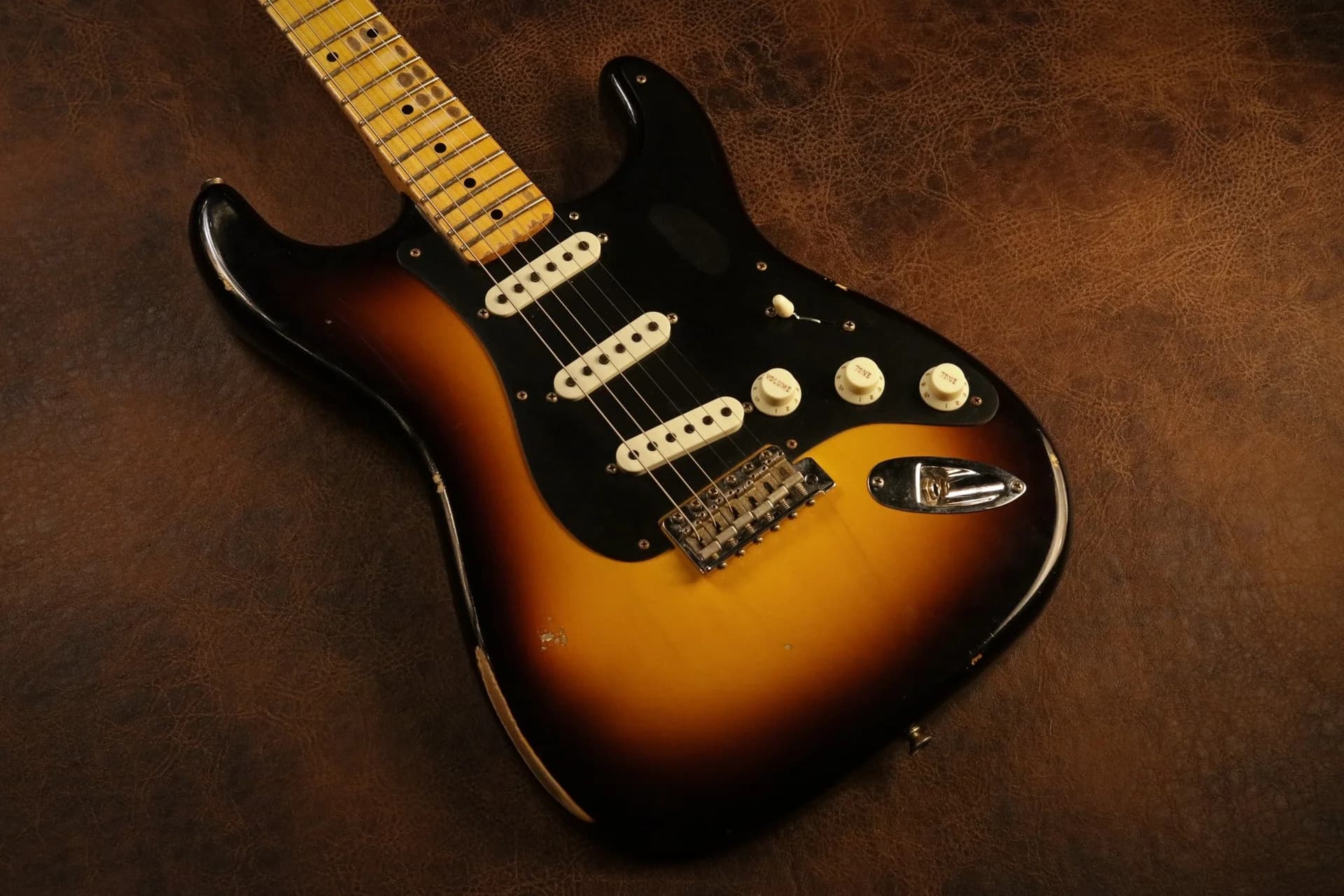
The American Professional II Stratocaster uses an alder body, a bolt-on maple neck, and either a maple or rosewood fingerboard, depending on the version. The contoured body is one of the main reasons for the Strat's success: the guitar sits well against the player, feels comfortable sitting or standing, and usually causes less fatigue than heavier guitars with sharp edges.
The 25.5-inch scale gives the Stratocaster slightly higher string tension than short-scale guitars such as the Les Paul. This helps create attack, brightness, and definition, but it can also make bends feel a little firmer for some players. The American Professional II Deep C neck has a modern feel without being too thin, and the rolled fingerboard edges make the instrument more comfortable.
The layout is classic: three single-coil pickups, a 5-way selector, one volume, and two tone controls. The two-point bridge with vibrato arm allows subtle pitch movement, moderate dips, and expressive effects. It is not designed for extreme abuse like a Floyd Rose, but it works very well for the traditional Strat vocabulary.
Technical Specifications
| Specification | Fender American Professional II Stratocaster |
|---|---|
| Body | Alder |
| Body shape | Stratocaster solid-body with ergonomic contours |
| Body finish | Gloss Urethane |
| Neck | Maple |
| Neck construction | Bolt-on, 4-bolt |
| Neck profile | Deep C |
| Fingerboard | Maple or rosewood, depending on version |
| Fingerboard radius | 9.5 inches / 241 mm |
| Scale length | 25.5 inches / 648 mm |
| Frets | 22 narrow tall |
| Nut | Bone |
| Nut width | 1.685 inches / 42.8 mm |
| Neck pickup | V-Mod II Single-Coil Strat |
| Middle pickup | V-Mod II Single-Coil Strat |
| Bridge pickup | V-Mod II Single-Coil Strat |
| Pickup configuration | SSS |
| Controls | Master Volume, Tone 1 for neck/middle, Tone 2 for bridge |
| Selector | 5-position blade |
| Extra feature | Push-push tone control adds the neck pickup in specific combinations |
| Bridge | 2-Point Synchronized Tremolo with bent steel saddles and cold-rolled steel block |
| Tuners | Fender Standard Cast/Sealed Staggered |
| Hardware | Nickel/Chrome |
| Factory strings | Fender USA 250L Nickel Plated Steel .009–.042 |
| Case | Deluxe Molded Case |
Fender Stratocaster
 1 / 4
Features and Functionality
The heart of the Stratocaster is its three single-coil pickups and 5-way switch. The bridge pickup delivers attack, brightness, and cut. The middle pickup is balanced and useful for clean rhythm parts. The neck pickup is fuller, sweeter, and strongly associated with blues, soul, and singing lead lines. Positions 2 and 4 combine pickups and produce the percussive sound many players immediately associate with a Strat.
On the American Professional II, V-Mod II pickups aim for a refined response, with clarity and articulation while keeping the Strat's characteristic brightness. The treble bleed circuit helps retain high end when the guitar volume is rolled down, which is useful for controlling gain from the instrument without making the tone dull.
The push-push tone control adds the neck pickup to some combinations, expanding the sound options. It allows tones that a traditional 5-position Strat does not offer by default, such as bridge and neck together. For beginners, think of it simply as an extra pickup-mixing option.
Sound and Performance
The Fender Stratocaster sounds open, clear, and highly dependent on the player's hands. It responds strongly to picking force, guitar volume, and pickup choice. Clean, it delivers brightness, definition, and a percussive attack that works very well for funk, pop, soul, and blues rhythm parts.
With overdrive, the Stratocaster tends to sound more articulate and less compressed than guitars with humbuckers. This is excellent for blues and classic rock because each note remains clear. On the other hand, players looking for very heavy rhythm tones may miss body from the bridge pickup on a traditional SSS Strat. In that case, an HSS version may be the better solution.
The synchronized vibrato is an important part of the instrument's personality. It allows subtle pitch movement, more expressive phrases, and classic blues and rock effects. When properly set up, the American Professional II two-point bridge offers good stability, but it still requires attention to fresh strings, nut condition, lubrication, and overall setup.
Artists Who Use It
Jimi Hendrix is one of the most important Stratocaster players in history. His relationship with the model showed that the guitar could go far beyond clean tones: controlled feedback, fuzz, wah-wah, vibrato arm use, open chords, and explosive solos became part of modern rock vocabulary. The image of Hendrix with a Stratocaster, especially in late-1960s performances, became a symbol of the electric guitar as an instrument of radical expression.
Stevie Ray Vaughan brought the Stratocaster to the center of Texas blues-rock. His Number One guitar, associated with heavy strings, powerful attack, and loud amplifiers, produced a large, intense, highly dynamic sound. SRV proves that a Strat does not have to sound fragile: in the right hands, it can be aggressive, full, and deeply expressive.
Eric Clapton adopted the Stratocaster in a defining way during his solo career, especially with instruments such as Blackie. His use helped establish a more vocal and controlled side of the Strat, with blues, classic rock, and ballad tones. Clapton's signature models also became important for combining the Strat look with more modern electronics, including noiseless pickups and mid boost.
Buddy Holly was one of the first artists to make the Stratocaster visible to a broad rock and roll audience. His use of the model in the 1950s helped connect the guitar to a modern, youthful, direct image. With clean sounds, strong rhythms, and stage presence, Holly opened the door for generations of Strat players.
David Gilmour shows how the Stratocaster can sound wide, melodic, and emotional. His Black Strat became an essential part of Pink Floyd's sound, with long solos, precise bends, delays, modulation, and clean or overdriven tones that always remain controlled. Gilmour represents the atmospheric side of the Strat: less immediate aggression, more expression, space, and sustain built through touch and effects.
Who It Is For
The Fender Stratocaster makes sense for guitarists seeking versatility, comfort, and clear tones. It works very well for blues, classic rock, pop, funk, soul, worship, indie, and recordings where the guitar needs definition. It is also excellent for learners because it clearly reveals the difference between pickups, picking dynamics, volume, and tone settings.
It is not the best choice for everyone. Players seeking very heavy, compressed, low-end-rich tones may prefer a humbucker guitar, such as a Les Paul, or an HSS Strat. Players bothered by single-coil noise should consider Noiseless versions, proper shielding, or a noise gate. The Stratocaster is extremely versatile, but a traditional SSS version does not fully replace a high-gain guitar.
Pros and Cons
| Pros | Cons |
|---|---|
| Clear, articulate, highly recognizable tone. | Single-coil pickups can produce noise, especially with high gain or poor electrical grounding. |
| Comfortable body contours help during long practice, rehearsal, or live sessions. | The SSS bridge pickup can sound thin for heavy rhythm parts. |
| 5-way switching offers a wide range of clean and lightly driven sounds. | The vibrato bridge needs careful setup for good tuning stability. |
| 25.5-inch scale brings definition, brightness, and attack. | Bends can feel firmer for players coming from short-scale guitars. |
| Huge availability of parts, upgrades, models, and price ranges. | The large number of versions can confuse beginners during purchase. |
Final Verdict
The Fender Stratocaster remains one of the world's most relevant guitars because it combines ergonomics, clarity, and expression in a way that is difficult to replace. The American Professional II Stratocaster is an excellent modern reading of that concept: it keeps the open, musical Strat sound while adding real improvements in playability, stability, and versatility.
It is especially worthwhile for players who want a professional guitar for many styles, with a strong sonic identity and excellent touch response. It is not the best option for players who only want extreme heaviness or absolute silence with high gain, but for blues, rock, pop, funk, and recording, the Stratocaster remains one of the smartest and most inspiring choices in electric guitar.