
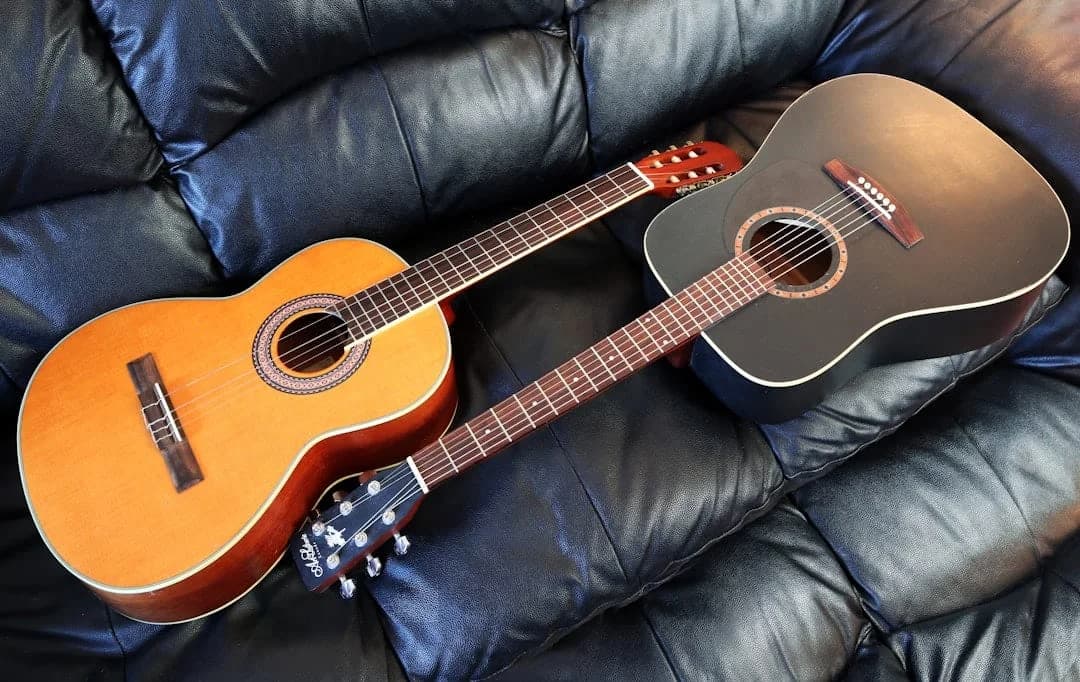
Electric or acoustic guitar: what is the real difference?
The best choice is not the one that looks more impressive or the one your friend recommends. The best choice is the one that matches the music you love, the way you plan to practice, and the sound that makes you want to pick up the instrument every day.
Let’s break down the main differences so you can make a smart, confident decision.
How each guitar produces sound
Acoustic guitar
An acoustic guitar creates volume naturally through its hollow body. When you strike the strings, the vibration travels through the bridge and soundboard, and the body amplifies the sound.
That means you can simply tune up and play. No cable, no amp, no software, no setup.
Acoustic guitar is especially practical for:
- singing and accompanying yourself;
- learning open chords and strumming patterns;
- playing folk, pop, country, worship, singer-songwriter music, and unplugged arrangements;
- practicing anywhere without extra equipment;
- developing rhythm and dynamic control.
Acoustic tone is direct, woody, and responsive. You hear every detail of your attack, which can be both motivating and honest.
Electric guitar
An electric guitar uses pickups to capture string vibration and send it as an electrical signal to an amplifier, audio interface, pedalboard, or digital modeler.
Because the signal can be shaped, the electric guitar offers a huge range of tones:
- clean and glassy;
- warm and jazzy;
- crunchy and bluesy;
- distorted and heavy;
- ambient with delay and reverb;
- funky with compression and wah.
Electric guitar is a strong choice if you want to play riffs, solos, bends, effects-driven parts, or modern guitar tones.
Which one is easier for beginners?
Many beginners assume acoustic guitar is the automatic starting point, but that is not always true.
Acoustic guitar can feel tougher on the fingertips, especially steel-string models with high action. However, it is simpler in another way: you pick it up and play instantly.
So the answer depends on what kind of ease matters most to you.
Choose electric if you want:
- lighter string tension;
- easier bends and solos;
- headphone practice options;
- a wide range of tones;
- rock, blues, metal, funk, or modern pop sounds.
Choose acoustic if you want:
- a simple grab-and-play instrument;
- natural sound without gear;
- easy vocal accompaniment;
- portability;
- a strong foundation in rhythm and chords.
The easiest guitar is the one you actually enjoy practicing.
Musical styles: follow the sound you love
Your favorite music is the best clue.
Electric guitar is ideal for
- rock;
- blues;
- metal;
- funk;
- jazz fusion;
- indie and alternative music;
- pop with processed tones;
- expressive lead guitar.
If you want to play riffs inspired by Jimi Hendrix, Metallica, John Mayer, Queen, Nile Rodgers, Red Hot Chili Peppers, or Arctic Monkeys, electric guitar will probably feel more natural.
Acoustic guitar is ideal for
- folk;
- singer-songwriter music;
- country;
- worship;
- acoustic pop;
- unplugged rock arrangements;
- fingerstyle;
- campfire-style songs and vocal accompaniment.
If you want to play songs by Ed Sheeran, Taylor Swift, Bob Dylan, Jack Johnson, Johnny Cash, or acoustic versions of your favorite pop songs, acoustic guitar is a practical and inspiring choice.
Cost: what do you need to buy?
Budget matters, especially when you are starting out.
Basic acoustic setup
To start with acoustic guitar, you usually need:
- the guitar;
- a tuner;
- picks;
- a gig bag or case;
- spare strings;
- a capo, if you want to change keys easily.
That is a relatively simple setup. A good beginner acoustic can take you far if it is comfortable and properly adjusted.
Basic electric setup
To start with electric guitar, you may need:
- the guitar;
- an amplifier, audio interface, or digital practice amp;
- an instrument cable;
- picks;
- a strap;
- a tuner;
- headphones, if you want silent practice.
Electric guitar can be affordable, but the total setup often costs more because of the extra equipment. The good news is that modern practice amps and digital tools make it easier than ever to get great tones at home.
A useful rule: do not spend your entire budget on the guitar and ignore setup quality. A well-adjusted beginner instrument is much better than an expensive guitar that is uncomfortable to play.
Volume and practice environment
Where and when you practice should influence your decision.
Acoustic guitar has natural volume. That is great when you want an immediate sound, but it can be a challenge if you live in an apartment, practice late at night, or share space with others.
Electric guitar can be very quiet when used with headphones. If you have an amp with a headphone output, an audio interface, or a modeler, you can practice riffs and solos without disturbing anyone.
However, acoustic guitar wins in simplicity. It is always ready. You can leave it on a stand, pick it up for five minutes, and play a quick chord progression. That convenience often leads to more consistent practice.
Ask yourself:
- Do I need to practice quietly?
- Do I enjoy adjusting tones and settings?
- Will I be more consistent with a grab-and-play instrument?
- Do I have space for an amp or recording setup?
Playability and feel
Playability is the physical experience of playing the instrument. It includes neck shape, string height, string tension, body size, weight, and overall comfort.
Electric guitars often offer:
- lighter strings;
- lower action;
- easier access to higher frets;
- comfortable bends and vibrato;
- many body shapes and neck profiles.
Acoustic guitars often offer:
- stronger string tension;
- more dynamic response;
- a fuller body sound;
- a more percussive feel;
- excellent feedback for rhythm practice.
If possible, try both before buying. Play simple chords like Em, G, C, and D. Then play a few single notes. Notice which instrument makes you relax, listen, and keep going.
Technique: what will each guitar teach you?
Both instruments can build strong musicianship, but they emphasize different skills.
Acoustic guitar develops:
- clean chord changes;
- rhythmic consistency;
- strumming control;
- finger strength;
- dynamics;
- fingerpicking patterns.
Electric guitar develops:
- muting and noise control;
- bends and vibrato;
- lead phrasing;
- alternate picking;
- slides, hammer-ons, and pull-offs;
- tone shaping with gear and touch.
Neither path is more serious or more correct. A complete guitarist can learn from both worlds. The important thing is to practice with focus and listen carefully to your sound.
Common myths
A few common myths can confuse beginners. Here is what is actually true.
| Myth | Truth |
|---|---|
| You must learn acoustic before electric | You do not have to. If your goal is electric guitar, you can start directly on electric. Chords, scales, rhythm, and music theory transfer between both instruments. |
| Electric guitar is only for rock | Electric guitar appears in jazz, funk, soul, pop, R&B, worship, reggae, country, and many other styles. |
| Acoustic guitar is always cheaper | Not always. Some acoustic guitars are expensive, and some electric beginner setups are very affordable. Compare the full setup, not just the instrument price. |
| Acoustic guitar is limited | A skilled acoustic player can perform rhythm, melody, percussion, fingerstyle arrangements, and complex harmonies. Acoustic guitar is simple in setup, not limited in expression. |
Quick decision guide
- love riffs, solos, and effects;
- want to play rock, blues, metal, funk, or modern pop;
- need headphone practice;
- enjoy experimenting with tone;
- prefer lighter strings and easier bends.
- want to sing and play at the same time;
- like folk, country, worship, acoustic pop, or singer-songwriter music;
- want a simple instrument with no extra gear;
- value portability;
- enjoy natural tone and rhythmic playing.
Beginner buying checklist
Before buying, check these details:
- Comfort: Does the neck feel good in your hand?
- Action: Are the strings too high?
- Tuning stability: Does the guitar stay in tune?
- Fret condition: Do notes buzz or die out?
- Weight and body size: Can you play comfortably sitting and standing?
- Sound: Does the tone inspire you?
- Setup: Can the store adjust the instrument before you take it home?
If you are unsure, ask a teacher or experienced player to help. A second opinion can save you from buying an instrument that looks good but feels frustrating.
A simple 30-day practice plan
No matter which guitar you choose, consistency matters more than perfection.
| Week | Focus | Activities |
|---|---|---|
| Week 1 | Posture and basic chords | Learn Em, G, C, and D. Practice slow chord changes. Use a metronome at a comfortable tempo. Play 10 to 15 minutes each day. |
| Week 2 | Rhythm and one easy song | Practice one basic 4/4 strumming pattern. Choose a song with three or four chords. Record yourself once to hear your progress. |
| Week 3 | Technique focus | On electric, practice alternate picking and muting. On acoustic, practice strumming dynamics and simple fingerpicking. Keep your hands relaxed. |
| Week 4 | Play a full song | Play one complete song from beginning to end. Clean up buzzing chords. Try playing along with the original recording. |
Small daily sessions create real progress. Ten focused minutes every day will beat one long practice session once a week.
Final answer: which guitar should you choose?
Choose electric guitar if the sounds in your head involve riffs, solos, distortion, effects, and headphone practice. Choose acoustic guitar if you want simplicity, natural tone, portability, and easy vocal accompaniment.
The right guitar is the one that makes you want to play more. If it inspires you to practice, learn songs, and keep improving, it is the right starting point.