Basic Data
| Field | Information |
|---|---|
| Name | Linkin Park |
| Origin | Agoura Hills, California, United States |
| Formation | 1996 |
| Status | Active |
| Genre | Nu metal, alternative rock, rap rock, electronic rock |
| Label | Warner Records, Machine Shop Recordings |
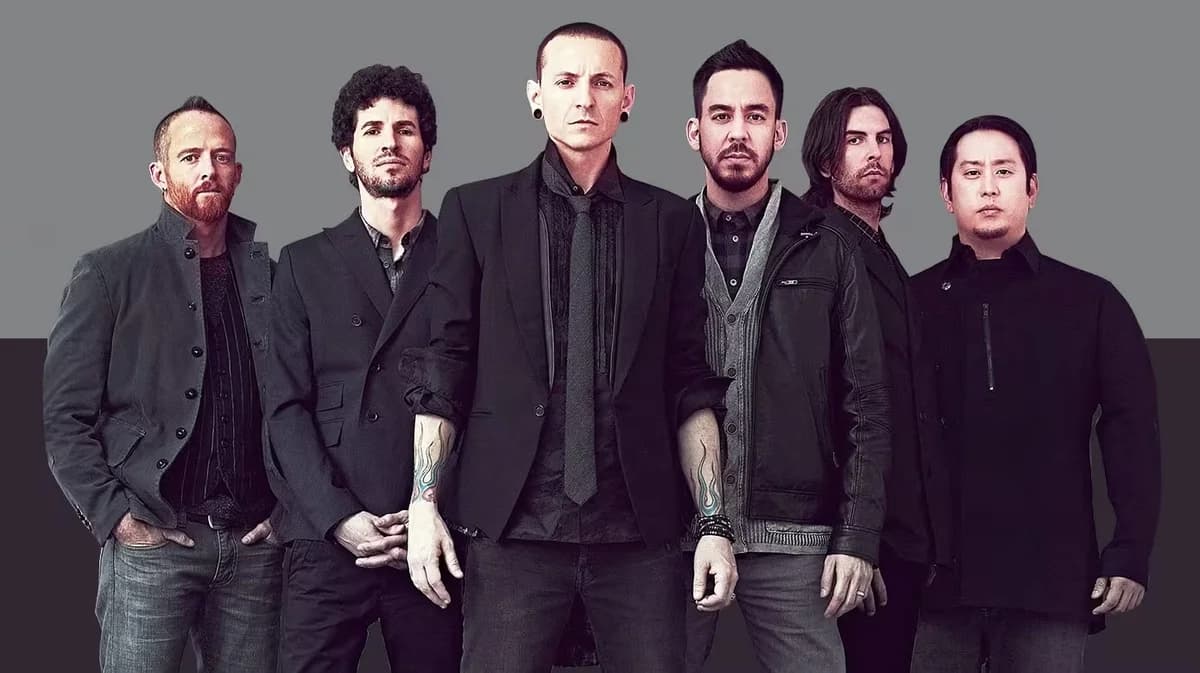
| Classic line-up | Chester Bennington, Mike Shinoda, Brad Delson, Dave “Phoenix” Farrell, Joe Hahn, Rob Bourdon |
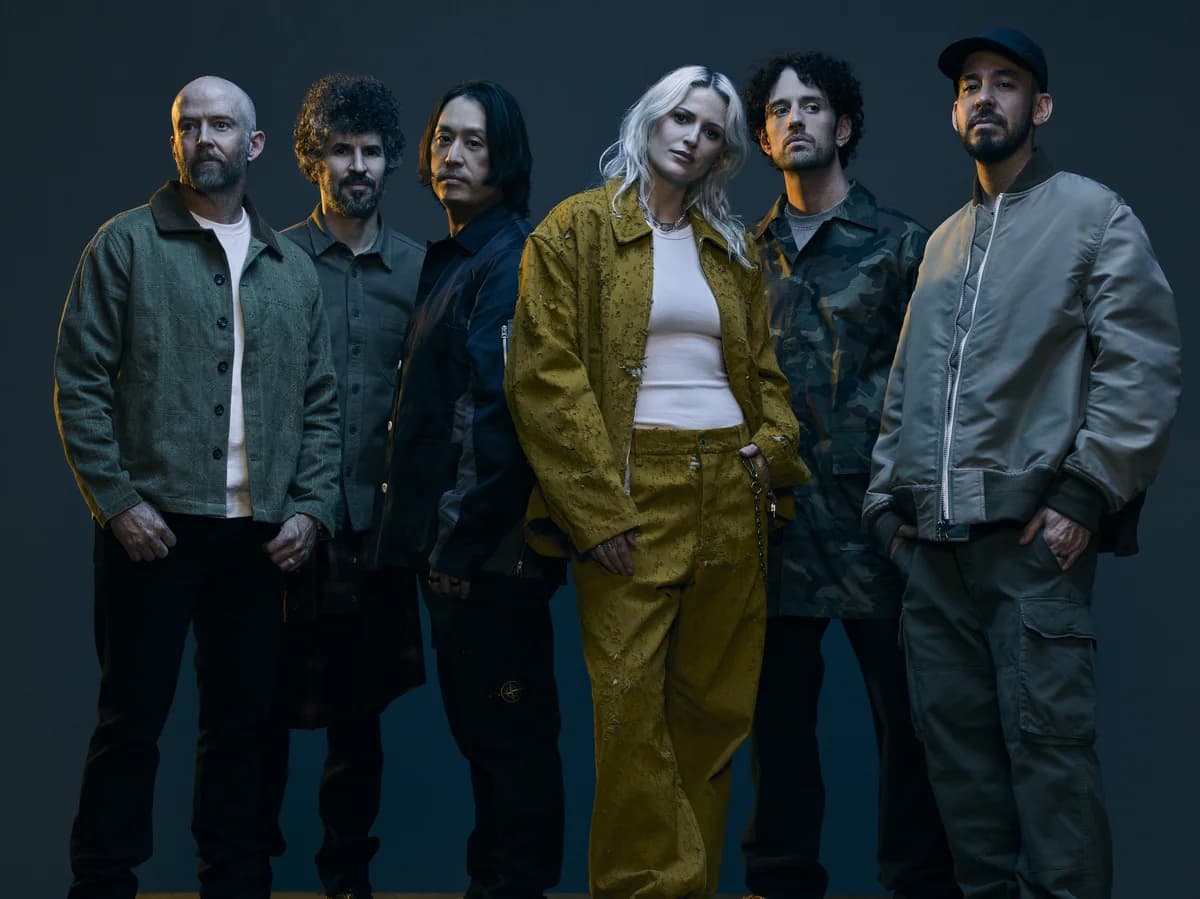
| Current line-up | Mike Shinoda, Brad Delson, Dave “Phoenix” Farrell, Joe Hahn, Emily Armstrong, Colin Brittain |
Origin and Formation
Linkin Park began in Agoura Hills, California, in 1996, before the world knew that name. The earliest version of the group was Xero, built around Mike Shinoda, Brad Delson and Rob Bourdon. Their idea was not to choose between heavy guitar, hip-hop rhythm, electronic programming, melody and visual culture. From the beginning, the project treated genre as raw material rather than a border.
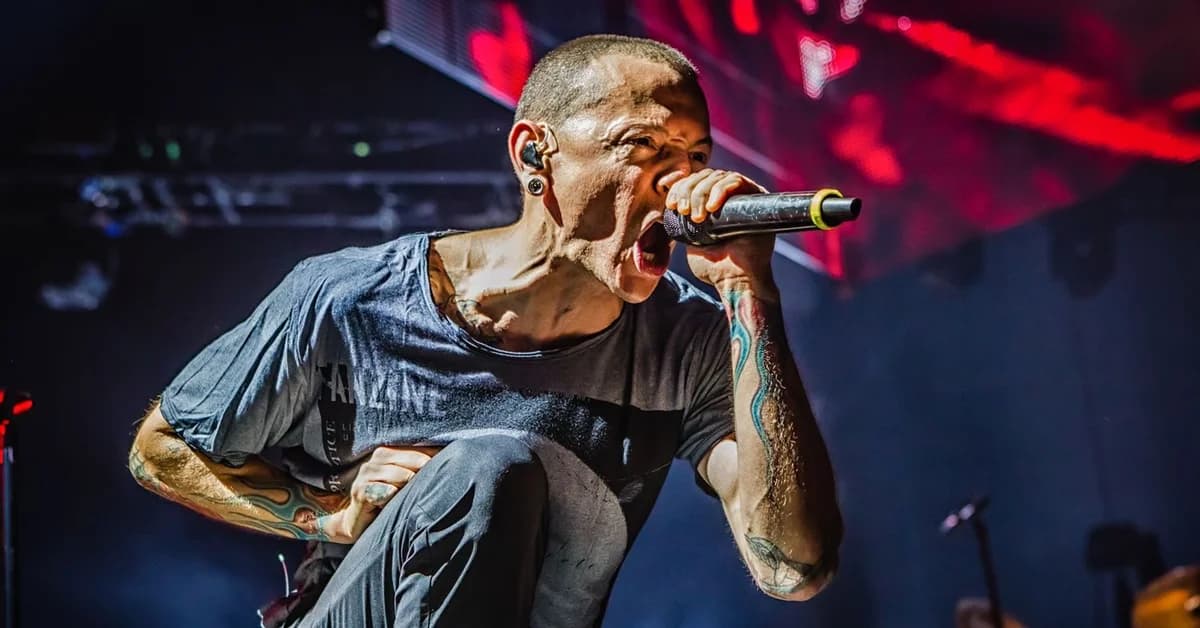
The first demos featured vocalist Mark Wakefield, but the decisive turn came when Chester Bennington joined in 1999 after his time with Grey Daze. Mike Shinoda already gave the group architecture: rap phrasing, production, visual direction and harmonic design. Chester gave it the emotional voltage. His voice could move from intimate melody to full-throated rupture without sounding theatrical; it sounded lived-in, disciplined and dangerously human.
Before signing with Warner, the band used the name Hybrid Theory, a phrase that perfectly described its musical premise. The final name, Linkin Park, came from Lincoln Park in Santa Monica, altered partly because of web-domain practicality. That small detail matters: Linkin Park understood earlier than most rock bands of its generation that music, design, technology, online community and identity could operate as one system.
By the time Hybrid Theory arrived in 2000, the classic line-up — Bennington, Shinoda, Delson, Farrell, Hahn and Bourdon — had already found a remarkable internal balance. Riffs were concise, drums were direct, samples were cinematic, Shinoda’s rap created tension, and Chester’s choruses delivered release. The band did not sell cartoon rebellion. It turned anxiety, guilt, pressure, anger and isolation into songs that could live in bedrooms, arenas, video games, radio and headphones.
Members
Linkin Park’s strength has always been collective design rather than isolated virtuosity. Mike Shinoda is the conceptual center: rapper, singer, producer, instrumentalist and visual thinker. Chester Bennington was the emotional amplifier, the singer who made the architecture feel physical. Brad Delson shaped a guitar language based on restraint: short riffs, low tunings, thick textures and impact instead of ornamental soloing.
Dave “Phoenix” Farrell anchored the low end and helped keep dense arrangements coherent. Rob Bourdon’s drumming was precise, economical and powerful, bridging rock impact with hip-hop-informed groove. Joe Hahn gave the band much more than scratches: he brought samples, transitions, visual direction and a cinematic sense of texture that made Linkin Park instantly recognizable.
After Chester’s death in 2017, the band entered a long and unresolved pause. The 2024 return introduced Emily Armstrong and Colin Brittain. Emily was not positioned as a replacement copy of Chester; she became a new voice for a new chapter. Colin brought the perspective of a modern drummer, songwriter and producer. Brad Delson remained a creative and studio member, while Alex Feder took over live guitar duties in the new touring era.
| Member | Role | Period |
|---|---|---|
| Mike Shinoda | Vocals, rap, guitar, keyboards, production | 1996-present |
| Chester Bennington | Vocals | 1999-2017 |
| Brad Delson | Guitar, production | 1996-present |
| Dave “Phoenix” Farrell | Bass | 1996-1998, 2000-present |
| Joe Hahn | Turntables, samples, programming, visual direction | 1996-present |
| Rob Bourdon | Drums | 1996-2024 |
| Mark Wakefield | Vocals | 1996-1998 |
| Emily Armstrong | Vocals | 2024-present |
| Colin Brittain | Drums, production | 2024-present |
History
Hybrid Theory, released in 2000, turned Linkin Park into a global phenomenon. Nu metal was already visible in mainstream culture, but Linkin Park sounded different. While many bands leaned on aggression alone, Linkin Park put vulnerability at the center. “One Step Closer,” “Crawling,” “Papercut” and “In the End” built a precise grammar: tense verses, electronic cuts, Shinoda’s rap, Bennington’s explosions and choruses designed for mass catharsis.
Meteora, released in 2003, refined the formula with even more cinematic production. “Somewhere I Belong,” “Faint,” “Numb,” “Breaking the Habit” and “From the Inside” became pillars of the band’s identity. “Numb” remains definitive because it compresses external pressure and internal collapse into one of the simplest and most universal melodies in modern rock. Collision Course with Jay-Z in 2004 expanded the band’s crossover legitimacy and proved how naturally its structures could interact with hip-hop.
Minutes to Midnight in 2007 was the first major break from the original mold. With Rick Rubin and Mike Shinoda producing, the band moved toward alternative rock, broader arrangements and a less compressed sound. A Thousand Suns in 2010 went further: conceptual, electronic, political and fragmented, built around fear, war, technology and collapse. Living Things in 2012 tried to reconnect the band’s different eras, while The Hunting Party in 2014 brought back sharper guitars and a more aggressive band feel.
One More Light, released in 2017, moved into a brighter pop vocabulary and divided part of the fan base. After Chester Bennington died on July 20, 2017, the album’s emotional center changed. The title track became an unintended memorial: quiet, caring and devastating. For years the band’s future remained uncertain, while the members processed grief, worked on other projects and protected the meaning of what they had built.
The return came in 2024 with From Zero. The title points back to Xero, the band’s earliest name, while also suggesting a restart after loss. Emily Armstrong and Colin Brittain entered not as a nostalgic device but as creative collaborators. “The Emptiness Machine” introduced the new phase with weight, melody and a vocal dialogue between Mike and Emily. The result was not a museum version of Linkin Park. It was a band choosing movement over paralysis.
Before its final name, the band passed through Xero and Hybrid Theory. The latter remained as the title of the debut album and became the clearest statement of the group’s hybrid language.
Hybrid Theory became one of the defining debut albums of the 21st century, pushed by singles that crossed radio, MTV, video games and early digital culture.
The band’s new era began publicly on September 5, 2024, with Emily Armstrong and Colin Brittain joining the creative and live framework of Linkin Park.
Discography
Linkin Park’s discography is a story of identity and reinvention. Hybrid Theory and Meteora established the core: low-tuned guitars, electronic programming, rap, scratches, melodic choruses and lyrics of psychological conflict. Minutes to Midnight widened the frame; A Thousand Suns turned the band into a conceptual laboratory; Living Things sought synthesis; The Hunting Party restored aggression; One More Light exposed a more pop and fragile side; From Zero opened a second life without reducing the band to nostalgia.
| Album | Year | Note |
|---|---|---|
| Hybrid Theory | 2000 | The debut that took emotional nu metal worldwide |
| Meteora | 2003 | The classic formula refined into cinematic precision |
| Minutes to Midnight | 2007 | A decisive shift toward broader alternative rock |
| A Thousand Suns | 2010 | A conceptual, electronic and political work |
| Living Things | 2012 | A synthesis of weight, electronics, rap and melody |
| The Hunting Party | 2014 | A return to sharper guitars and live-band aggression |
| One More Light | 2017 | A pop-oriented, emotionally exposed chapter |
| From Zero | 2024 | A restart with Emily Armstrong and Colin Brittain |
Style and Influence
Linkin Park is often labeled nu metal, but the term captures only part of the phenomenon. The band belonged to the same broad era as Korn, Limp Bizkit, Deftones and Papa Roach, yet its identity depended less on raw aggression than on contrast. Heavy guitars arrived in compact blocks; rap created rhythmic narrative; electronics shaped atmosphere; Joe Hahn’s scratches added movement; and Chester’s choruses opened a nearly pop emotional space without softening the conflict.
Brad Delson’s guitar approach is architectural. Many parts are simple, low and massive, designed to leave room for voice, beats and electronic detail. Rob Bourdon’s drumming connected rock impact to hip-hop groove. Shinoda’s production sense tied composition, design and community into one language. Across the catalogue, the band moved from immediate impact to conceptual experimentation, pop exposure and, later, a renewed heavy identity with From Zero.
Korn helped legitimize low-tuned guitars and lyrics of psychological pain in mainstream heavy music. Linkin Park inherited part of that environment but moved it toward tighter melody, electronics and radio-scale hooks.
Deftones proved that heaviness and atmosphere could coexist. Linkin Park took a more accessible path, but the relationship between texture, tension and emotional release belongs to a shared alternative lineage.
The industrial influence appears in the band’s use of noise, programming, electronic layers and machine-like drama. Linkin Park treated production as emotional architecture, not mere decoration.
Rap phrasing, beat construction and sonic collage connect Linkin Park to a hip-hop tradition in which voice and production operate together. Mike Shinoda brought that logic into a rock-band framework.
Among later bands, Bring Me the Horizon shows how heaviness, electronics, pop choruses and emotional vulnerability became a central grammar of modern alternative heavy music after Linkin Park.
Even in a more pop territory, arena-scale production, electronic percussion and emotional directness echo paths that Linkin Park helped normalize in mainstream rock.
Legacy
Linkin Park’s legacy is enormous because the band changed how a generation understood heavy rock. For millions of listeners, Hybrid Theory and Meteora were gateways not only to distorted guitars, but also to hip-hop, electronics, digital production and emotionally direct songwriting. The group proved that songs about anxiety, inadequacy, guilt and isolation could be massive without losing the feeling of confession.
The commercial record is undeniable: tens of millions of albums sold, major awards, chart-topping releases and videos that became global events across MTV and the early internet. But the deeper impact is linguistic. After Linkin Park, it became more natural for rock bands to include DJs, rappers, programming, pop hooks, digital aesthetics and online community as core elements rather than accessories.
Chester Bennington remains one of the defining voices of contemporary rock. His death in 2017 gave new weight to the catalogue, but it also revealed the depth of the connection between the band and its audience. The grief around Chester was not only nostalgia; it was recognition that his voice helped people name emotions they could not easily explain.
The From Zero era adds another layer to the legacy: the possibility of continuing without pretending nothing happened. With Emily Armstrong and Colin Brittain, Linkin Park entered a delicate territory between memory and renewal. The band does not replace Chester. It carries his absence while trying to write new pages.
For Luciano Bastos Guitar, Linkin Park stands as one of the essential rock bands of the post-2000 era. It may not descend directly from blues rock, classic hard rock or traditional heavy metal, but it expanded heavy guitar language into a world of samples, beats, digital collage and open vulnerability. Its permanent place in rock history is secured by that transformation.