
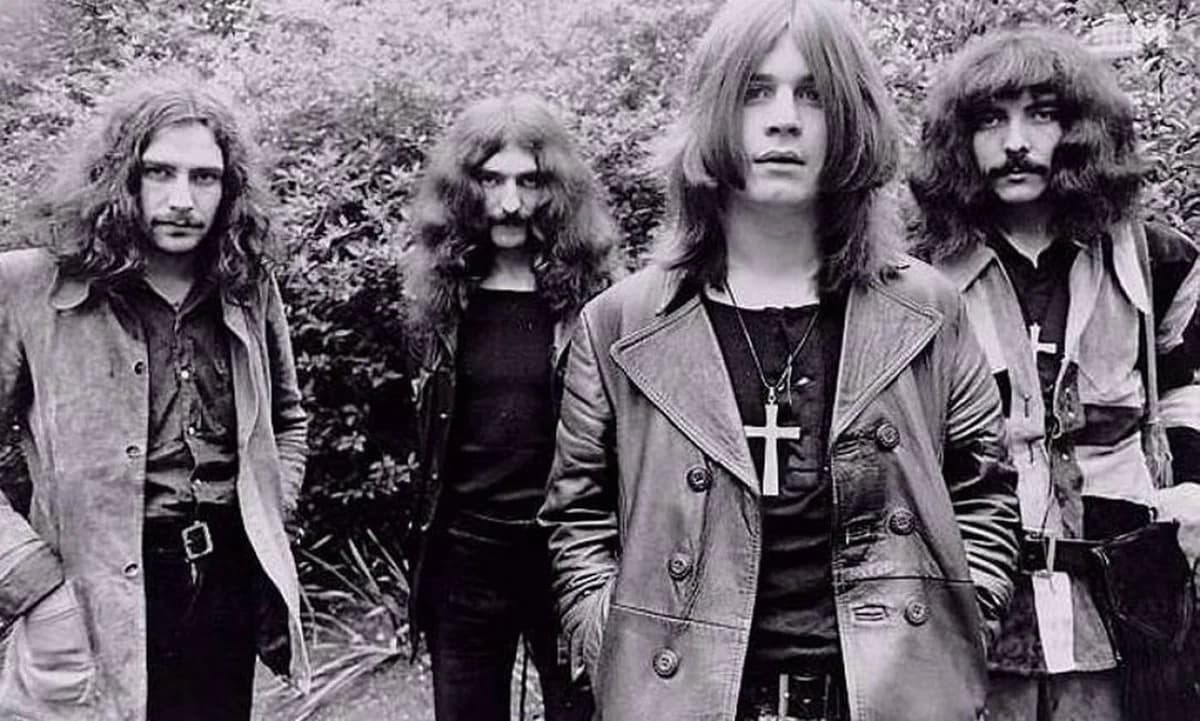
Basic Data
| Field | Information |
|---|---|
| Name | Black Sabbath |
| Origin | Birmingham, England |
| Formed | 1968 |
| End | 2025, after the final Back to the Beginning reunion in Birmingham |
| Genre | Heavy Metal, Hard Rock, Doom Metal, Blues Rock |
| Label | Vertigo, Warner Bros., I.R.S., Sanctuary, Universal |
| Classic lineup | Ozzy Osbourne, Tony Iommi, Geezer Butler and Bill Ward |
| Official website | blacksabbath.com |
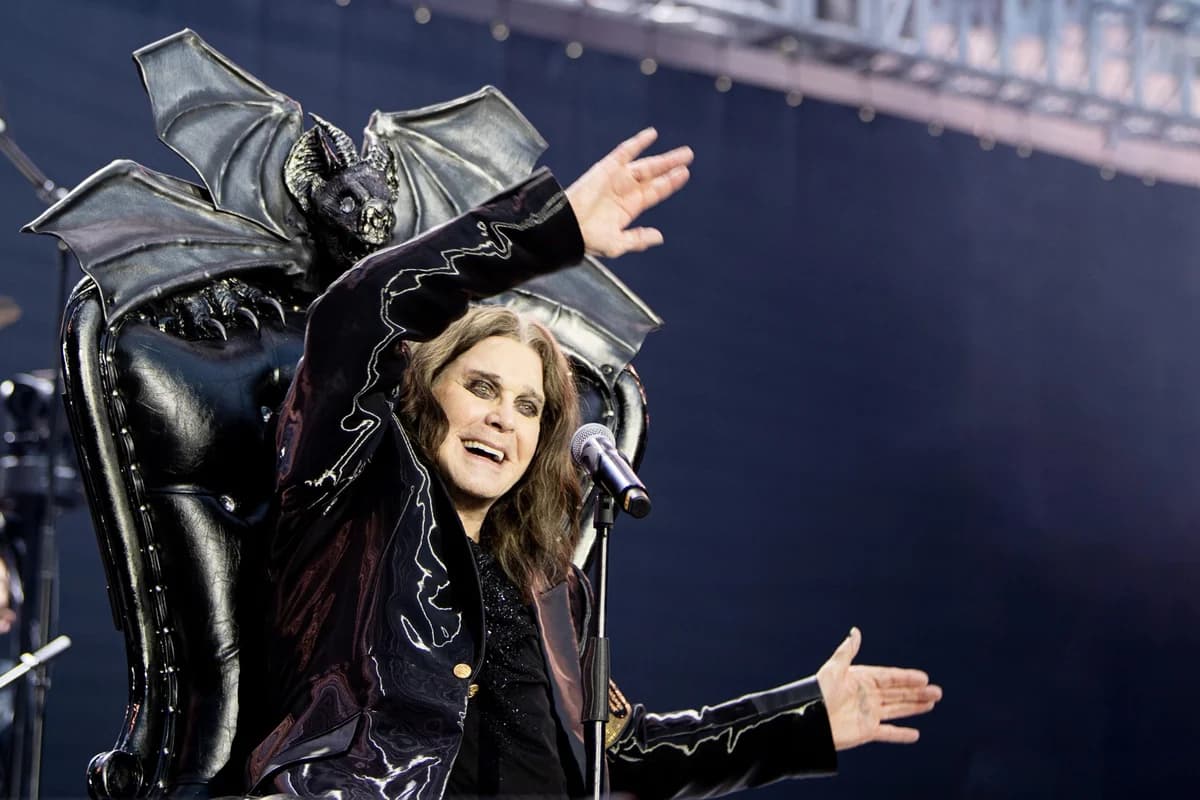
Origin and Formation
Black Sabbath formed in Birmingham, England, in 1968, far from the idealized colors of late-sixties psychedelia. Birmingham was an industrial city of factories, working-class neighborhoods and hard surfaces, and that environment mattered. Tony Iommi and Bill Ward had played in Mythology; Ozzy Osbourne and Geezer Butler had played together in Rare Breed. When the four musicians came together, their earliest idea still belonged to heavy blues rock, not yet to the musical language later called heavy metal.
Before becoming Black Sabbath, the band used the names Polka Tulk Blues Band, then Polka Tulk, and later Earth. The final name arrived after the musicians discovered that another group was already using Earth and after Butler recognized the emotional power of horror cinema. If audiences paid to be frightened by films, the band wondered, why could a rock song not produce a similar physical reaction?
The defining breakthrough was the song “Black Sabbath.” Iommi built the riff around a dark, threatening interval; Butler wrote lyrics filled with fear, occult imagery and nightmare; Ward’s jazz-informed drumming kept the performance unstable and human; and Ozzy’s voice sounded less like a narrator than someone trapped inside the vision. In that moment, heavy rock gained a new vocabulary.
Iommi’s industrial accident also shaped the sound. After losing the tips of two fingers on his fretting hand, he adapted with homemade thimbles, lighter strings and lower tunings. What began as survival became identity: thicker tone, darker resonance, and a physical heaviness that would define Sabbath and generations of metal guitarists.
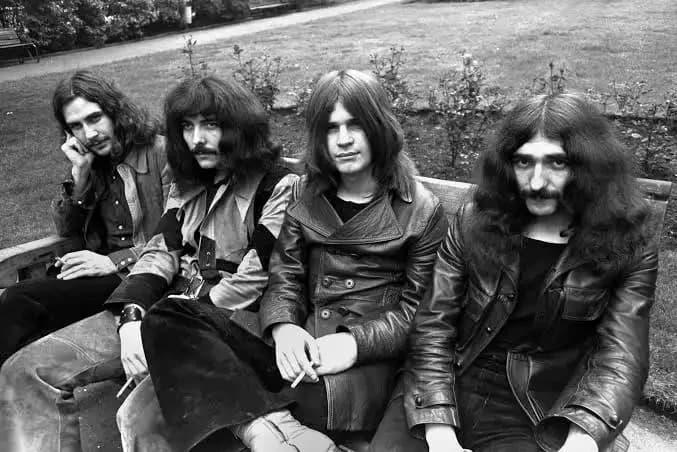
Members
The classic Black Sabbath lineup is one of rock’s most important chemical reactions. Tony Iommi was the architect of the riff: economical, ominous, massive, able to build entire songs from short phrases that sounded inevitable. Geezer Butler was not merely a bassist; his lines were melodic, restless and essential to the band’s lyrical atmosphere. Bill Ward brought turbulent, organic, jazz-laced drumming. Ozzy Osbourne gave the weight a human face: instinctive rather than technical, but with a melodic identity inseparable from the band.
After Ozzy’s departure, Ronnie James Dio opened a second crucial era. With Dio, Sabbath became more epic, dramatic and mythic, especially on Heaven and Hell and Mob Rules. The shift was not just vocal; the arrangements became sharper, the lyrics more grandly symbolic, and the stage presence completely different.
The later history of Black Sabbath was unstable but significant. Ian Gillan recorded the raw and strange Born Again. Glenn Hughes appeared on Seventh Star, originally closer to an Iommi solo project. Tony Martin carried a long late-eighties and nineties period with The Eternal Idol, Headless Cross and Tyr. Yet the cultural image of the band remained permanently tied to the founding quartet.
| Member | Role | Main period |
|---|---|---|
| Tony Iommi | Guitar | 1968-2017; 2025 |
| Ozzy Osbourne | Vocals | 1968-1979; 1985; 1997-2006; 2011-2017; 2025 |
| Geezer Butler | Bass, lyrics | 1968-1984; 1987; 1990-1994; 1997-2006; 2011-2017; 2025 |
| Bill Ward | Drums | 1968-1980; 1983; 1985; 1994; 1997-2006; 2025 |
| Ronnie James Dio | Vocals | 1979-1982; 1991-1992; 2006 |
| Vinny Appice | Drums | 1980-1982; 1991-1992; 1998; 2006 |
| Ian Gillan | Vocals | 1982-1984 |
| Tony Martin | Vocals | 1987-1991; 1993-1997 |
| Geoff Nicholls | Keyboards | 1979-2004 |
History
Released in 1970, Black Sabbath arrived like an anomaly. Where much rock pursued blues virtuosity, psychedelic color or arena uplift, Sabbath offered slowness, dread and almost cinematic threat. “Black Sabbath,” “The Wizard,” “N.I.B.” and “Warning” still carried blues roots, but they pushed that language into darker territory.
Paranoid, released the same year, made the revolution undeniable. With “War Pigs,” “Paranoid,” “Iron Man,” “Electric Funeral,” “Hand of Doom” and “Fairies Wear Boots,” the album practically drew the map for heavy metal. “Paranoid,” written quickly to complete the record, became the band’s biggest single; “War Pigs” turned anti-war protest into apocalyptic ritual; “Iron Man” became one of the most recognizable guitar statements in rock.
Master of Reality deepened the weight. Lower tunings and monolithic riffs anticipated doom, stoner and sludge metal. “Sweet Leaf,” “Children of the Grave” and “Into the Void” show a band that could sound primitive and sophisticated at once. Vol. 4 expanded the emotional range with “Changes,” “Supernaut” and “Snowblind,” while Sabbath Bloody Sabbath added progressive ambition without losing density.
The classic era began to fray in the second half of the seventies. Sabotage still had major force, especially “Symptom of the Universe,” but Technical Ecstasy and Never Say Die! reflected internal conflict, business pressure, drugs and exhaustion. Ozzy left in 1979, and many might have expected the story to end. Instead, Sabbath returned with Ronnie James Dio and Heaven and Hell, one of heavy rock’s great second acts.
The eighties and nineties brought constant lineup changes and questions of identity, yet Iommi remained the central axis. With Dio came Mob Rules and later Dehumanizer. With Ian Gillan came Born Again. With Tony Martin came a less commercially celebrated but strongly cult-followed period of dark traditional metal. Black Sabbath became both a classic lineup and an aesthetic lineage sustained by Iommi’s guitar.
The original lineup’s reunion era restored Sabbath’s status as a living monument. 13, released in 2013, brought Ozzy, Iommi and Butler back to the studio with producer Rick Rubin and drummer Brad Wilk. The End tour closed the regular career in Birmingham in 2017. In 2025, Back to the Beginning at Villa Park reunited the original quartet onstage for the first time in two decades for a symbolic farewell in their hometown.
Tony Iommi lost parts of two fingertips before the band broke through. His adaptation with prosthetic tips, lighter strings and lower tunings directly helped shape Black Sabbath’s heaviness.
The change from Earth to Black Sabbath reflected the band’s realization that fear could be an artistic experience. They turned the emotional impact of horror films into riffs.
“Paranoid” was written quickly during sessions for the second album, yet it became the band’s best-known song and a gateway for generations of listeners.
Discography
Black Sabbath’s discography can be read as three major stories. The first is the Ozzy era of the seventies, when the band created metal’s grammar through blues, darkness, social criticism and an unprecedented sense of atmosphere. The second is the Dio era and its extensions, where the sound became more epic and technically polished. The third is survival and reinvention through different singers before the final return of the original identity.
The essential albums are concentrated between 1970 and 1975, but Heaven and Hell is indispensable for understanding the band’s ability to be reborn. 13 has historical value as the final studio chapter for Ozzy, Iommi and Butler.
| Album | Year | Note |
|---|---|---|
| Black Sabbath | 1970 | Dark, foundational debut |
| Paranoid | 1970 | Popular and creative consolidation |
| Master of Reality | 1971 | A foundation for doom and stoner metal |
| Vol. 4 | 1972 | Sonic and emotional expansion |
| Sabbath Bloody Sabbath | 1973 | Progressive ambition and classic riffs |
| Sabotage | 1975 | Tension, weight and complexity |
| Technical Ecstasy | 1976 | Experimental and uneven phase |
| Never Say Die! | 1978 | Ozzy’s final album of the classic era |
| Heaven and Hell | 1980 | Rebirth with Ronnie James Dio |
| Mob Rules | 1981 | Heavy, epic continuation of the Dio era |
| Born Again | 1983 | Raw and controversial Ian Gillan period |
| Seventh Star | 1986 | Glenn Hughes era, closer to Iommi hard rock |
| The Eternal Idol | 1987 | Beginning of the Tony Martin era |
| Headless Cross | 1989 | Dark theatrical metal |
| Tyr | 1990 | Epic and conceptual approach |
| Dehumanizer | 1992 | Dio returns with modern heaviness |
| Cross Purposes | 1994 | Tony Martin returns |
| Forbidden | 1995 | Final album of the Martin era |
| 13 | 2013 | Ozzy, Iommi and Butler return to the studio |
Style and Influence
Black Sabbath’s style was born from the collision of British blues, industrial heaviness, horror imagination and a rhythmic looseness later metal bands often flattened. Iommi’s riffs function like characters: short, low, repeated with minimal variation and loaded with tension. Butler filled space without fighting the guitar, often creating counter-movements that increased the drama. Ward’s drumming breathed, broke and pushed the music away from rigidity. Ozzy sang like a human siren, making even the darkest riffs memorable.
The production of the early albums preserves room sound, bleed, roughness and imperfection. That rawness is part of the impact. Unlike much virtuosic hard rock, Sabbath did not need speed to sound heavy. Weight came from tuning, space, repetition, contrast and the feeling that a riff could carry an entire world.
Across the catalog, the band expanded that language. Sabbath Bloody Sabbath flirted with progressive arrangement; Heaven and Hell moved toward heroic metal; the Tony Martin years explored dark theatricality and traditional metal forms. Still, the matrix remained: the riff as the moral center of the music.
The model of a heavy instrumental trio, improvisation and amplified blues helped shape Sabbath’s earliest vocabulary before the band found its darker identity.
The British blues environment of the 1960s provided the phrasing and repertoire base that Iommi and his bandmates transformed into something slower, heavier and more threatening.
The Beatles’ influence appears less in heaviness than in memorable songwriting. Ozzy had a direct melodic instinct that made even Sabbath’s darkest riffs surprisingly singable.
The visual and emotional impact of horror cinema was decisive for the name, atmosphere and lyrical imagination of the band. Sabbath translated fear and suspense into music.
Metallica inherited Sabbath’s centrality of the riff and the idea that heaviness could carry narrative, drama and social criticism. Much of thrash architecture depends on that inheritance.
Doom metal carried forward the monumental slowness, harmonic gravity and ritual feeling established by “Black Sabbath” and “Into the Void.”
The Sabbath legacy appears in asymmetric riffs, dragging weight and the combination of dark psychedelia with emotional tension that shaped parts of grunge and alternative metal.
Legacy
Black Sabbath’s legacy is so broad that the phrase “influential band” feels insufficient. The group did not merely participate in the birth of heavy metal; it supplied the genre’s essential vocabulary: low riffs, dark atmosphere, apocalyptic imagery, social criticism, horror, slow weight and a physical relationship between guitar and anxiety.
The band was inducted into the Rock and Roll Hall of Fame, became a cultural emblem of Birmingham and crossed generations of listeners, players and subgenres. Doom metal, stoner rock, sludge, thrash, grunge, death metal and alternative metal all carry some trace of Sabbath, whether in sound, attitude or permission to turn discomfort into art.
The final Back to the Beginning show in 2025 had the force of a public ritual: the return to the city of origin, the presence of the original lineup and the participation of artists who exist, directly or indirectly, because Black Sabbath opened the door. Few endings have been so consistent with a band’s story.
At the center stands Tony Iommi, perhaps the greatest riff architect in metal history, but Black Sabbath was never only a guitar. It was Geezer’s restless bass, Ward’s unpredictable drums, Ozzy’s ghostly voice and, in another era, Dio’s epic command. The result remains dangerous even after decades of cultural absorption. Sabbath still haunts because its heaviness was not a pose: it was environment, biography, city, body and fate turned into sound.