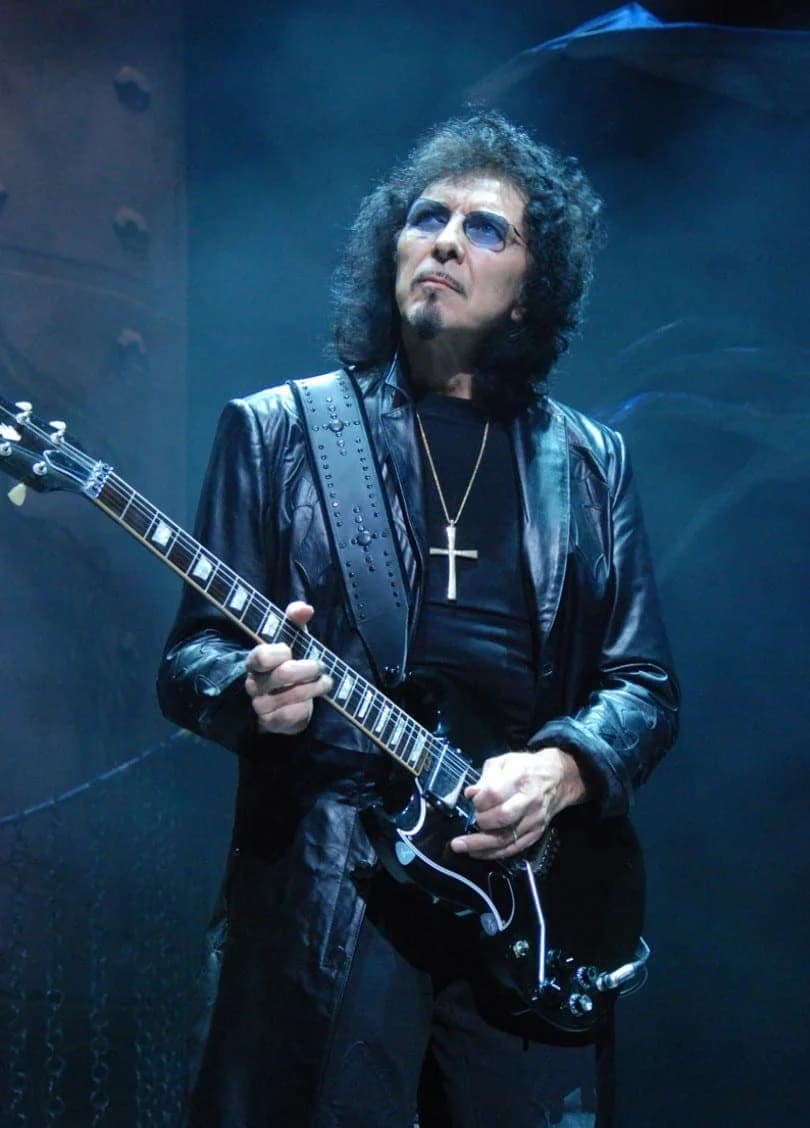
Basic Facts
| Field | Information |
|---|---|
| Full name | Anthony Frank Iommi Jr. |
| Stage name | Tony Iommi |
| Date of birth | February 19, 1948 |
| Place of birth | Handsworth, Birmingham, England |
| Nationality | British and Italian |
| Main instrument | Guitar |
| Career start | 1960s |
| Bands and projects | Mythology, Earth, Black Sabbath, Heaven & Hell, Jethro Tull, solo career, WhoCares |
| Artistic status | Active as guitarist, songwriter and collaborator |
| Musical signature | Dark riffs, lower tunings, weight, melodic economy and an architectural sense of composition |
Introduction
Few guitarists changed the vocabulary of rock as profoundly as Tony Iommi. If Chuck Berry helped establish the riff as the engine of rock and roll, Iommi dragged that idea into darker, denser and more threatening territory. His playing is not built on excess notes, but on intention, mass and rhythmic design.
As co-founder, principal guitarist, central composer and the only constant member of Black Sabbath across decades, Iommi was the structural force behind one of the most influential bands in modern music. His sound helped define the language of heavy metal, from doom to stoner, and his blend of physical limitation, technical invention and musical imagination made him one of guitar’s most singular figures.
Early Steps
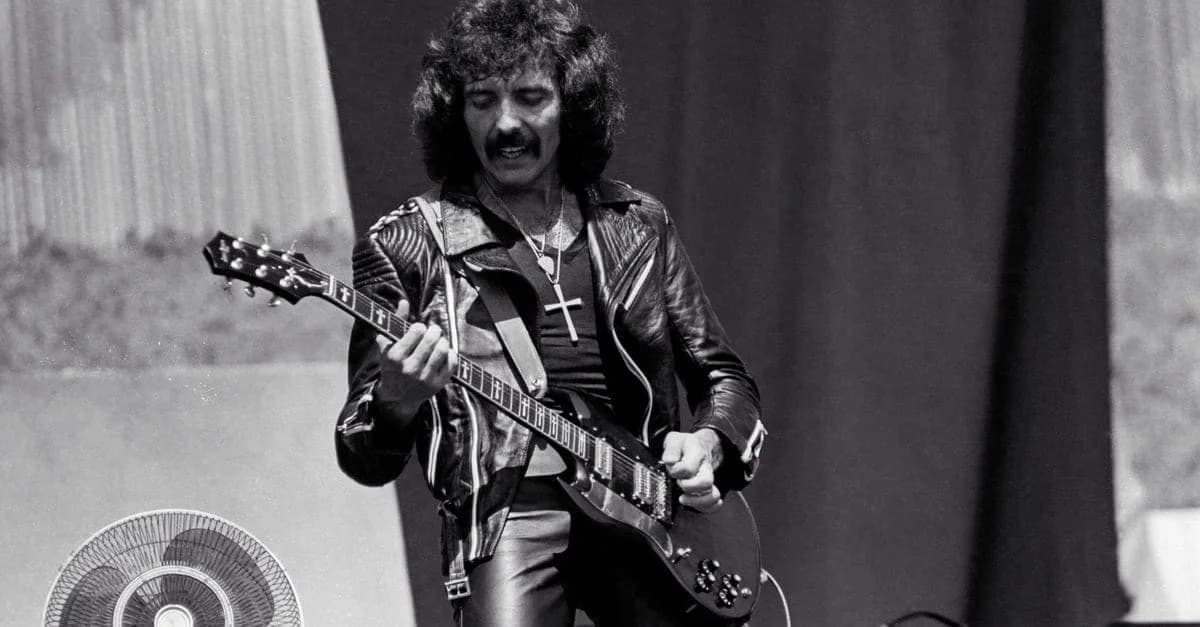
Tony Iommi grew up in Birmingham, an industrial city whose hardness seems to echo in the sound he would later create. As a child he was first drawn to drums, but he eventually moved to guitar and began shaping his identity through British instrumental music, blues and pre-metal rock.
The decisive event of his life came while he was still a teenager: in a factory accident he lost the tips of two fingers on the hand he used to fret the strings. Instead of ending his path, the accident became the turning point of his art. To keep playing, Iommi began modifying the guitar, the string action, the tuning, the string gauges and even the mechanics of his own hand.
Before Black Sabbath took shape, he played in local acts such as The Rockin’ Chevrolets and Mythology. He also spent a brief period with Jethro Tull in 1968, even appearing with the band on The Rolling Stones Rock and Roll Circus. Soon afterward he returned to the nucleus that evolved from Earth into Black Sabbath.
Musical Influences
The clarity of melody, the sense of line and the idea of guitar as a lead voice left a deep mark on Iommi’s early formation.
Discovering that Reinhardt had kept playing after a major hand limitation gave Iommi a real model for survival and reinvention.
British blues was central to Iommi’s foundation, and Clapton represented a model of singing tone, expressive bends and controlled weight.
The idea of repeating a motif with authority and turning a few notes into a whole language can be heard in the way Iommi builds riffs.
This scene taught Iommi concision, band discipline and the importance of the riff as a memorable unit.
Bands and Projects
| Band / Project | Period | Key Albums and Highlights |
|---|---|---|
| Mythology and Earth | 1960s | Birmingham local groups — early formation before Black Sabbath |
| Black Sabbath (Ozzy era) | 1968–1979 | Black Sabbath (1970), Paranoid (1970), Master of Reality (1971), Vol. 4 (1972), Sabbath Bloody Sabbath (1973) |
| Jethro Tull | 1968 | Brief stint — appeared on The Rolling Stones Rock and Roll Circus |
| Black Sabbath (Dio era) | 1979–1982 | Heaven and Hell (1980), Mob Rules (1981) |
| Heaven & Hell | 2006–2010 | Reunion with Ronnie James Dio — tours and The Devil You Know (2009) |
| Solo career / WhoCares | 2000–present | Iommi (2000), Fused (2005), 13 (2013) with Black Sabbath |
Instruments and Gear
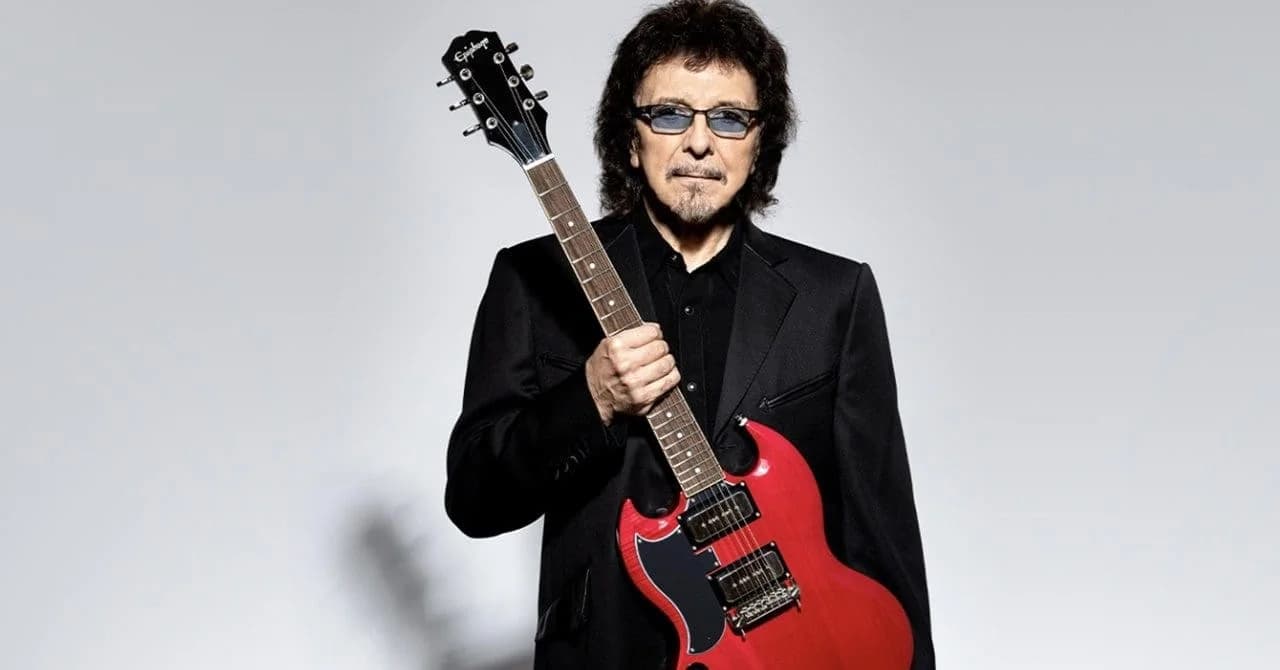
Tony Iommi’s relationship with gear was never cosmetic. His setup was born from the need to keep playing despite pain.
Main Techniques
In Iommi’s work, the riff is not an intro or a support device: it is the composition itself, built from strong rhythmic cells and hypnotic repetition.
Lower tuning helped make the guitar more playable after the accident and also dramatically expanded the heaviness of the sound.
His solos do not rely on excess speed. Iommi values vibrato, sustain, melodic direction and note choice.
Power chords, chromatic movement, tritone tension and descending motion create constant unease.
The alternation between muting, open strings and clipped attack gives his riffs a near-martial pulse.
Essential Songs
Curiosities
Losing the tips of two fingers did not only change the way he played. It changed the sound of heavy guitar itself.
Tony Iommi did perform with Jethro Tull on The Rolling Stones Rock and Roll Circus.
His most famous SG became known as the 'Monkey' because of the sticker on the body.
Many modifications he requested from builders such as John Birch and John Diggins came from real stage and playability problems.
Iommi played a decisive role in later phases of the band, including the Ronnie James Dio era and Heaven & Hell.
His solo records and collaborations reveal another angle of his art while keeping the signature riff at the center.
Legacy and Influence
To speak about Tony Iommi’s legacy is to speak about the grammar of heavy metal itself. His impact is not limited to founding a historic band; he changed the way guitarists think about heaviness, tuning, repetition, space and sonic authority.
His importance unites three rare dimensions: technical innovation, because he reinvented the instrument in order to keep playing; compositional innovation, because he elevated the riff to the structural center of heavy songcraft; and aesthetic innovation, because he created a sound and atmosphere that transformed hard rock imagination.
From doom to thrash, from stoner to traditional metal, Iommi’s footprint is everywhere. It is enough to hear him play to understand why so many regard him as one of the true architects of the electric guitar.