
Basic Facts
| Field | Information |
|---|---|
| Full name | Richard Hugh Blackmore |
| Stage name | Ritchie Blackmore |
| Born | April 14, 1945 |
| Birthplace | Weston-super-Mare, Somerset, England |
| Nationality | British / English |
| Main instrument | Guitar |
| Main genres | Hard rock, heavy metal, progressive rock, folk rock, Renaissance-inspired music |
| Bands and projects | Deep Purple, Rainbow, Blackmore's Night, The Outlaws, Screaming Lord Sutch & The Savages |
| Years active | 1960–present |
| Nicknames | "The Man in Black" |
Introduction
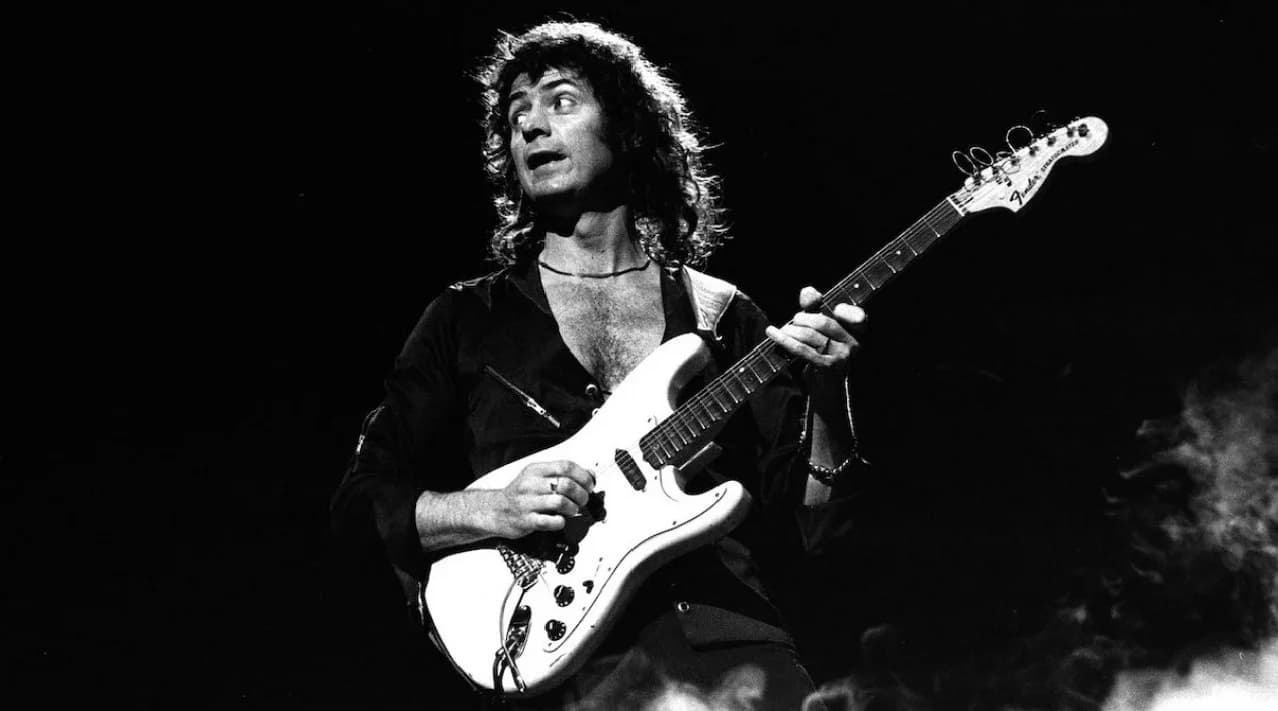
Ritchie Blackmore is one of the guitarists who explain how the electric guitar became an epic force inside rock music. He was not only the architect behind monumental riffs such as "Smoke on the Water", "Highway Star" and "Burn"; he also pushed hard rock toward a more dramatic language, blending blues, classical phrasing, harmonic tension, rhythmic aggression and a stage presence that often felt almost medieval.
His career moves through three distinct worlds. In Deep Purple, Blackmore helped define 1970s British hard rock, turning the guitar into a fierce counterpart to Jon Lord's Hammond organ. In Rainbow, he took that vocabulary into a more fantastic, neoclassical and melodic universe, especially beside Ronnie James Dio. In Blackmore's Night, he left the electric arena for an acoustic world shaped by Renaissance music, proving that his fascination with old melodies, modes and castle-like atmospheres was not an accessory: it was part of his musical DNA.
Blackmore is hard to classify because he could sound raw and blues-based in one bar, baroque in the next, and completely incendiary when the band accelerated. His touch is identifiable through firm attack, vocal vibrato, precise bends, minor-key drama, fast sequences and a preference for melodies that seem to tell a story before the lyrics even begin.
Early Steps
Richard Hugh Blackmore was born in Weston-super-Mare, Somerset, and grew up in Heston, Middlesex. As a child, he received his first guitar from his father under one condition: he had to learn properly. That detail matters, because Blackmore was not shaped only by rock instinct. He took early classical guitar lessons and later studied electric guitar with Big Jim Sullivan, one of Britain's most respected session players.
Before he became an arena guitar hero, Blackmore worked as an apprentice radio mechanic near Heathrow Airport and entered the early 1960s studio scene. He played with The Outlaws, worked around producer Joe Meek's productions and backed artists such as Glenda Collins, Heinz, Neil Christian and Screaming Lord Sutch. That period shaped his discipline: he learned to play fast, understand arrangements, support singers and deliver guitar parts that served the song.
In 1968, joining a band called Roundabout changed everything. The project soon became Deep Purple. The first phase still carried psychedelic and progressive elements, but the classic lineup with Ian Gillan, Roger Glover, Jon Lord and Ian Paice opened the door to a heavier, more direct and explosive sound. From "Deep Purple in Rock" onward, Blackmore was no longer just a gifted guitarist: he was one of the architects of modern hard rock.
Musical Influences
Big Jim Sullivan was a direct teacher and reference point for Blackmore. Studio precision, clear attack and stylistic versatility helped form the young guitarist's technical foundation before Deep Purple.
Blackmore admired Jeff Beck's daring approach, especially the way he made the guitar speak beyond conventional licks. That influence appears in Blackmore's search for tone, expression and unpredictability.
Clapton's vibrato became an important reference for Blackmore, particularly as he developed a more vocal way of sustaining notes. Blackmore absorbed the blues, then made it sharper, darker and more dramatic.
Hendrix expanded the idea of electric performance, volume, feedback and stage freedom. Blackmore did not copy Hendrix literally, but he shared the concept of the guitar as an instrument of physical and theatrical impact.
Classical influence is central to Blackmore's style. Sequences, arpeggios, minor modes, dramatic progressions and baroque-flavored melodies appear in solos like "Highway Star" and across Rainbow's catalog.
His interest in medieval and Renaissance-flavored melodies grew over time and found its fullest shape in Blackmore's Night. That world connects his electric phase to his later acoustic work.
Bands and Projects
Blackmore's path began behind the scenes of British pop, but became historic with Deep Purple. The band emerged in the late 1960s and found its defining identity when Blackmore's guitar began to clash and converse with Jon Lord's Hammond organ. That tension was decisive: Deep Purple did not sound like a guitar band with keyboards; it sounded like two lead instruments dueling inside the same song.
With the Mark II lineup, Blackmore recorded essential albums including "Deep Purple in Rock", "Fireball", "Machine Head", "Made in Japan" and "Who Do We Think We Are". This period established him as a master riff writer and high-intensity soloist. Later, with David Coverdale and Glenn Hughes, he contributed to "Burn" and "Stormbringer", a phase that brought soul, funk and a more groove-driven rock feel into the band's sound.
In 1975, Blackmore formed Rainbow. The debut album, "Ritchie Blackmore's Rainbow", featured musicians connected to Elf and revealed a new direction: hard rock with fantasy, weight and classically inspired melody. The Ronnie James Dio era, especially "Rising" and "Long Live Rock 'n' Roll", became fundamental to the development of melodic heavy metal and neoclassical metal. Later, with vocalists such as Graham Bonnet and Joe Lynn Turner, Rainbow also explored a more accessible language without fully abandoning Blackmore's dramatic signature.
Blackmore returned to Deep Purple in the 1980s for the "Perfect Strangers" reunion and remained into the 1990s, when he left again. From 1997 onward, beside Candice Night, he led Blackmore's Night, a project centered on folk rock, acoustic instruments, Renaissance themes and more intimate arrangements. For some hard rock fans it was surprising; for anyone who had followed his interviews and musical vocabulary, it felt almost inevitable.
Instruments and Gear
Core Techniques
Blackmore knew how to turn simple ideas into definitive signatures. "Smoke on the Water" is the most famous example: a few notes, a memorable rhythm, striking intervals and enough space for the band to breathe. In "Burn" and "Black Night", the riff is the engine of the song, not decoration.
His vibrato is a signature. Instead of mechanically shaking every note, Blackmore chooses moments of tension and sustains notes as if they were sung. This approach appears in "Mistreated", "Child in Time" and many live Rainbow performances.
Blackmore was one of the pioneers in bringing classically inspired sequences into heavy rock. In "Highway Star", the solo feels composed, with arpeggios, symmetry, harmonic tension and melodic resolution. It influenced generations of neoclassical guitarists.
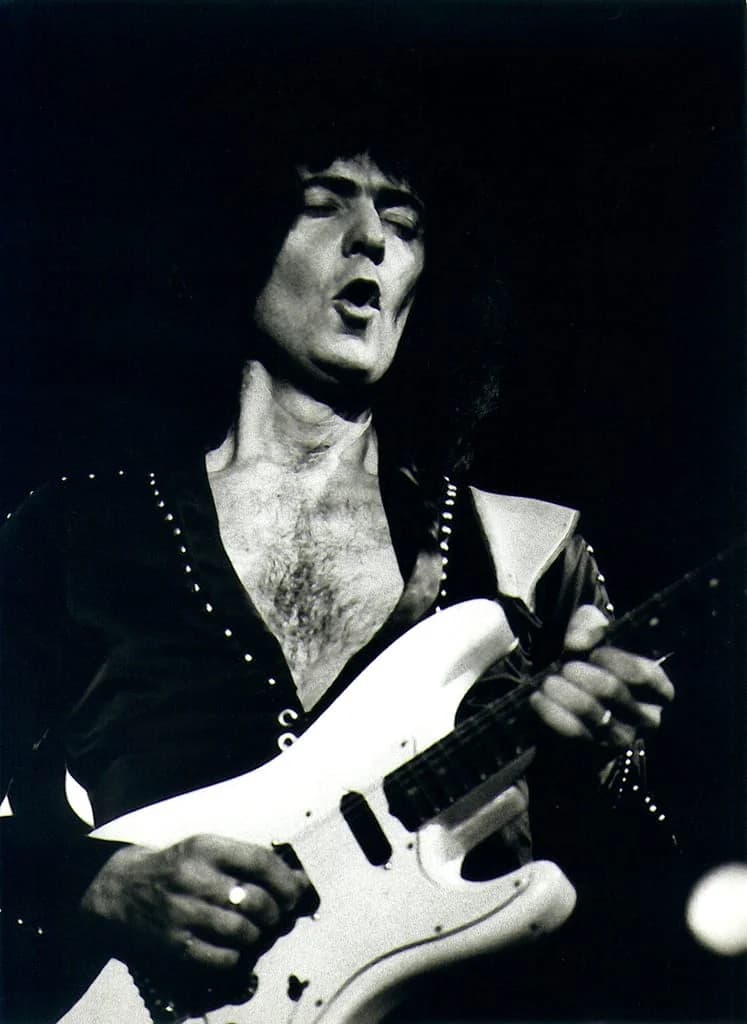
The Stratocaster tremolo arm in his hands creates drops, shocks, microtonal shifts and almost vocal effects. He uses it for drama, not mere display. Live, it helped increase the sense of danger.
Blackmore starts from British blues but often shifts into minor scales, harmonic minor colors and modal shades. The result keeps emotional force while sounding darker, more European and more theatrical than traditional blues rock.
One of Blackmore's trademarks is the feeling that he is always near the edge. He alternates controlled phrases with explosive attacks, pauses, noise and stage gestures. That tension between discipline and unpredictability is central to his musical personality.
Essential Songs
Curiosities
Blackmore is credited with suggesting the name Deep Purple, inspired by a song that was a favorite of his grandmother. The detail fits his lifelong taste for older melodies and nostalgic atmospheres.
Before worldwide fame, Blackmore played on recordings and backed pop artists in the early 1960s. That phase shaped his studio discipline and ability to create useful parts quickly.
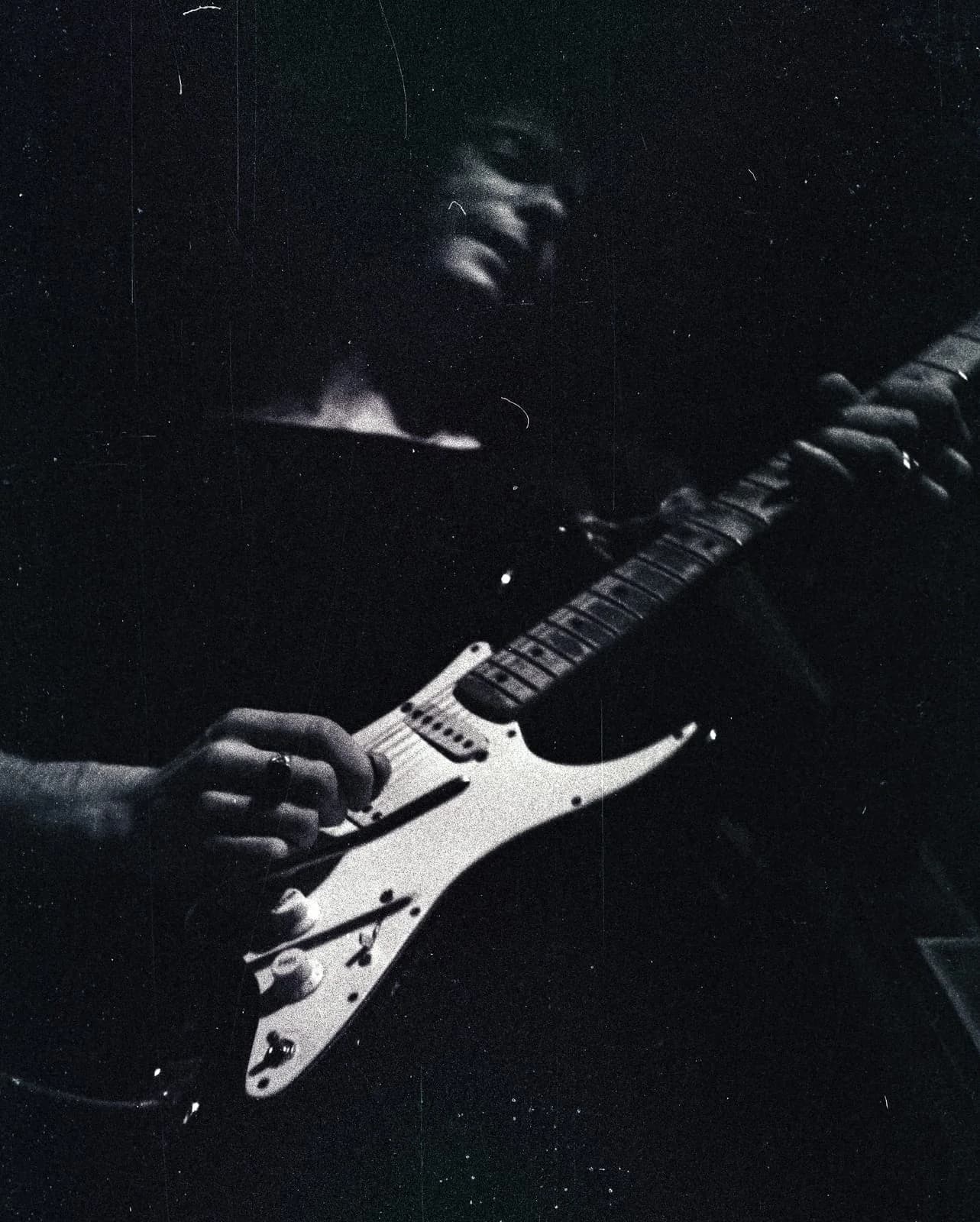
Blackmore is one of the guitarists most associated with scalloped fretboards. They favor bends and vibrato, but demand fine control: pressing too hard can pull the note sharp.
After feeling Deep Purple was moving away from his vision, Blackmore formed Rainbow. The project allowed him to explore fantasy, classical melody and clearer aesthetic control.
With Blackmore's Night, many expected him to remain only in hard rock. Instead, he embraced acoustic guitars, medieval themes and folk arrangements, proving that his identity went beyond high volume.
Blackmore was included in Deep Purple's 2016 Rock and Roll Hall of Fame induction, a formal recognition of his importance in shaping hard rock and heavy metal.
Legacy and Influence
Ritchie Blackmore's legacy operates on several levels. The first is the riff: few guitarists created themes so instantly recognizable. "Smoke on the Water" can be played by beginners, but its simplicity hides a deep lesson in space, identity and rhythmic construction. The second is the solo: in "Highway Star", "Lazy", "Child in Time" and "Stargazer", Blackmore showed that a rock solo could have structure, narrative and classical vocabulary without losing aggression.
The third layer is aesthetic. Blackmore helped bring hard rock, classical music and fantasy closer together long before neoclassical metal became an established school. Guitarists such as Yngwie Malmsteen and countless melodic metal and hard rock players drew from that idea: the electric guitar could sound like a blade, a voice and an orchestra at the same time.
There is also the legacy of personality. Blackmore built a reputation as demanding, unpredictable and uninterested in following outside expectations. That posture generated conflict, but also preserved something rare: a career that never stayed trapped in one formula. From Deep Purple's weight to Rainbow's fantasy and Blackmore's Night's acoustic delicacy, his work shows a musician who preferred to pursue his own obsessions rather than repeat the past forever.
For guitar players, studying Blackmore means learning that technique does not need to be separated from character. What remains is not only speed, tone or scale choice. It is the feeling that every phrase can open a door to a dark castle, a high-speed road or a stage in flames.