
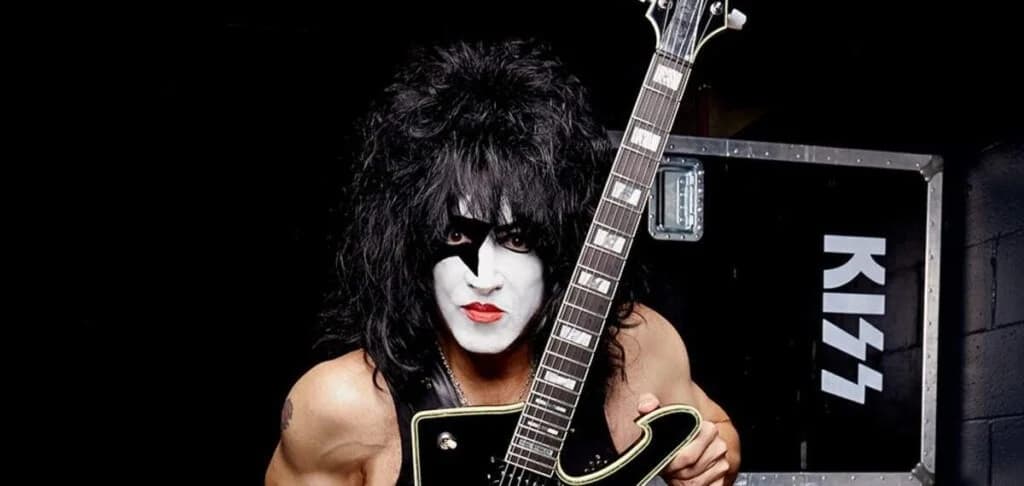
Basic Facts
| Field | Information |
|---|---|
| Stage name | Paul Stanley |
| Birth name | Stanley Bert Eisen |
| Born | January 20, 1952 |
| Birthplace | Manhattan, New York, United States |
| Nationality | American |
| Instruments | Vocals, rhythm guitar, acoustic guitar |
| Genres | Hard rock, glam rock, arena rock, classic rock, pop rock, soul/R&B |
| Main bands and projects | KISS, Wicked Lester, Paul Stanley solo, Paul Stanley's Soul Station |
| Career start | Late 1960s and early 1970s |
| Years active | 1970–present |
| KISS persona | The Starchild |
| Nicknames | The Starchild |
Introduction
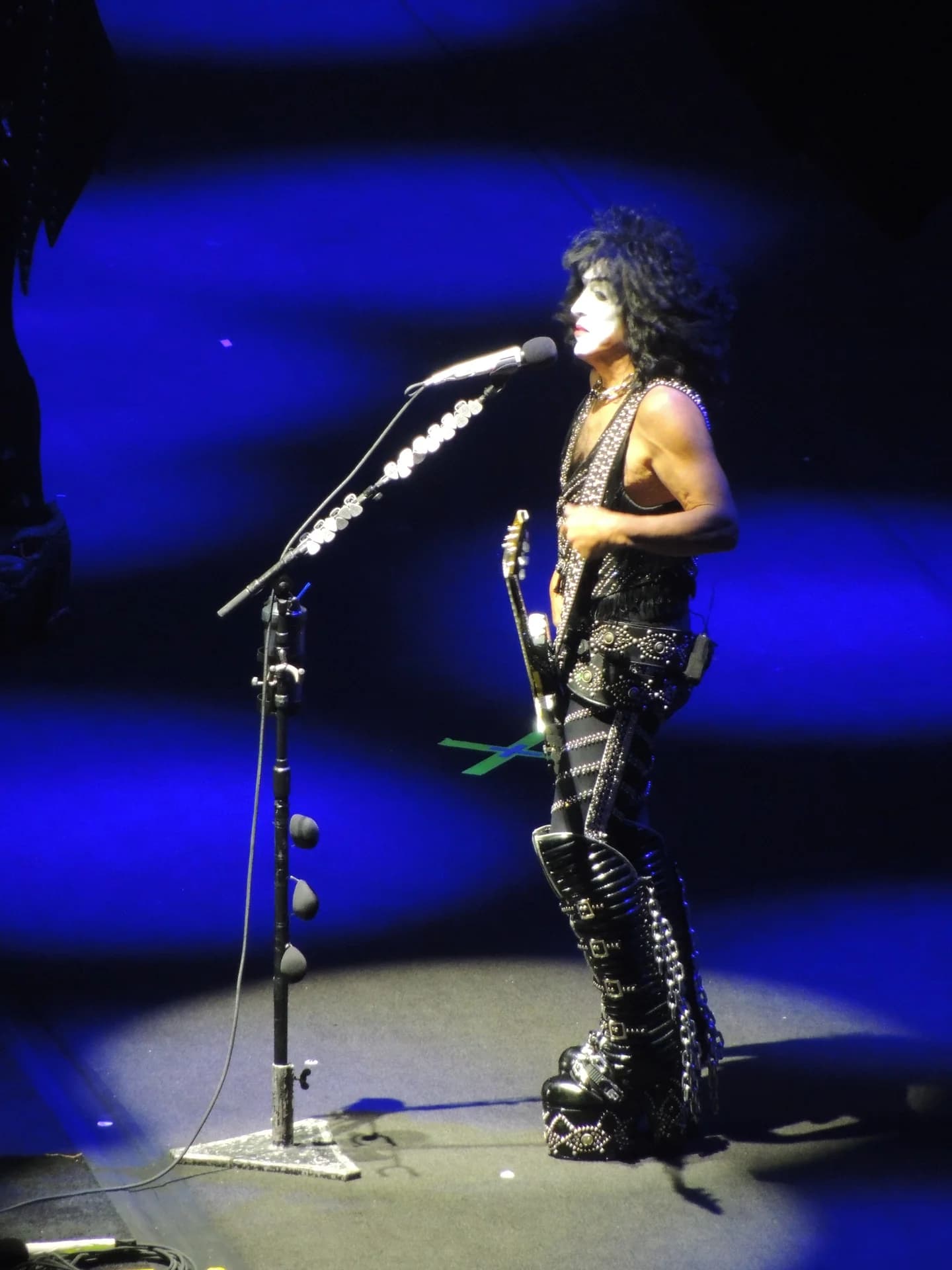
Paul Stanley is one of the key figures for understanding how rock became an arena-scale spectacle. The familiar image is instant: white makeup, a star over one eye, platform boots, an angular guitar and an arm raised toward the crowd. Yet reducing Stanley to the Starchild image misses the core of his achievement. He was the voice, rhythm guitarist, co-writer, visual thinker, informal stage director and one of the principal architects of KISS's identity.
Within KISS, Gene Simmons embodied the demon, Ace Frehley brought the space mythology and Peter Criss added a streetwise swing. Stanley occupied a particular role: he connected the song, the audience and the show. His voice carried the anthems, his guitar anchored the riffs, his stage presence organized the performance, and his visual intelligence helped turn KISS into a cultural symbol recognized even by people who never owned one of the band's albums.
As a guitarist, Stanley does not belong to the school of extended solo virtuosity. His importance lies in the architecture behind the spotlight: the right hand, the pressure of the chord, the economy of the riff, the attack that drives the song into the chorus. In a band famous for fire, blood, costumes and excess, the rhythm guitar had to keep the structure standing. Stanley did it with a direct, physical and highly effective language.
As a singer, his signature blends dramatic tenor range, open projection and theatrical command. He sings as if he is addressing the last row of an arena. Even in the studio, his phrasing feels designed to grow in front of a crowd. That quality helps explain why songs like "Detroit Rock City", "Love Gun", "I Was Made for Lovin' You" and "Heaven's on Fire" still work as collective declarations, not merely catalog tracks.
After KISS ended its final tour in December 2023, Stanley did not vanish from the scene. The end mainly closed the physical routine of major touring with the band. Since then, he has remained connected to the expansion of the KISS legacy through the digital avatar project, continued his work as a visual artist, preserved Soul Station as an expression of his passion for soul and R&B, appeared in selected public settings, and stayed active as a curator of his own history.
Early Steps
Stanley Bert Eisen was born in Manhattan, New York, on January 20, 1952, and grew up in an urban environment where music, theater, radio and visual culture constantly overlapped. His childhood was also shaped by microtia, a congenital condition that affected his right ear and hearing on that side. This detail matters not as a simplified triumph-over-adversity device, but because it helps explain Stanley's relationship with identity, image and projection. For someone who grew up feeling different, the stage became a place of symbolic reconstruction.
As a young listener, Paul was drawn to artists who made performance as important as the music itself. Elvis Presley showed that a singer could control a room before finishing the first line. The Beatles proved that a band could be sound, image, public personality and a self-contained universe. Soul and Motown offered lessons in phrasing, vocal harmony, melodic elegance and emotional intensity. British rock reinforced the bond between guitar, attitude and youth culture.
Before KISS, Stanley moved through local bands and lineups that reflected New York's eclectic scene. The decisive step came when he joined forces with Gene Simmons. Together they played in Wicked Lester, a project that recorded material but lacked the direct, explosive identity both musicians wanted. Wicked Lester mixed rock, pop, psychedelia and ambitious arrangements, but it did not yet communicate a clear artistic proposition.
That dissatisfaction became essential. Paul and Gene wanted a band that sounded heavier, looked larger than life and could be understood in seconds. Peter Criss brought a raw voice, drums and street attitude. Ace Frehley completed the equation with lead guitar, odd humor and an alien aura that fit the emerging concept perfectly. In 1973, that combination became KISS.
The band's early years were spent in small clubs, uneven sound systems and rooms that did not always know how to react to the makeup and costumes. During this period, Stanley developed much of his stage vocabulary. He learned how to talk to the crowd, fill silence, turn insecurity into provocation and use the guitar as a physical extension. The Starchild was not born fully formed; it was refined night after night through direct contact with an audience.
Musical Influences
The Beatles' influence appears in Stanley's belief that a band can be more than a group of musicians. He absorbed the importance of melody, hooks, visual identity and public personality. Even in KISS's hardest songs, his writing often preserves a strong pop clarity: the song has to be remembered, sung and recognized quickly.
From the Rolling Stones, Stanley drew the idea of rhythm guitar as a physical engine. A riff does not need to be complex to be powerful; it needs swing, intention and attitude. The sexualized theatricality, direct crowd connection and stage energy also echo the Mick Jagger and Keith Richards school.
Elvis represented magnetism. For Stanley, the frontman is not simply the strongest singer; he is the person who organizes the audience's attention. Body language, pauses, eye contact, stage position and the ability to turn a song into an event all run through Stanley's career.
Motown explains much of the Paul Stanley behind the hard rock image. His taste for elegant hooks, placed backing vocals, clear phrasing and emotional interpretation appears both in KISS ballads and in Paul Stanley's Soul Station. For Stanley, heaviness and melody were never opposites.
Smokey Robinson represents the melodic sophistication and interpretive subtlety Stanley has long admired in classic soul. The influence is especially clear when he steps away from aggression and leans into a softer, romantic, vocally centered approach.
Paul Rodgers stands as a model of rock singing with authority, blues feeling and control. In Stanley, the influence is less about copying a tone than about aiming for commanding vocal presence: singing high, singing with dramatic intent and keeping the phrase centered.
Bands and Projects
Paul Stanley's professional story unfolds in distinct phases. The first is the formative period, marked by local groups and Wicked Lester. That project, shared with Gene Simmons, functioned as a laboratory. Although it did not become the band they envisioned, it made the missing ingredients obvious: impact, focus, weight, visual identity and a concept that could be understood immediately.
In 1978, when all four members released solo albums simultaneously, Paul Stanley's album revealed a more melodic writer than many casual listeners expected. Songs like "Tonight You Belong to Me" and "Wouldn't You Like to Know Me" connect hard rock, pop rock and arena romance. The album matters because it shows that his world did not depend only on the KISS machine; there was a clear authorial sensibility of his own.
During the 1980s, with KISS unmasked, Paul became even more central as the band's public face and primary voice. Lineup changes and shifting aesthetics demanded adaptation. Rather than abandon theatricality, he translated it into the vocabulary of eighties hard rock: big hair, videos, massive choruses, cleaner guitars and radio-reaching ballads. "Heaven's on Fire", "Tears Are Falling", "Reason to Live" and "Forever" show his ability to survive outside the classic iconography.
The makeup reunion in the 1990s repositioned KISS as a living rock institution. Stanley returned to the Starchild not as empty nostalgia, but as a character inside an already established mythology. In the following decades, the band balanced tours, releases, commemorative projects and the maintenance of a brand that had outgrown the traditional idea of a rock group.
After KISS's physical farewell onstage at Madison Square Garden on December 2, 2023, Stanley entered a phase of curation and continuity. KISS ended the routine of long tours, but not its cultural presence. The digital avatar project, developed with companies connected to immersive performance technology, turned the farewell into a transition: the band moved from being only a touring physical body to also becoming an expanded performance archive. Paul participates in this chapter as a guardian of the scale, imagery and narrative that defined KISS.
His post-tour life also includes visual art, selected appearances, public conversations, involvement with the band's memory and the possibility of new KISS-related creations. Rather than creative retirement, the current moment looks more like a change of function: less road work, more curation, legacy-building, special projects and exploration of formats that extend the band's mythology without demanding the same physical toll as classic touring.
Instruments and Gear
Main Techniques
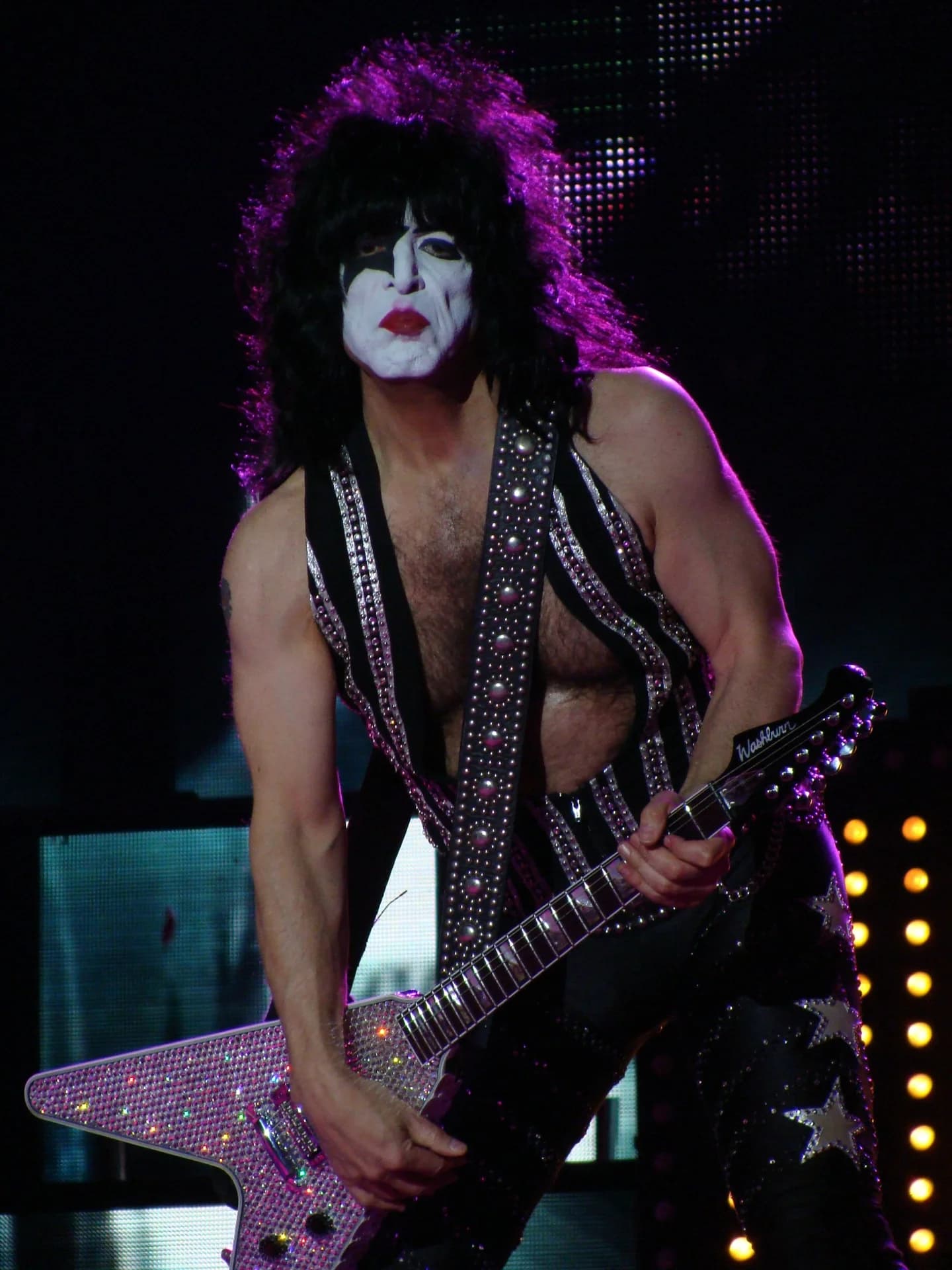
Paul Stanley's guitar was built to support large songs. He uses power chords, open chords, dry attacks and accents that leave room for vocals, drums and sonic pyrotechnics. In "Detroit Rock City" and "I Stole Your Love", the rhythm part does not try to compete with the lead guitar; it builds the road the song runs on.
Stanley uses the guitar as a songwriter. Many riffs seem born already connected to what the voice will do next. The chord prepares the hook, the attack emphasizes the strong syllable and the progression avoids excess information. This economy is one reason so many KISS songs are easy to remember without being weak.
Paul understands the chorus as the meeting point between band and audience. In "Love Gun", "I Was Made for Lovin' You" and "Heaven's on Fire", the central phrase almost works like a slogan, but the melody keeps it from becoming just a chant. It is writing built for thousands of voices.
His voice blends projection, brightness and controlled exaggeration. Stanley often sings with the feeling of opening a curtain: the note is not only pitch, it is gesture. In "Detroit Rock City", the performance creates narrative urgency; in "Forever", it turns vulnerability into melodic grandeur.
One of Paul's strengths is moving between sexualized hard rock and balladry without sounding displaced. He understands that an arena ballad still needs tension, growth and climax. "Forever" and "Every Time I Look at You" show this side, while "Love Gun" and "I Stole Your Love" represent the more physical pole.
With Paul Stanley, stage presence is technique. His crowd talk, open arms, controlled pauses and movement between microphone and runway function as extensions of the arrangement. He conducts collective energy as if the audience were another instrument in the band.
Essential Songs
Curiosities
The Starchild persona combines star imagery, romance, brightness and stage leadership. Unlike Gene Simmons's demon or Ace Frehley's spaceman, Paul's character was built around seduction, glamour and direct audience connection.
Stanley Bert Eisen became Paul Stanley through a process of public reinvention. The name is direct, memorable and aligned with an artist who always understood image, signature and impact.
Paul was born with microtia and hearing loss in his right ear. Over time, he spoke publicly about insecurity, bullying and acceptance, turning a personal experience into a broader message about difference and confidence.
Stanley developed a path as a painter, with works marked by color, texture and gestural energy. This side is not disconnected from KISS: it reveals the same interest in visual impact, composition and graphic identity.
Paul Stanley's Soul Station showed that his musical formation did not come only from heavy guitars. The project highlights his love for Motown, R&B and classic soul, genres that shaped his vocal and melodic approach.
Legacy and Influence
Paul Stanley's legacy cannot be contained by the categories of singer, guitarist or songwriter alone. He belongs to a lineage of artists who understood rock as a complete language. In KISS, music, costume, makeup, logo, stage, fire, photography and merchandising functioned as parts of a single symbolic system. Paul was one of the main figures responsible for keeping that system coherent.
His influence as a rhythm guitarist lies in his defense of function. He shows that a well-built rhythm part can be as decisive as a famous solo. For guitar players, studying Paul Stanley means studying economy, attack and architecture: when to enter, when to leave space, how to support the voice, how to make a riff feel larger than it is and how to turn simple chords into a collective gesture.
As a frontman, his contribution is even broader. Stanley helped define the arena singer who speaks to the crowd, conducts the energy and makes each person feel part of something larger. Many hard rock, glam metal and arena rock vocalists inherited that school, even when they did not reproduce KISS's makeup or theatrical look.
The post-touring phase adds another chapter to his legacy. Paul Stanley is not only preserving the past; he is participating in the discussion of how a rock band can continue to exist when its members no longer want, or no longer can, live on the road. KISS's digital avatars, audiovisual projects, interest in immersive formats and the maintenance of a global fan community suggest that Stanley is still curating a mythology.
Paul Stanley is essential because he teaches a lesson beyond pure technique: identity is also part of sound. Guitar, voice, costume, posture and songwriting work together. The Starchild remains one of rock's most recognizable figures because Paul Stanley understood, before many others, that a great song may begin with a riff, but it becomes immortal when it finds an image, an audience and a story.