
Basic Facts
| Field | Information |
|---|---|
| Full name | David Jon Gilmour |
| Stage name | David Gilmour |
| Born | March 6, 1946 |
| Birthplace | Cambridge, England |
| Nationality | British |
| Career start | Early 1960s; international breakthrough from 1968 onward |
| Main association | Pink Floyd |
| Other work | Solo career, production, soundtrack work and collaborations |
| Main instrument | Electric guitar |
| Artistic signature | Melodic phrasing, expressive bends, wide sustain and a cinematic sense of space |
Introduction
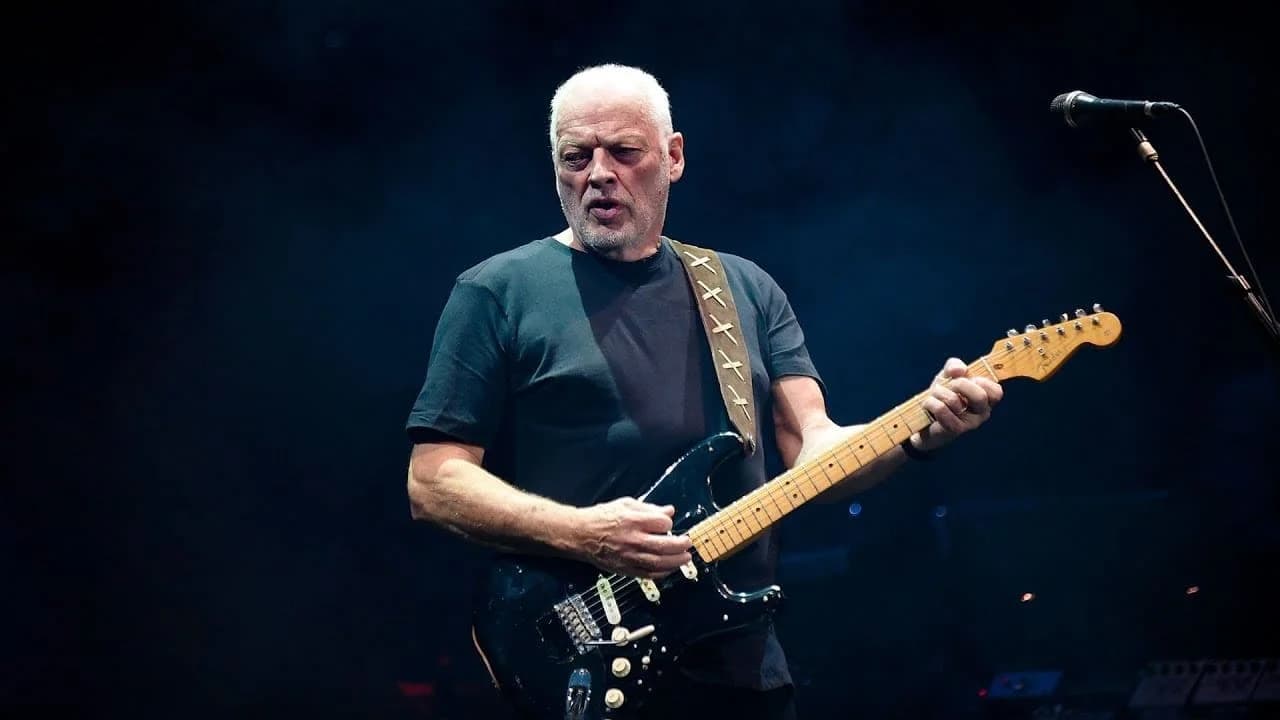
David Gilmour belongs to a rare class of guitarists: players who can be identified almost instantly from a handful of notes. Instead of turning speed into his central argument, he built his identity around intention, breathing room, dynamics and tone. His touch combines blues feeling, melodic elegance and an almost architectural understanding of sonic space. Every solo feels as though it grows from inside the song rather than being laid on top of it.
Early Steps
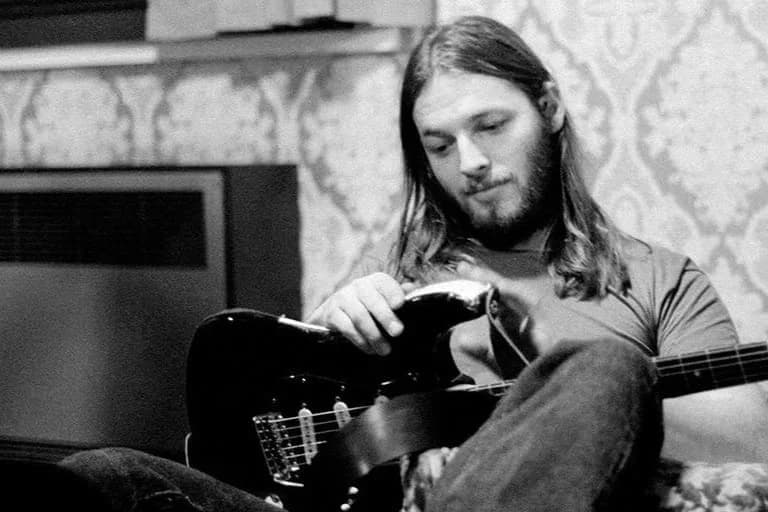
Before fame, David Gilmour grew up in Cambridge in an intellectually rich environment, yet much of his musical education came from curiosity and obsessive listening. As a young player, he absorbed folk, acoustic blues, rock’n’roll and the electric guitar culture that was beginning to define a generation. He learned by copying, by watching other musicians, by trying to recreate what he heard and, little by little, by developing an ear that was far more refined than showy.
As a teenager he played in local groups and went through the formative phase typical of many British musicians in the 1960s: playing constantly, absorbing different styles and discovering where personal identity truly begins. His pre-Pink Floyd path included bands such as Jokers Wild and periods of travelling and playing across Europe. Those experiences helped shape one of his defining traits: a refusal to be confined to a single school of guitar playing.
When he was invited to join Pink Floyd in 1968, the band was moving through a fragile transition around Syd Barrett’s departure. Gilmour therefore arrived not only as a musical reinforcement, but as a crucial figure in the shift between two historic eras. What might have been a simple replacement became a creative rebuilding. From that point on, his guitar would become one of the central forces in the band’s sound.
Musical Influences
Gilmour’s language was formed through the meeting of British melodic guitar traditions, the blues, acoustic folk and studio imagination. He has always shown admiration for musicians who could make the guitar sing rather than merely impress. That helps explain why his work sounds so human even when it moves through huge and cinematic soundscapes.
A decisive influence on his dream of playing a Stratocaster and on the ideal of clear, singable melodic lead guitar.
Important to his acoustic formation and to his lifelong connection with 12-string folk and blues textures.
They helped shape his relationship with songcraft, tuning, accompaniment and musical fundamentals.
Strong reference points for blues phrasing, sustain, expressiveness and tonal identity.
Elvis Presley, the Everly Brothers and early rock energy helped form his sense of structure and emotional impact.
The result was never a collage. In Gilmour, everything was filtered through a deeply personal sense of time, silence and intensity. From the blues he took the emotional weight of the note, from folk a sense of intimacy, from rock a physical scale of sound, and from psychedelia the courage to turn atmosphere into language.
Bands and Projects
David Gilmour’s story is inseparable from Pink Floyd, but his career reaches well beyond the image of “the band’s guitarist.”
| Bands / Projects | Considerations |
|---|---|
| Pink Floyd | After joining Pink Floyd in 1968, Gilmour helped lead the band from its early psychedelic phase toward a more expansive, atmospheric and structurally ambitious aesthetic. His contribution was crucial on albums such as Meddle, The Dark Side of the Moon, Wish You Were Here, Animals and The Wall. After Roger Waters left, Gilmour played a central role in the continuation of the band through A Momentary Lapse of Reason and The Division Bell, reaffirming his musical identity in a different chapter of the group. |
| Solo career | His solo discography reveals shades that Pink Floyd sometimes only hinted at: David Gilmour (1978), About Face (1984), On an Island (2006), Rattle That Lock (2015), Luck and Strange (2024) |
Across these records, Gilmour appears as a more exposed songwriter and vocalist while preserving the lyricism and atmospheric depth that made him famous.
Collaborations and appearances
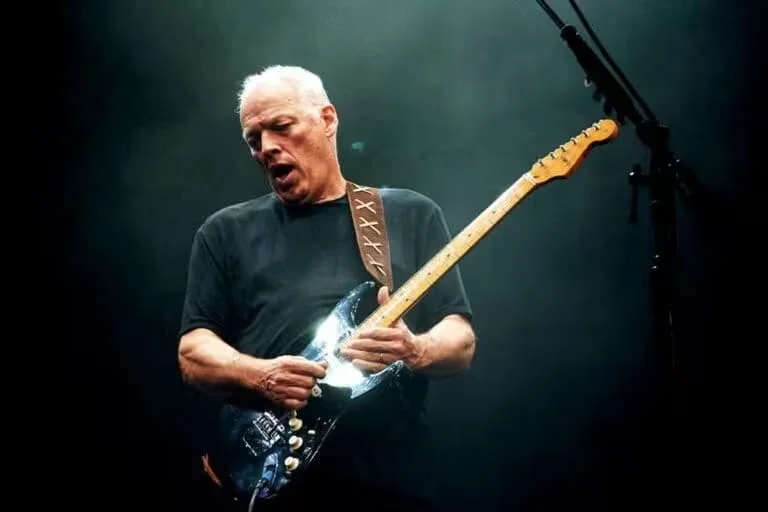
Over the years he has also collaborated with a wide range of artists through benefit concerts, productions, guest spots and one-off projects. That parallel body of work highlights an important truth: even outside his main setting, his guitar retains an instantly recognizable identity.
Instruments and Gear
To talk about David Gilmour is to talk about tone as a patient construction. His sound does not depend on a single pedal or one isolated trick, but on the interaction between guitar, hands, amplification, effects, dynamics and real stage or studio volume.
More than simply owning legendary equipment, Gilmour has always known how to assign each tool a precise musical function. The Black Strat became a symbol, but the real secret lies in the way he controls attack, vibrato, gain and the distance between notes. His tone is not merely beautiful; it tells a story.
Main Techniques
Gilmour’s technique is not measured by note density, but by the emotional quality of each phrase. He makes something extremely difficult feel simple: playing less and saying more.
His bends are an absolute signature. They rise with intention, arrive exactly at the target note and sustain dramatic tension without losing pitch.
Gilmour’s vibrato feels like a human voice: broad, expressive, controlled and always adapted to the emotional meaning of the phrase.
He uses silence as part of the design. The spaces between phrases create expectation and make every entrance feel inevitable.
His sound depends on keeping the note alive. He achieves that through a rare combination of gain, touch, volume and timing.
Delay, reverb, modulation and echo are never just decoration; they widen the dramatic meaning of the solo and the harmony beneath it.
In specific contexts, Gilmour uses lap steel to reach sliding colors, harmonic depth and an almost orchestral sense of movement.
The great technical lesson Gilmour leaves behind is that musicality is not the same as mechanical complexity. His art shows that phrasing, pitch control, note choice, breath and tone can carry more force than any display of speed.
Essential Songs
These songs reveal the breadth of his vocabulary. They contain blues, psychedelia, folk, atmospheric rock and a rare ability to make the guitar feel intimate even when the musical setting is immense.
Curiosities
The black Fender Stratocaster he bought in 1970 became the most emblematic guitar of his career and appeared on a long list of historic recordings.
The guitar sold for US$3.975 million in 2019 and broke records again in 2026 when it reached US$14.55 million at auction.
His Martin D-35 was central to landmark acoustic recordings and became one of the instruments most closely linked to his catalog.
Decades after the original Pink Floyd at Pompeii film, Gilmour returned to the amphitheatre for historic solo performances.
The instrumental track cowritten with Richard Wright won the Grammy Award for Best Rock Instrumental Performance.
Long before being identified with progressive rock, Gilmour had already absorbed folk, acoustic blues, early rock’n’roll and British instrumental guitar music.
Another revealing detail lies in his creative posture: Gilmour never sounds like a guitarist trying to fill every available space. His style seems to trust that emotion arrives more powerfully when the music is allowed to breathe. That aesthetic discipline is one reason his solos age so gracefully.
Legacy and Influence
David Gilmour’s legacy is immense because it works on several levels at once. For the wider public, he is the author of some of the most moving solos in rock history. For musicians and producers, he is a master of tone, dynamics and atmosphere. For guitarists, he is proof that identity matters more than exhibition. For songwriters, he is an example of how the guitar can serve the song without ever surrendering authorship.
His influence runs through progressive rock, blues-rock, ambient music, post-rock and even contemporary forms of cinematic guitar writing. Many players inherited from him the idea that one perfectly placed note, with the right vibrato and the right tone, can be more devastating than an entire torrent of fast phrases. He taught generations to hear the solo as narrative rather than interruption.
In a musical world often seduced by acceleration, David Gilmour remains a monument to the value of intention. His guitar does not rush; it hovers, sings, wounds, consoles and endures. Very few artists have turned emotion into sound with such elegance and permanence.