Basic Facts
| Field | Information |
|---|---|
| Full name | Edward Lodewijk Van Halen |
| Stage name | Eddie Van Halen |
| Date of birth | January 26, 1955 |
| Place of birth | Amsterdam, Netherlands |
| Date of death | October 6, 2020 |
| Place of death | Santa Monica, California, United States |
| Nationality | Dutch-born, later established as an American musician |
| Career start | Mid-1970s |
| Bands and projects | Van Halen, Mammoth, guest appearances and studio collaborations |
| Instruments | Guitar, keyboards, songwriting |
Introduction
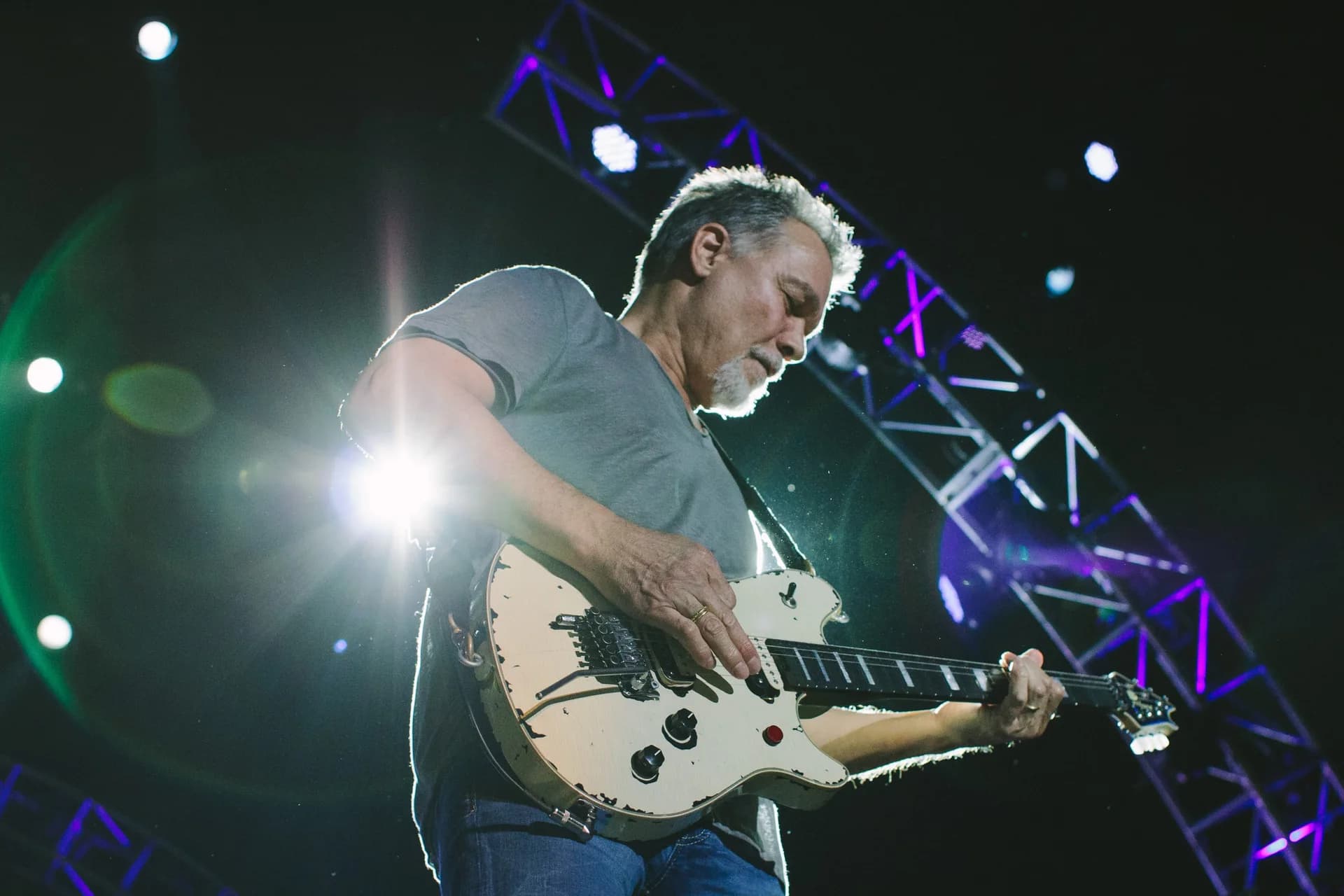
To talk about Eddie Van Halen is to talk about a rupture in rock guitar history. Before him, hard rock guitar already had weight, power, and virtuosity. After him, it had a new grammar. His playing fused aggression, clarity, swing, melodic imagination, and a near-obsessive curiosity for tone and instrument design. Eddie did not simply play fast: he made the guitar sound as if it still had unexplored functions hidden inside wood, wire, pickups, and amplifiers.
With Van Halen, he helped turn the Sunset Strip spirit and American hard rock into a global force. With “Eruption,” he showed millions that a solo could be both technical spectacle and unforgettable composition. With songs such as “Panama,” “Jump,” “Unchained,” and “Hot for Teacher,” he proved that innovation did not have to come at the expense of hooks, groove, or mass appeal. His legacy goes far beyond famous licks. It lives in guitar culture, in modern instrument design, in hot-rodded amplifier history, and in the idea that a guitarist can also be an inventor, tone architect, and central composer.
Early Steps
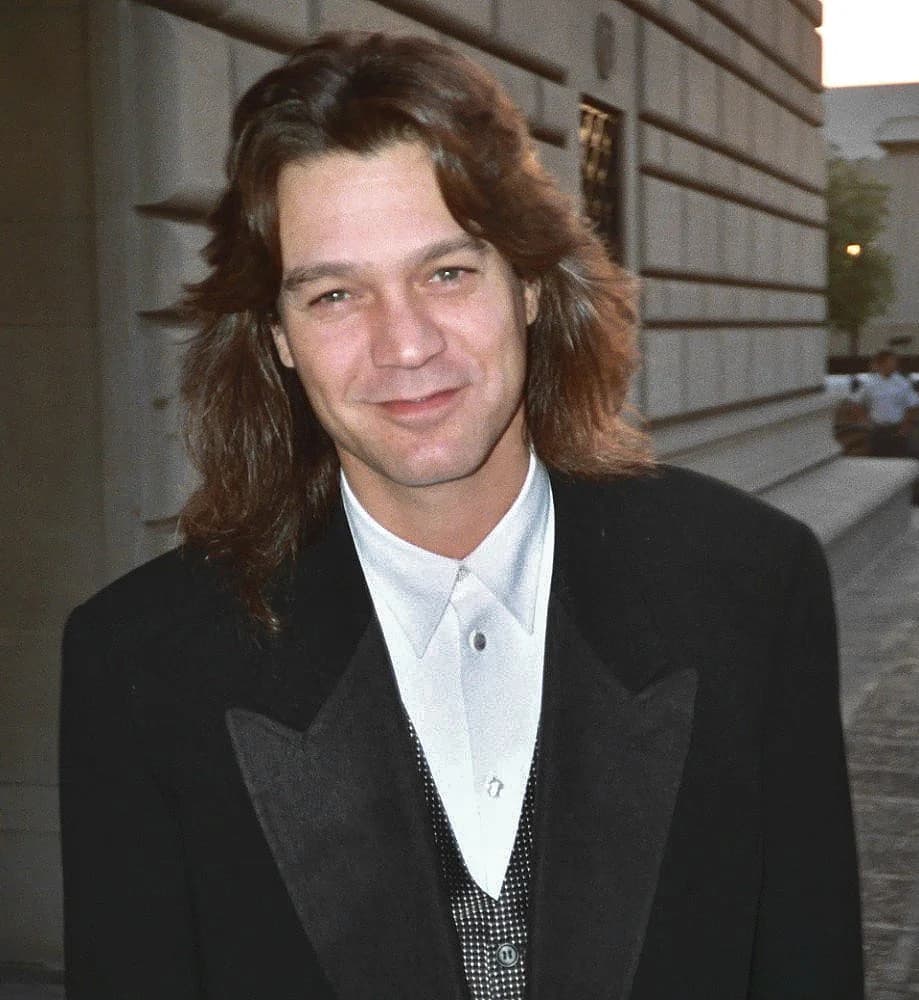
Eddie was born in Amsterdam, the son of musician Jan Van Halen and Eugenia Van Halen. The family moved to California in the early 1960s, and that move changed everything. The classical training he received at home began to coexist with the explosion of British and American rock. He and his brother Alex studied piano as children, and Eddie soon showed exceptional ears, often reproducing pieces by memory and intuition more than by formal reading.
One of the most famous details from this period says a lot about his musical mind: Eddie originally played drums while Alex played guitar. In time, the brothers switched instruments, and the result felt almost inevitable. Eddie found in the guitar an open field where discipline, instinct, and invention could all meet. As a teenager, he immersed himself in the Pasadena scene, playing parties, clubs, and garages while spending endless hours taking apart and rebuilding gear in search of sustain, gain, touch sensitivity, and comfort.
Before the world knew the name Van Halen, there was Mammoth, the early form of the band that would later solidify with David Lee Roth on vocals and Michael Anthony on bass. By the time the group was making serious noise around Los Angeles, one thing was already clear: Eddie did not merely sound promising. He sounded like someone carrying the next decade of guitar inside his hands.
Musical Influences
Eddie often spoke with admiration about Eric Clapton, especially the way Clapton transformed blues language into modern electric force. Part of Eddie's gift for melodic phrasing comes from that lineage: even in his most explosive moments, there is always a singable logic behind the notes.
Holdsworth deeply influenced Eddie's sense of harmonic freedom and fluid movement across the fretboard. That influence can be heard in the legato passages and intervallic choices that allowed Eddie to move beyond standard rock vocabulary without losing excitement.
From Page, Eddie absorbed the value of the riff as total song identity. It was never only about solos. It was about writing music with weight, drama, and personality. The theatrical side of production and the balance between rawness and imagination also reflect that inheritance.
More than just a player, Les Paul represented the inventor spirit that Eddie admired. That influence appears in his endless experiments with pickups, bridges, voltages, woods, and amplifiers. Eddie treated the instrument as a platform for ongoing evolution.
His piano studies and early exposure to classical repertoire helped shape his sense of precision, articulation, and melodic construction. Even when he sounded ferocious and overdriven, there was remarkable internal order to the way he organized musical ideas.
Bands and Projects
| Band / Project | Period | Key Albums and Highlights |
|---|---|---|
| Mammoth | 1972–1974 | Precursor to Van Halen, with David Lee Roth on vocals |
| Van Halen (David Lee Roth era) | 1974–1985 | Van Halen (1978), Van Halen II (1979), Fair Warning (1981), 1984 (1984) |
| Van Halen (Sammy Hagar era) | 1985–2004 | 5150 (1986), OU812 (1988), Balance (1995) |
| Van Halen (reunion with Roth) | 2007–2020 | A Different Kind of Truth (2012) |
| EVH collaborations and brand | 1978–2020 | Solo on Michael Jackson's “Beat It” (1982); EVH guitar and amplifier line |
Instruments and Equipment
Eddie Van Halen changed guitar history because he refused to accept off-the-shelf answers. His rig was a laboratory. He wanted the harmonic thickness of humbuckers, the comfort of a Strat-style body, tremolo stability, quick response, and an amplifier that behaved like an extension of his hands. From that restlessness came combinations that shaped decades of gear culture.
Main Techniques
The technique most closely associated with Eddie did not begin with him, but he was the player who turned it into a mass-language event. His tapping was not just about speed. It was a way of drawing arpeggios, intervallic patterns, and rhythmic explosions with remarkable clarity. In “Eruption,” it became a historic statement and reset expectations for rock guitar.
Eddie used the tremolo system like a singer uses inflection. Instead of treating the bar as a gimmick, he folded dive bombs, cries, shakes, and violent returns directly into the phrase itself. That approach expanded the expressive range of hard rock guitar and influenced generations of performers.
One of Eddie's great secrets lies not in speed but in groove. His riffs breathe, push, and swing. The picking hand alternates attack, muting, and accent placement with near-percussive precision, which is why songs like “Panama,” “Unchained,” and “Ain't Talkin' 'Bout Love” feel enormous even before the solo arrives.
Eddie blended hammer-ons, pull-offs, slides, natural harmonics, and artificial harmonics into a continuous sense of motion. The result was phrasing that could feel fluid one second and incendiary the next, always with strong control and shape.
For Eddie, technique and sound were never separate ideas. Pickup choice, amplifier behavior, tremolo setup, and the physical response of the instrument were all part of execution. His touch is fully understood only when heard together with the brown sound: warm, compressed, open, and ferocious.
Essential Songs
Curiosities
One of the best-known stories from his early life is the instrument swap with his brother Alex. Eddie began on drums, Alex began on guitar, and the brothers later reversed roles. That background helps explain the rhythmic force in Eddie's playing.
Long before becoming a hard rock icon, Eddie studied piano seriously. That foundation can be heard in his sense of structure, dynamics, and the way he organized fast ideas with unusual clarity.
Rather than wait for the industry to build his ideal instrument, Eddie built his own answer. The Frankenstein became a physical translation of his musical mind: hybrid, personal, rough-looking, and revolutionary in function.
His contribution to Michael Jackson's track brought his guitar voice to an enormous audience far beyond hard rock. The guest spot was brief, but it amplified his image as a musician who could transform any recording.
Although he is remembered primarily as a guitarist, Eddie also had a strong bond with keyboards and harmonic writing. The success of “Jump” made that side of him impossible to ignore.
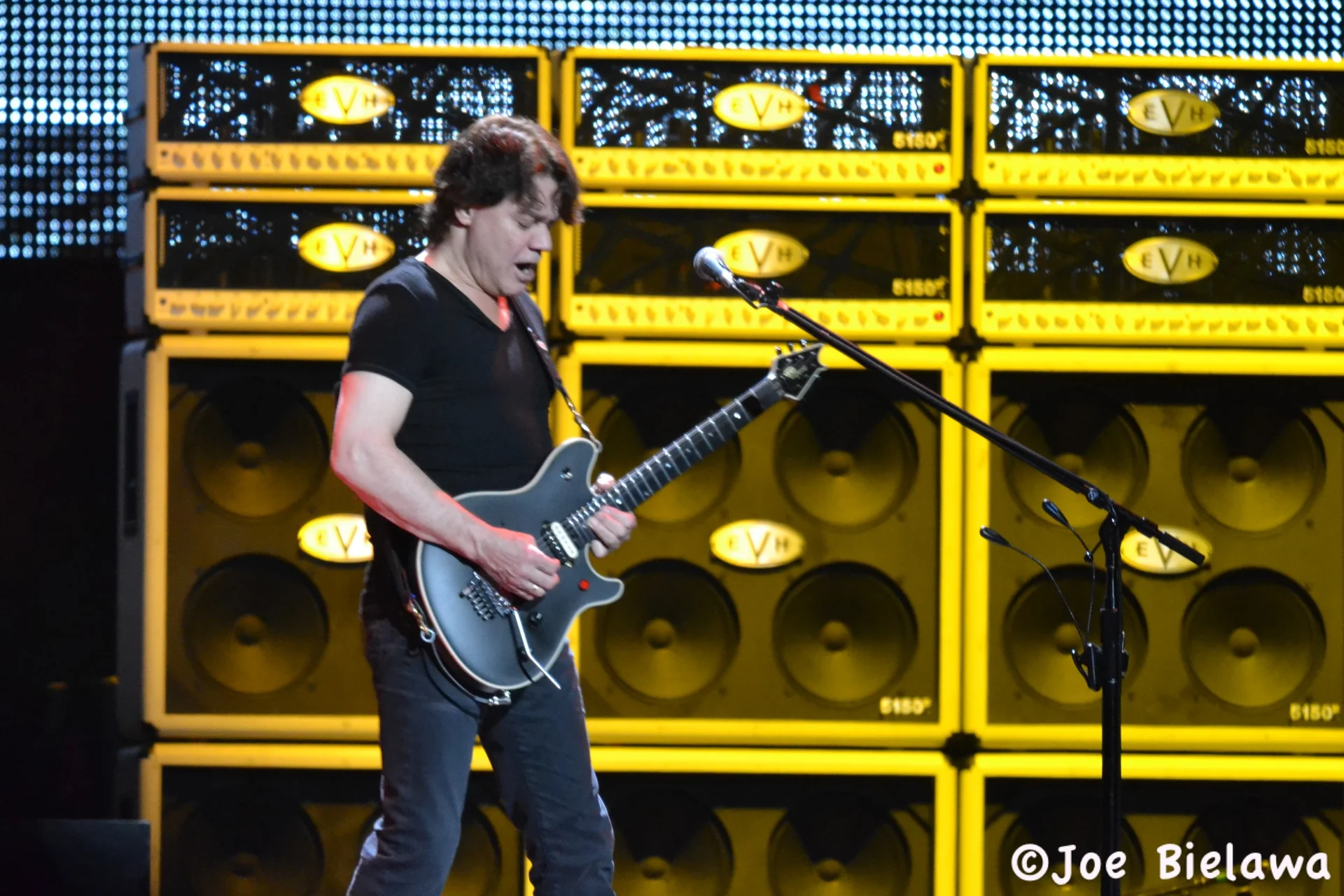
The number 5150 appeared in studio culture, equipment, and defining phases of his career. Over time it stopped being just a reference and became a symbolic stamp within the Eddie Van Halen universe.
Legacy and Influence
Eddie Van Halen was not just a famous guitarist. He was a turning point. His work reconfigured the instrument's vocabulary, redefined the relationship between technique and entertainment, and pushed builders, engineers, and musicians to rethink what an electric guitar could do. After him, tapping, superstrat designs, refined high-gain amplification, and the obsession with sustain and articulation moved from the margins to the center of guitar culture.
His influence crosses styles. It lives in hard rock, metal, shred, pop, gear design, and the visual imagination of the modern guitar. Entire generations borrowed his licks; many more borrowed his experimental attitude. Yet very few reached the rare quality that made Eddie unique: the ability to sound instantly identifiable in both a simple riff and a full technical eruption.
Inducted into the Rock & Roll Hall of Fame with Van Halen, he remains one of the most important figures in rock history. His name stands not only for instrumental excellence, but for the courage to take the guitar apart, reinvent it, and give it back to the world with new possibilities inside it.