Basic Data
| Field | Information |
|---|---|
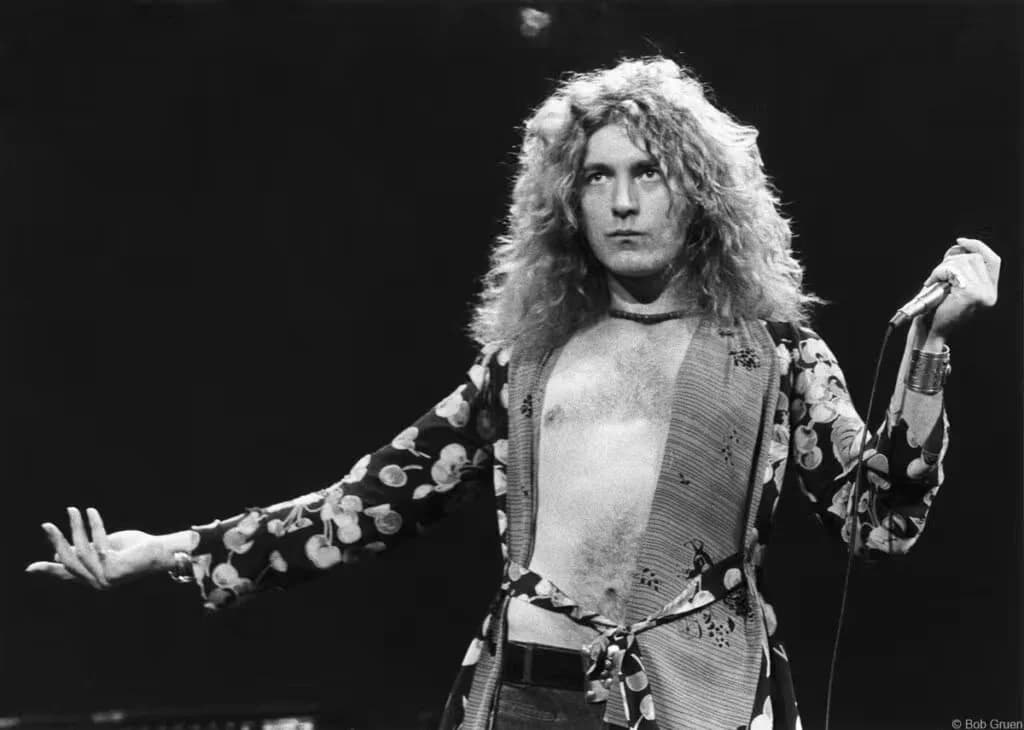
| Name | Led Zeppelin |
| Origin | London, England |
| Formation | 1968 |
| End | 1980 |
| Genre | Hard Rock, Blues Rock, Folk Rock, Heavy Metal |
| Label | Atlantic Records; Swan Song Records |
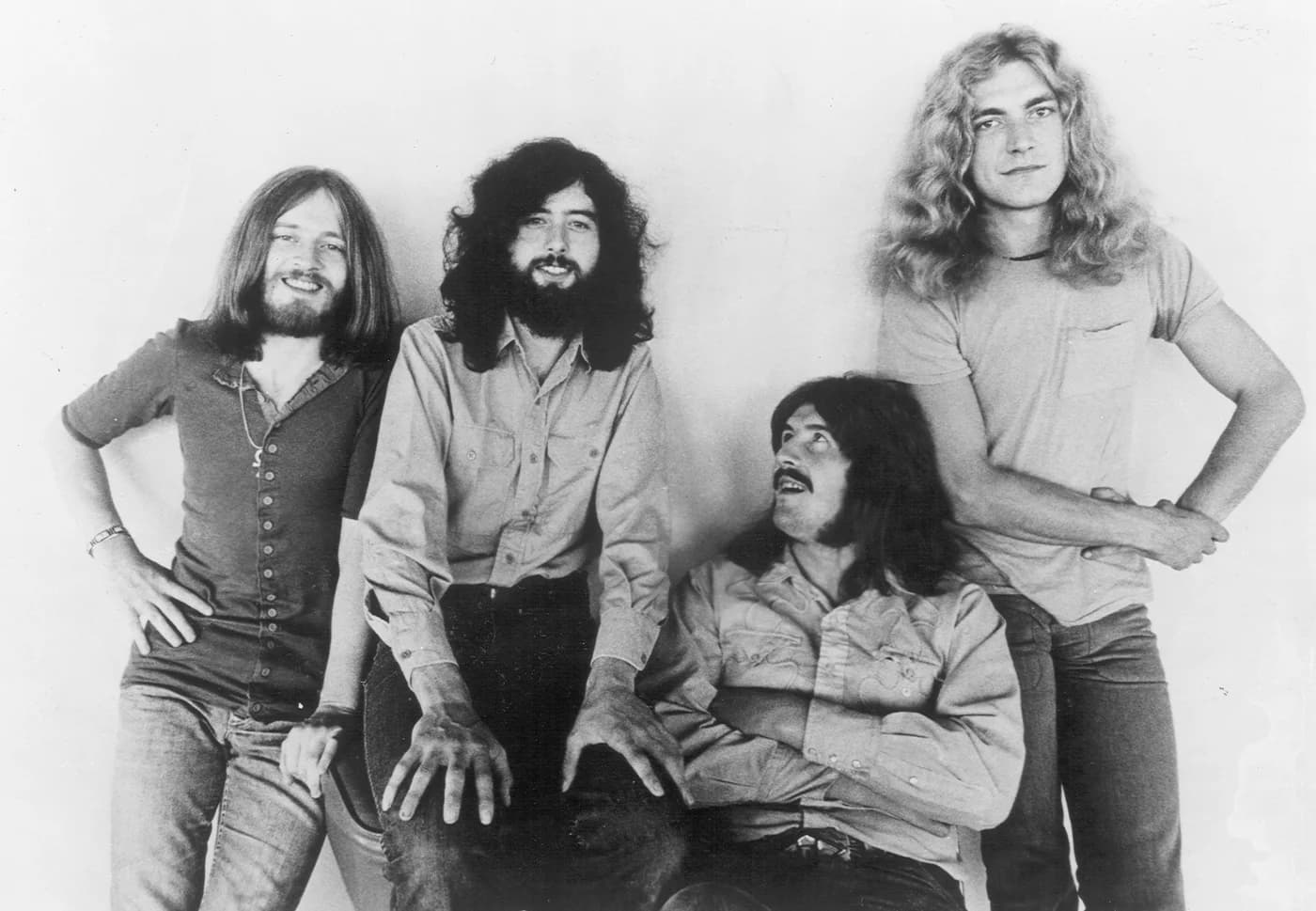
| Classic line-up | Jimmy Page, Robert Plant, John Paul Jones, John Bonham |
| Status | Disbanded; occasional special-event reunions |
| Official website | ledzeppelin.com |
Origin and Formation
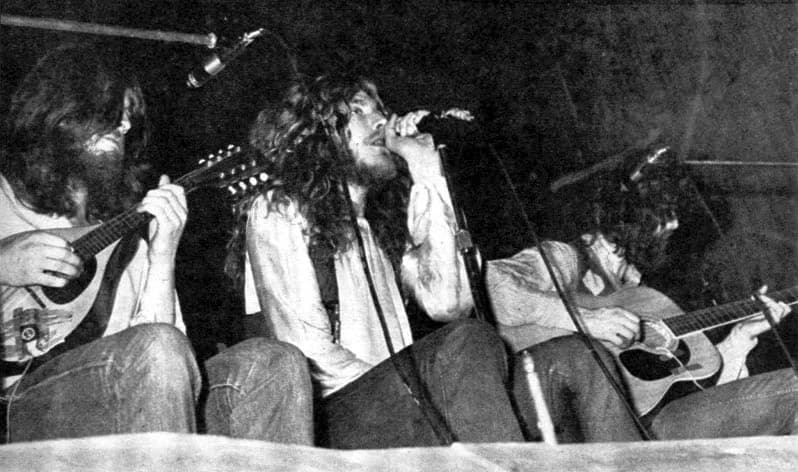
Led Zeppelin formed in London in 1968, but its real origin sits at a larger crossroads: the end of the Yardbirds, Jimmy Page’s studio experience, the British blues scene, the late-1960s club circuit and a clear desire to push rock into heavier, more expansive and more cinematic territory. Page was already one of England’s most respected guitarists. Before leading Led Zeppelin, he had worked as a session musician on countless recordings, absorbing in the studio an unusually deep understanding of arrangement, microphone placement, editing and texture. He did not think only like a guitarist; he thought like a producer, architect and director of sound.
When the Yardbirds collapsed, Page still had touring commitments to fulfill. The first solution was a new line-up under the name The New Yardbirds. Bassist and keyboardist John Paul Jones, another highly sought-after session player, joined after showing interest in working with Page. The crucial vocalist was Robert Plant, then known around the Midlands circuit and connected to bands such as Band of Joy. Plant recommended John Bonham, a drummer with explosive force from the same regional scene. Bonham’s arrival completed the equation: Page brought vision and riffs, Plant brought vocal presence and lyrical imagination, Jones brought harmonic sophistication and arrangements, and Bonham brought physical force, swing and rhythmic authority.
The chemistry was immediate. The first rehearsal remains central to the band’s mythology because, when they played material associated with the Yardbirds, especially “Train Kept A-Rollin’,” the four musicians felt an unusual dimension of volume, elasticity and impact. This was not merely a competent band; it was a line-up in which everyone sounded large, leaving space while filling the room with rare sonic mass. Soon after, the name Led Zeppelin replaced The New Yardbirds, establishing a new identity and moving the project beyond the shadow of Page’s previous group.
The context mattered. British rock had already absorbed American blues, psychedelia and studio experimentation; Jimi Hendrix had expanded electric-guitar language; Cream had demonstrated the force of the expanded power trio; The Who had raised volume and theatricality; and audiences were beginning to accept albums as complete works rather than collections of singles. Led Zeppelin entered that landscape with an aggressive proposition: records that did not depend on hit singles, long concerts, improvisation, visual control, mystery and a sound that treated heaviness as expressive language rather than mere noise.
Members
| Member | Instrument/Role | Period |
|---|---|---|
| Jimmy Page | Guitar, production, sonic direction | 1968-1980; reunions in 1985, 1988, 1995 and 2007 |
| Robert Plant | Vocals, harmonica, lyrics | 1968-1980; reunions in 1985, 1988, 1995 and 2007 |
| John Paul Jones | Bass, keyboards, mandolin, arrangements | 1968-1980; reunions in 1985, 1988, 1995 and 2007 |
| John Bonham | Drums, percussion | 1968-1980 |
| Jason Bonham | Drums at special reunions | 1988, 1995, 2007 |
| Tony Thompson | Drums at one reunion | 1985 |
| Phil Collins | Drums at one reunion | 1985 |
| Paul Martinez | Bass at one reunion | 1985 |
| Michael Lee | Drums at a special appearance | 1995 |
Jimmy Page was Led Zeppelin’s conceptual axis. His importance is not only in the riffs, although those riffs are essential to rock history. Page treated the guitar as lead voice, texture, orchestra, noise and symbol. He moved between Les Paul power through saturated amplifiers, acoustic guitars in open tunings, twelve-string layers, bowed guitar, studio overdubs and strategic silence. As producer, he explored microphone distance, natural ambience and contrasts between intimate passages and electric explosions. His great gift was turning a simple idea into dramatic architecture.
Robert Plant supplied the mythic element. His voice was not merely high; it was elastic, sexual, bluesy, theatrical and often narrative. Plant connected roots blues to Celtic imagination, fantasy literature, travel landscapes and a frontman stance that shaped almost every later hard-rock singer. Across the records, he matured as an interpreter: from the young scream of “Communication Breakdown” to the epic delivery of “Kashmir” and the more restrained readings of “The Rain Song,” one hears a singer learning how to use volume, breath and vulnerability.
John Bonham was the gravitational force. His drum sound, often described as gigantic, came from a combination of touch, tuning, space, dynamics and groove. Bonham could sound devastating without losing swing, and that balance shaped the band’s DNA. On “When the Levee Breaks,” his drums feel like an ancient machine; on “Good Times Bad Times,” the kick-drum articulation already announces an advanced language; on “Achilles Last Stand,” he sustains a marathon of intensity without collapse. His death in 1980 was not a simple personnel change: it meant the loss of an irreplaceable structural component.
History
The first album, released in 1969, introduced Led Zeppelin as a collision of blues, psychedelia and electric weight. Recorded quickly, it already contained the philosophy that would guide the band: material rooted in older traditions but treated with volume, dynamics and modern production. “Good Times Bad Times,” “Dazed and Confused” and “Communication Breakdown” pointed to different paths — rhythmic precision, dark tension and proto-punk urgency — while “Babe I’m Gonna Leave You” showed the group’s command of acoustic contrast and electric explosion. Critics did not always understand immediately, but audiences did.
John Bonham’s death in September 1980 ended Led Zeppelin’s active history. In December that year, the members announced they would not continue without him. The decision was artistically consistent: Bonham was not a replaceable drummer inside the group’s logic, but part of its musical identity. Later reunions occurred — Live Aid in 1985, Atlantic Records’ 40th Anniversary in 1988, the Rock and Roll Hall of Fame in 1995 and the full O2 Arena show in 2007 with Jason Bonham — but none became a permanent return. Led Zeppelin remained, by choice and circumstance, a closed legend.
The expression that inspired “Led Zeppelin” is usually linked to a joke that a supergroup would go down like a lead balloon. The spelling “Led,” without the “a,” helped avoid mispronunciation in English.
In 1971, the band released its fourth record without an explicit title or band name on the original cover, using symbols associated with the members. The decision deepened the mystery and challenged conventional music marketing.
Discography
Led Zeppelin’s studio discography is compact in size and enormous in density. Between 1969 and 1979, the band built a sequence of records that works almost like a full laboratory for heavy rock: amplified blues, British folk, psychedelia, hard rock, proto-metal, funk, reggae, Eastern-flavored modal writing, acoustic ballads, progressive epics, and studio production treated as an instrument. What makes the catalog extraordinary is that those shifts do not feel like identity changes. They feel like expansions of the same vocabulary: high-impact riffs, monumental drums, sophisticated bass and keyboards, vocals with near-shamanic presence, and arrangements that breathe like live performances.
| Studio album | Year | Label | Editorial reading |
|---|---|---|---|
| Led Zeppelin | 1969 | Atlantic | The debut that fused blues, weight, stage dynamics and aggressive production. |
| Led Zeppelin II | 1969 | Atlantic | The record that established the heavy riff as a central hard-rock language. |
| Led Zeppelin III | 1970 | Atlantic | The acoustic and folk turn that widened the band’s identity. |
| Led Zeppelin IV | 1971 | Atlantic | The synthesis of mysticism, blues, folk and electric force. |
| Houses of the Holy | 1973 | Atlantic | The expansion album: funk, reggae, vocal layers and brighter production. |
| Physical Graffiti | 1975 | Swan Song | The double-album panorama, mixing brilliant leftovers with ambitious new material. |
| Presence | 1976 | Swan Song | A tense, guitar-driven record cut under difficult circumstances. |
| In Through the Out Door | 1979 | Swan Song | The keyboard-rich phase shaped strongly by Jones and Plant. |
Style and Influence
Led Zeppelin’s style begins in the blues but does not end there. The band took structures, themes and inflections from American blues and expanded them with British volume, studio ambition and epic imagination. The result is not simply blues rock; it is a form of electric theater in which the riff acts as a character, the drums as physical scenery and the vocal as narrative. Page’s guitar rarely seeks absolute cleanliness. It lives through saturation, micro-variations, controlled noise, overdubs and contrasts. Jones’s bass often creates the true bridge between riff and groove. Bonham’s drums do not accompany; they command the floor.
Dynamics are one of the band’s greatest lessons. Led Zeppelin could sound crushing because it knew how to pull back. “Babe I’m Gonna Leave You,” “Ramble On,” “Stairway to Heaven” and “Ten Years Gone” show that silence, acoustic guitar and preparation matter as much as explosion. Rather than keeping intensity at maximum, the band builds arcs. That approach influenced not only hard rock and heavy metal, but also grunge, stoner rock, alternative metal and much of the culture of bands that balance weight and atmosphere.
Production is also fundamental. Page understood that drums could sound enormous when the room became part of the instrument; that doubled guitars could create width without losing aggression; that microphone placement changed the emotional meaning of a take; and that an album needed dramatic sequencing. That is why Led Zeppelin remains current for musicians and producers: the band teaches composition, arrangement, tone, performance and emotional editing.
The legacy of electric blues lives in the riff vocabulary, vocal tension and call-and-response feel. Led Zeppelin raised that matrix to arena volume, but the emotional root of many songs comes directly from this world.
Howlin’ Wolf’s vocal ferocity, rhythmic weight and threatening atmosphere help explain Zeppelin’s darker physical side. Plant does not literally imitate him, but he absorbs the idea of the voice as animal force.
Page’s acoustic sophistication connects with the British folk school, including tunings, fingerpicking and a less obvious approach to the guitar. This appears in the pastoral side that separates Zeppelin from many other heavy bands.
Jimmy Page’s Yardbirds experience was a laboratory for improvisation, volume, psychedelia and live expansion. Led Zeppelin emerges from that school with stronger production and a far more self-contained identity.
Although a contemporary, Black Sabbath shared with Zeppelin the opening of the path toward heavy metal. Zeppelin’s influence on metal comes especially through the riff, colossal drums and epic scale.
Aerosmith absorbed the Zeppelin lesson of heavy blues, vocal sensuality and arena-ready guitar riffs, translating that matrix into a more direct and radio-facing American language.
Decades later, Soundgarden revived the idea of heavy riffs, dense tunings, high vocals and irregular structures. Zeppelin’s shadow appears in the elastic weight, not merely in classic-rock aesthetics.
Legacy
Led Zeppelin’s legacy is that of a band that changed the scale of rock. Before them, blues rock, psychedelia, loud guitar, improvisation and theatricality already existed. After them, those elements seemed to belong to a larger architecture: the album as territory, the concert as ritual, the riff as monument and the band as a near-mythic entity. Their influence on hard rock and heavy metal is immense, but reducing them to “metal precursors” is too small. Led Zeppelin also redefined the role of acoustic guitar in heavy rock, expanded the use of dynamics in long songs and helped consolidate album culture as a complete experience.
Institutional recognition confirms part of that history. The band was inducted into the Rock and Roll Hall of Fame in 1995, received major honors across the decades and remains present in lists of the greatest artists, albums and songs in rock history. But numbers and awards explain only a fraction. The real sign of permanence is in musicians’ everyday practice: guitarists still learn Page’s riffs, drummers study Bonham’s sound and time, singers measure power and presence against Plant, and bassists and keyboardists rediscover Jones’s elegance. Led Zeppelin became a language.
There is also a legacy of ambiguity. The band has always carried debates around blues borrowing, road excess, inflated mythologies and a kind of 1970s rock masculinity that can be troubling today. A serious profile does not need to erase those tensions. Understanding them helps separate fascination from blind idol worship. Led Zeppelin was a product of its time and a force that exceeded it. The work remains alive because it contains contradictions: brutal and refined, popular and mysterious, rooted and futuristic, excessive and precise.
As a musical experience, few groups have taught more about impact. “Kashmir” shows that heaviness can be hypnosis; “Stairway to Heaven” shows that gradual growth can be stronger than instant explosion; “When the Levee Breaks” shows that a drum sound can define an era; “Whole Lotta Love” shows that a riff can become cultural identity. For Luciano Bastos Guitar, Led Zeppelin is a central reference because it connects guitar, blues, classic rock, hard rock and sonic imagination in one body. The band ended in 1980, but its grammar is relearned every time someone plugs in a guitar, turns up the volume and tries to make a chord sound larger than the room.